Get all your news in one place.
100's of premium titles.
One app.
Start reading
AAP
AAP
Lifestyle
Liz Hobday

Art controversy in court and on national gallery walls

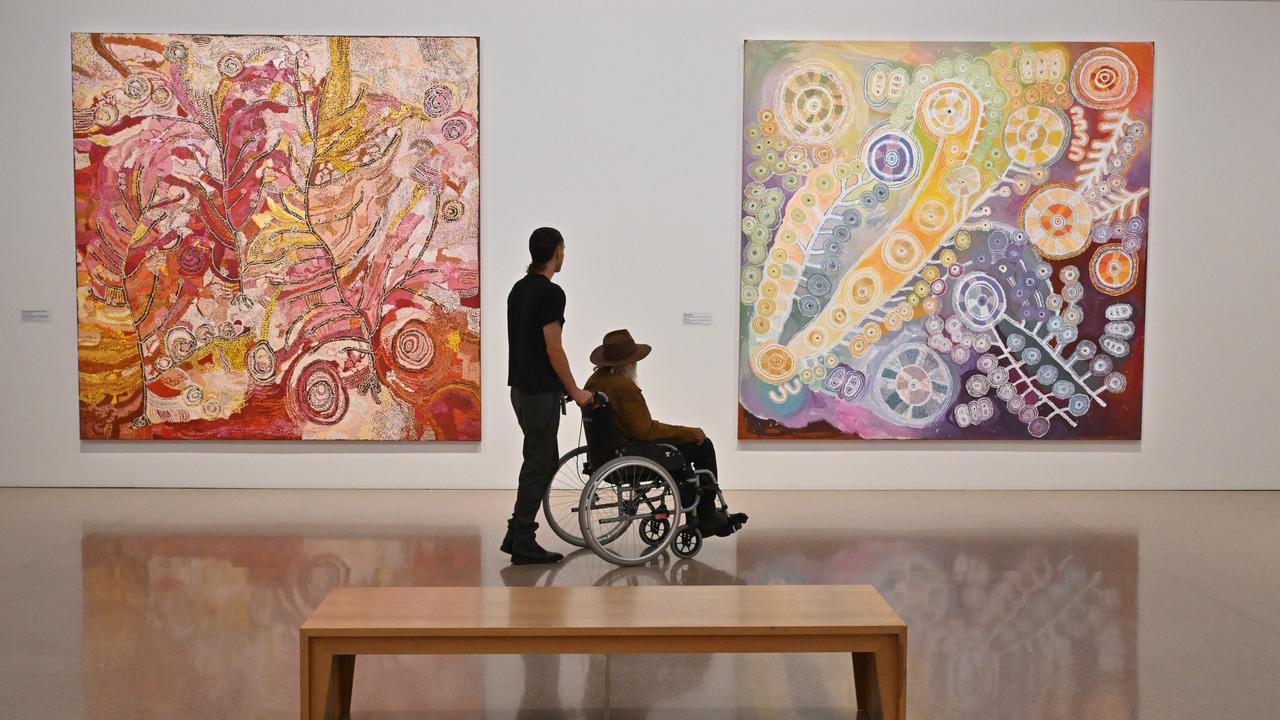
The Ngura Pulka - Epic Country exhibition features major works by 52 Indigenous artists. (Mick Tsikas/AAP PHOTOS)

Paintings associated with the nation's biggest art controversy in decades are going on display at the National Gallery of Australia.

The Ngura Pulka - Epic Country exhibition was originally scheduled for 2023, but was postponed just before opening following stories in The Australian newspaper.
The stories alleged white arts workers had interfered with works by artists from Central Australia's APY (Anangu Pitjantjatjara Yankunytjatjara) Art Centre Collective - claims that sent shock waves through the Aboriginal art industry and damaged sales.

What became known as the "white hands on black art" allegations have been strenuously denied, with the APY collective launching a defamation action in the Supreme Court of South Australia seeking $4.4 million in damages.

The exhibition, billed as the most ambitious artistic project to come from the APY Lands, opens on Saturday at the gallery in Canberra.

It includes 31 major works by 52 artists such as Wynne Prize recipients Zaachariaha Fielding and the Ken sisters, and includes artists working in Coober Pedy and Adelaide.

"Ngura Pulka has been a long time coming, but we always knew we would get here because of the strength and resilience of our artists, our artworks and our culture," Yankunytjatjara artist and collective chair Sandra Pumani said.

The opening is a triumph for the collective and its artists, collective general manager Skye O'Meara said.

Indigenous artist Sandra Pumani
"We always knew we would get here," Yankunytjatjara artist Sandra Pumani says. (Mick Tsikas/AAP PHOTOS)

"We can't think about Ngura Pulka without thinking about the attack and about what happened to us," she said.

"The collective survived the attack by the absolute skin of our teeth. 

"There were several occasions when we were looking at strategies of what galleries would be closed."

The collective was subject to a string of investigations by the South Australian government, the registrar of Indigenous corporations and the consumer watchdog, and a review commissioned by the NGA.

The Australian Competition and Consumer Commission found no breaches of consumer law, but acknowledged broader cultural issues at the organisation that fell outside its enforcement powers.

The NGA review cleared 28 artworks in the Ngura Pulka exhibition, finding artists had exercised effective creative control over their paintings.

However, a $1.4 million deal for the NGA to acquire the Ngura Pulka artworks fell through during the controversy, according to court documents.

Ngura Pulka - Epic Country at the National Gallery of Australia
The Aboriginal-owned APY Art Centre Collective supports about 500 Anangu artists. (Mick Tsikas/AAP PHOTOS)

The collective was dropped by the ethical standards body for the First Nations art sector, the Indigenous Art Code.

The Aboriginal-owned collective supports about 500 Anangu artists, many from remote communities where arts centres are the only source of non-government income.

The organisation markets the artworks through galleries in Adelaide, Melbourne and Sydney and at international art shows.

An additional six large-scale artworks have been created for the Ngura Pulka exhibition since the 2023 show was postponed.

Ngura Pulka is on show at the NGA until August 23.

Sign up to read this article
Read news from 100's of titles, curated specifically for you.
Already a member? Sign in here
Related Stories
Top stories on inkl right now
One subscription that gives you access to news from hundreds of sites
Already a member? Sign in here
Our Picks
Fourteen days free
Download the app
One app. One membership.
100+ trusted global sources.