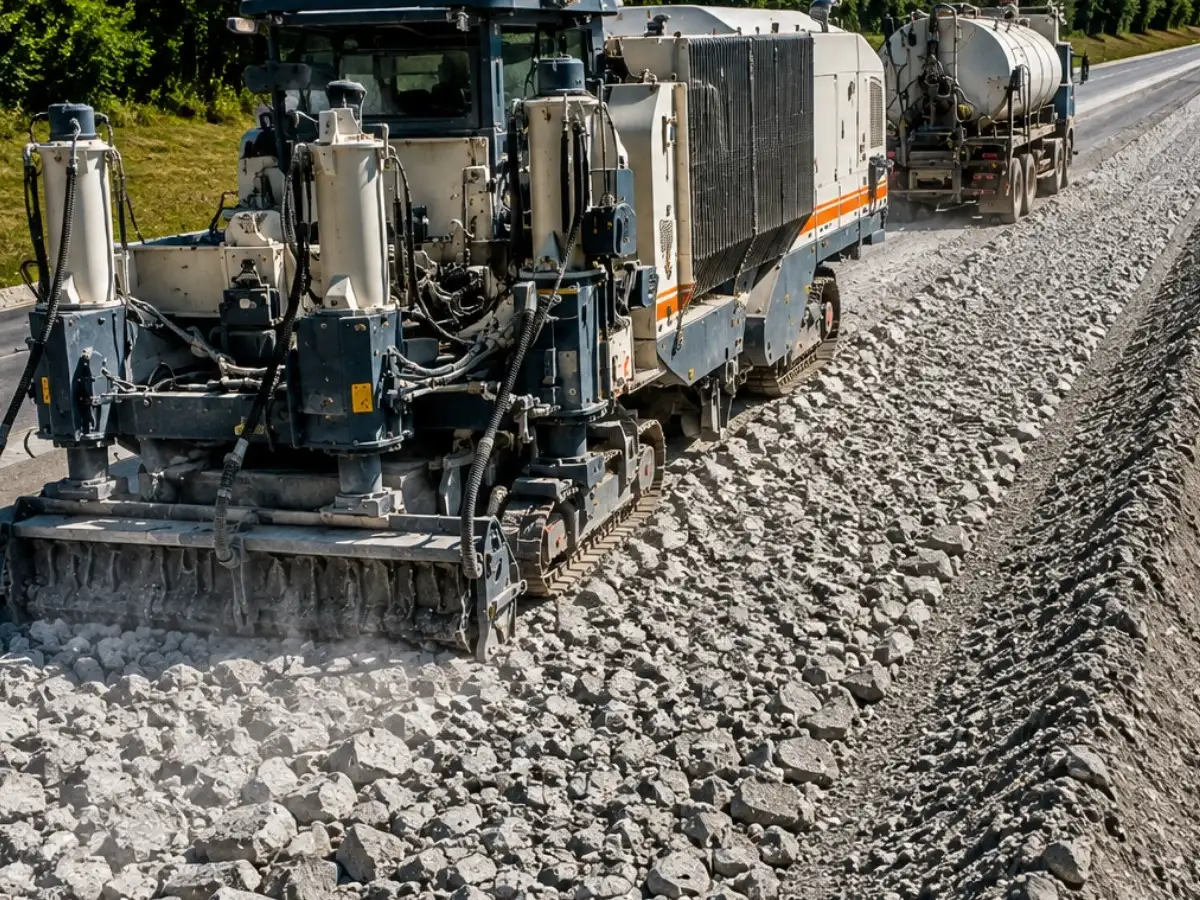
Infrastructure upgrades often get expensive because of the materials that must be hauled in and hauled away. Arkansas avoided that expense on a stretch of Interstate 30 just outside Little Rock by crushing the old slabs and reusing the material as subbase for the new highway. According to a case study indexed by the Transportation Research Board, part of the National Academies of Sciences, Engineering, and Medicine, the 20-mile project avoided quarrying more than 95,000 tons of new crushed stone. It saved about $15,000 in truck fuel costs. As any work zone shows, much of a highway's needed material is already beneath it, and bringing in fresh rock is not always the cheapest option.
What actually happened on I-30
In Arkansas's first in-place concrete recycling job, crews broke up the old, deteriorated concrete on a 20-mile section of I-30, crushed it there, and used the material as aggregate in the new subbase layer. That decision spared the state from opening a quarry, extracting fresh stone, and trucking it to the site.
How in-place concrete recycling actually works
The process is simple in concept but requires heavy-duty equipment. Rather than digging up old concrete, loading it onto trucks, and hauling it to a different facility to be crushed, crews bring a crusher to the road. The old slab is broken up and crushed on the corridor and placed back down as the base layer underneath the new pavement. Because the material stays on site, it avoids the multiple trucking trips a traditional demolition-and-rebuild process would require.