Get all your news in one place.
100's of premium titles.
One app.
Start reading
The Conversation
The Conversation
William Taylor, Assistant Professor and Curator of Archaeology, University of Colorado Boulder

Archaeology and genomics together with Indigenous knowledge revise the human-horse story in the American West

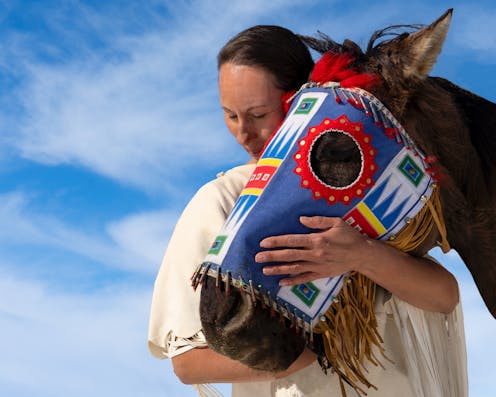
Horses are an active part of life for the Lakota and many other Plains nations today. Jacquelyn Córdova/Northern Vision Productions

Few places in the world are more closely linked with horses in the popular imagination than the Great Plains of North America. Romanticized stories of cowboys and the Wild West figure prominently in popular culture, and domestic horses are embedded in everything from place names, like Wild Horse Mesa, to sporting mascots, like the Denver Broncos.

Horses first evolved in the Americas around 4 million years ago. Then horses largely disappeared from the fossil record by about 10,000 years ago. However, archaeological finds from the Yukon to the Gulf Coast make it clear that horses were an important part of ancient lifeways for the early peoples of North America.

Sign up to read this article
Read news from 100's of titles, curated specifically for you.
Already a member? Sign in here
Related Stories
Top stories on inkl right now
One subscription that gives you access to news from hundreds of sites
Already a member? Sign in here
Our Picks
Fourteen days free
Download the app
One app. One membership.
100+ trusted global sources.