Get all your news in one place.
100's of premium titles.
One app.
Start reading
The Times of India
The Times of India
World
TOI World Desk

Archaeologists have rediscovered Ichijodani, a lost Japanese samurai city that once flourished during the country's brutal medieval power struggles

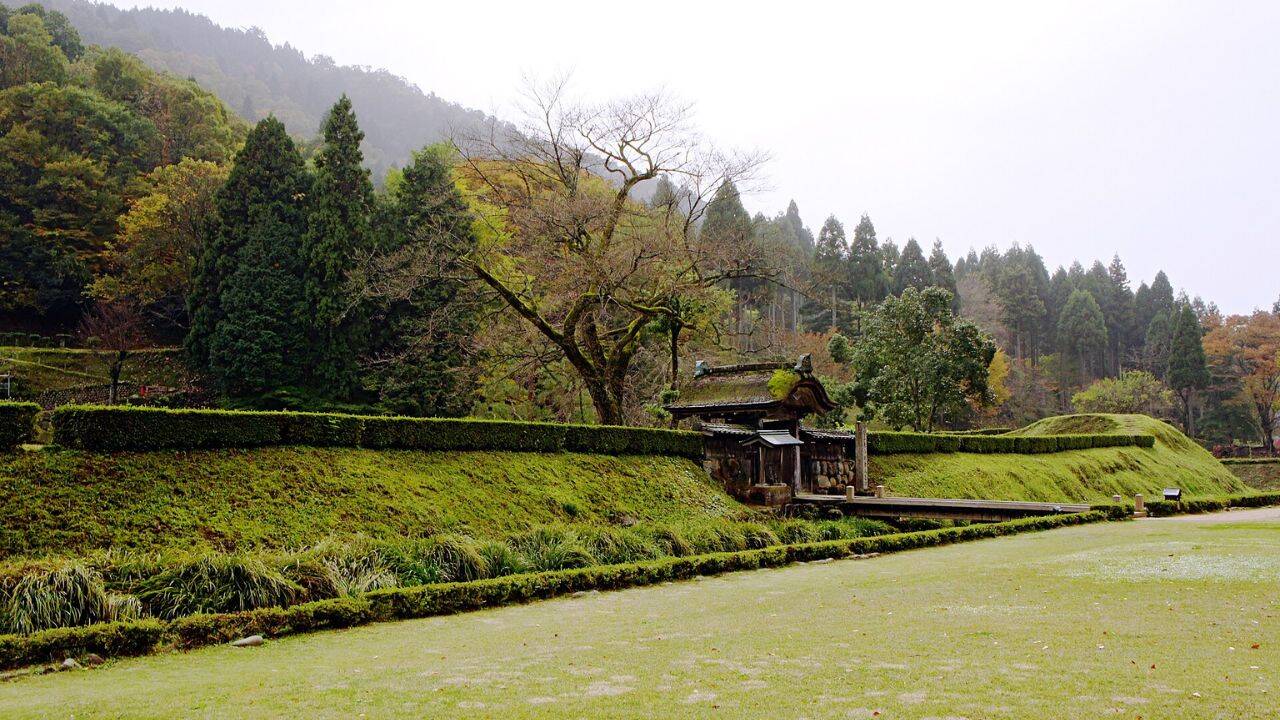
The lost Japanese city of Ichijodani was once a thriving centre of samurai power, culture, trade and home to thousands of people during one of the most violent periods in the country’s history. From around 1471 to 1573, the narrow Ichijo Valley in central Japan was controlled by the powerful Asakura clan, whose rulers built a fortified castle town that eventually rivalled Kyoto in wealth and sophistication. The city disappeared after the armies of warlord Oda Nobunaga destroyed it by fire in 1573, burying its streets, homes and possessions beneath fields for centuries. Archaeologists rediscovered the remains in the 1960s, and more than 100 excavation campaigns have since discovered an extraordinary collection of buildings and objects. As described by Archaeology Magazine, the site offers an unusually detailed glimpse into everyday life in medieval Japan.

Get breaking news anytime, anywhere. Download the TOI app now!

How did Ichijodani become a powerful samurai city

Ichijodani rose during Japan’s Sengoku, or Warring States period when the country was divided among competing regional warlords. The central government in Kyoto had weakened, allowing powerful daimyo to build their own armies and fight for territory. The Asakura family was among those that took advantage of this disorder. In 1471, the family seized control of Echizen Province and established Ichijodani as its base. According to Archaeology Magazine, the valley was particularly well suited for defence. It stretched for roughly two miles but was only about 260 feet wide at its narrowest point, while mountains rising around it provided natural protection. The Asakura also placed their main castle high on a mountain rather than in the middle of the settlement. Watchtowers could survey the surrounding landscape, while defensive gates could restrict access to the valley. The castle itself included moats, earthworks, guardhouses and more than 140 trenches. Yet Ichijodani was more than a military stronghold. It became a busy city that may have housed as many as 10,000 people.

What was everyday life like in the samurai settlement

Archaeological excavations have revealed that Ichijodani was surprisingly diverse. More than 1.7 million artefacts have been recovered, giving researchers a detailed picture of the people who lived and worked there. The city contained samurai residences, workshops, temples and other buildings. Archaeologists have found evidence of metalworkers, potters, bead makers, gunsmiths, textile dyers, lacquerers, brewers and woodworkers. There was even at least one doctor, whose property contained tools used for preparing medicines and fragments of a Chinese medical text dating to the 13th century.

The remains also show that the residents were connected to wider trading networks. The Ichijo River provided a route towards the Sea of Japan, around 20 miles away, allowing goods and information to reach the settlement. Among the objects found in samurai homes are sword and armour fragments, combs, hairpins, mirrors, writing equipment, chopsticks, coins and pieces used in shogi (a chess-like board game). These discoveries make the ancient city feel less like an abandoned battlefield and more like a place where ordinary routines continued alongside the constant threat of war.

Why was tea culture important in Ichijodani

One of the more unexpected discoveries has been the popularity of tea culture. Archaeologists have found tea-related ceramics not only in the homes of powerful lords but also among lower-ranking samurai and townspeople. Archaeology Magazine explains that Ichijodani became a refuge for monks, artists, poets, intellectuals and craftspeople fleeing Kyoto during the Onin War, which began in 1467. Their arrival helped bring elements of the capital’s sophisticated culture into the provincial city. The result was a settlement that combined military power with art, entertainment and refined social traditions. Tea ceremonies, imported ceramics and elaborate banquets formed part of life among the city’s elite.

At the centre of this world stood the Asakura palace, or ‘yakata.’ The enormous complex covered about 87,000 square feet and was protected by walls and a moat. Excavations have revealed kitchens, stables, bathhouses, reception rooms, performance spaces and gardens, including what researchers describe as the oldest Japanese flowerbed ever excavated. Thousands of small, inexpensive earthenware dishes called kawarake were also discovered. These were often used only once before being broken and discarded. More than a ton of their fragments were found in the palace moat, evidence of lavish gatherings where hospitality was closely connected to status and prestige.

How did Ichijodani meet its violent end

By the late 1560s, Ichijodani appeared to be at the height of its influence. In 1567, Asakura lord Yoshikage hosted Yoshiaki Ashikaga, heir to the shogunate, who stayed in the city for nine months. His coming-of-age ceremony was held at the Asakura palace and may have attracted around 200 guests. But political tensions soon changed the city’s fortunes. Yoshiaki eventually left Ichijodani and allied himself with Oda Nobunaga, one of the most powerful warlords of the period. The Asakura became part of an alliance opposing Nobunaga. After several clashes, Nobunaga’s forces defeated Yoshikage in 1573. Yoshikage fled towards Ichijodani, but Nobunaga followed. On 18 August 1573, his forces set the city on fire.

The evidence of destruction remains striking. According to Archaeology Magazine, archaeologists have found burned soil across the site, while foundation and paving stones were turned red by intense heat. Historical accounts state that the fire continued for 3 days. Afterwards, Ichijodani was abandoned. The valley eventually returned to farmland, and the once-bustling city disappeared beneath rice fields for about 400 years.

What has archaeology revealed about the lost samurai city

Ichijodani’s destruction ultimately became the reason it survived so well beneath the ground. Unlike many medieval Japanese cities that remain occupied today, its buildings were never continuously rebuilt over the same archaeological layers. When archaeologists began investigating the valley in the 1960s, they found a remarkably preserved snapshot of a vanished world. More than six decades of excavation have since reconstructed streets, homes, palaces, workshops, gardens and defensive structures. Today, Ichijodani stands as one of the clearest archaeological records of Japan’s Warring States period. Its remains show that samurai life was not defined solely by swords and battles. Behind the fortified walls were families, craftsmen, doctors, merchants, artists and hosts preparing elaborate meals and ceremonies. The city’s story is also a reminder of how quickly power disappeared during medieval Japan’s brutal struggles. Ichijodani flourished for roughly a century before one military defeat transformed it from a prosperous capital into a forgotten landscape. Its rediscovery has allowed archaeologists to bring that lost city, and the people who once called it home, back into view.

Sign up to read this article
Read news from 100's of titles, curated specifically for you.
Already a member? Sign in here
Related Stories
Top stories on inkl right now
One subscription that gives you access to news from hundreds of sites
Already a member? Sign in here
Our Picks
Fourteen days free
Download the app
One app. One membership.
100+ trusted global sources.