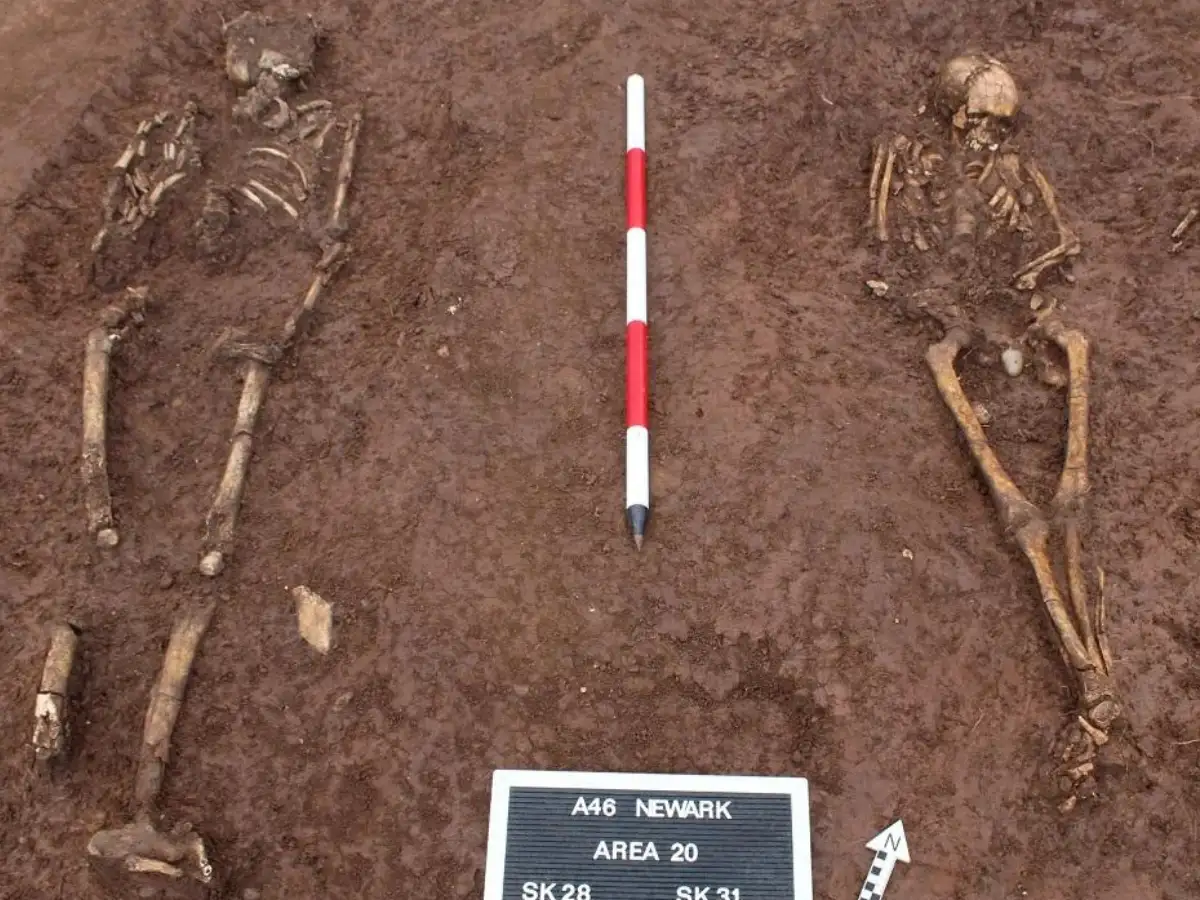
Most of us don’t give much thought to the ground beneath a road. But in Nottinghamshire, England, a planned highway expansion has just revealed one of the most multi-layered archaeological sites the region has seen in a long time, and the discoveries are the kind of thing that makes history feel surprisingly close.
A team of 30 archaeologists spent 22 weeks digging through more than 23 acres of farmland before work could start on the A46 Newark Bypass, a plan to ease traffic congestion around Newark. What lay under the surface spanned almost 8,000 years of human life, from about 6000 BCE to the early modern period. In the same patch of English countryside lived and died Stone Age farmers, Roman settlers, Anglo-Saxon families and communities from the Civil War era, all stacked like pages in a book nobody knew was there.