Get all your news in one place.
100's of premium titles.
One app.
Start reading
MarketBeat
MarketBeat
Sam Quirke

Apple’s $5.7 Billion Patent Verdict Raises a Bigger Royalty Question

Shares of Apple Inc. (NASDAQ: AAPL) fell 2.66% on Tuesday, Sept. 29, adding to a decline in the prior session, despite having set an intraday all-time high on Tuesday, Sept. 22. A federal jury’s $5.7 billion verdict against Apple on Friday, Sept. 25, added a fresh legal overhang, providing a reminder that even the largest companies can see their stock spooked by a single piece of legal news.

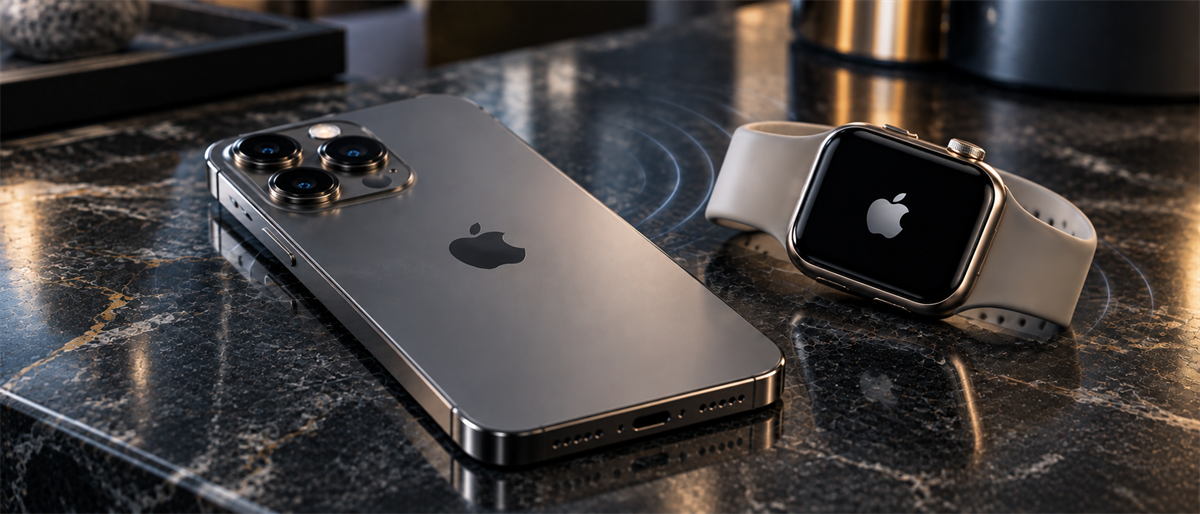
The ruling ordered the tech giant to pay more than $5.7 billion to Taction Technology after finding that Apple’s Taptic Engine infringed claims in two patents covering haptic-feedback technology used in iPhones and Apple Watches. Apple has said it will appeal. A $5.7 billion one-time payment might be material in absolute terms, but Apple has substantial financial capacity to absorb it, having generated nearly $117 billion in operating cash flow during the first nine months of fiscal 2026.

However, here is where the verdict gets interesting: the real threat isn't the one-time payout. It's the possibility of an ongoing royalty on every affected iPhone and Apple Watch sold going forward. That scenario would put material pressure on hardware margins over time, and it's why some are treating this verdict as more than a legal sideshow.

Why the Royalty Risk Matters More Than the Verdict

Thankfully for investors, Apple's scale makes the headline figure look worse than the underlying economics. The company can comfortably absorb a multibillion-dollar charge without threatening its balance sheet, buybacks, or ability to invest in new products.

A recurring royalty is different. It would affect the economics of every affected device for years rather than hitting earnings once. The market, therefore, has good reason to focus less on the Sept. 25 award and more on what Apple might ultimately have to agree to pay to keep using the technology.

Apple’s Pricing Power Still Supports the Bull Case

For now, Apple's pricing power remains the foundation of the broader bullish thesis. The company has consistently raised prices on iPhone Pro models without losing meaningful volume, and it's done so while managing component-cost inflation and maintaining solid gross margins.

Services revenue, which has started to exceed Hardware in some quarters, provides a diversification buffer that didn't exist five years ago. Recent iPhone Pro demand indicators remain healthy, with lead times elevated in several markets—a backdrop consistent with pricing power holding up.

The bulls argue that this cash-generation capacity can absorb the $5.7 billion hit. The real constraint is whether Apple can avoid paying a recurring royalty, and here the appeal front offers a credible path forward.

A federal district court originally granted Apple summary judgment of noninfringement in 2023, but the U.S. Court of Appeals for the Federal Circuit vacated that ruling on Aug. 13, 2025, and sent the case back for further proceedings. A successful appeal or a settlement that avoids a significant ongoing royalty would remove much of the overhang. Under that framework, the verdict creates a window for a settlement that removes longer-term uncertainty without gutting margins.

Valuation Leaves Less Room for Legal Setbacks

The bearish argument continues to rest on valuation and execution risk, but they’ll consider the Sept. 25 verdict to be another string in their bow. When you consider how Apple's valuation continues to look stretched compared to historical levels, there’s not that much room for stumbles like this.

If hardware margins were to be compressed by new recurring royalty payments, if the current upgrade cycles disappoint, or if component costs rise faster than pricing can offset them, the stock’s valuation could start to contract rather sharply.

Bears will also argue that Apple’s new premium devices may raise average selling prices without generating enough net-new incremental earnings growth to justify the current valuation. A legal headwind only compounds that concern when the stock is already priced at an elevated multiple.

Yet here is the critical detail—the vast majority of analysts remain bullish on Apple, and the MarketBeat consensus rating is still a Moderate Buy, even after the verdict. That consensus suggests Apple's fundamental economics are strong enough to weather this verdict without a material shift in the investment case.

A Legal Scare, Not Yet a Thesis Breaker

That said, the $5.7 billion verdict is a real risk, and the royalty question deserves close monitoring as the appeal proceeds. But Apple's pricing power, broader revenue growth, and fortress balance sheet make this a problem the company has substantial resources to address, whether through appeal, settlement, or through the kind of margin management it has proven adept at executing.

For those who are bullish on Apple over the long term, the verdict might actually be creating a window for an entry point, as it’s almost certainly not a reason to abandon the bullish thesis. That means investors comfortable with Apple’s valuation at current levels might see the recent pullback as a buying opportunity dressed up as a legal scare.

The article "Apple’s $5.7 Billion Patent Verdict Raises a Bigger Royalty Question" first appeared on MarketBeat.

Sign up to read this article
Read news from 100's of titles, curated specifically for you.
Already a member? Sign in here
Related Stories
Top stories on inkl right now
One subscription that gives you access to news from hundreds of sites
Already a member? Sign in here
Our Picks
Fourteen days free
Download the app
One app. One membership.
100+ trusted global sources.