Get all your news in one place.
100's of premium titles.
One app.
Start reading
Tom’s Guide
Tom’s Guide
Technology
Amanda Caswell

Apple spent years fixing Siri — only for ChatGPT to make it irrelevant

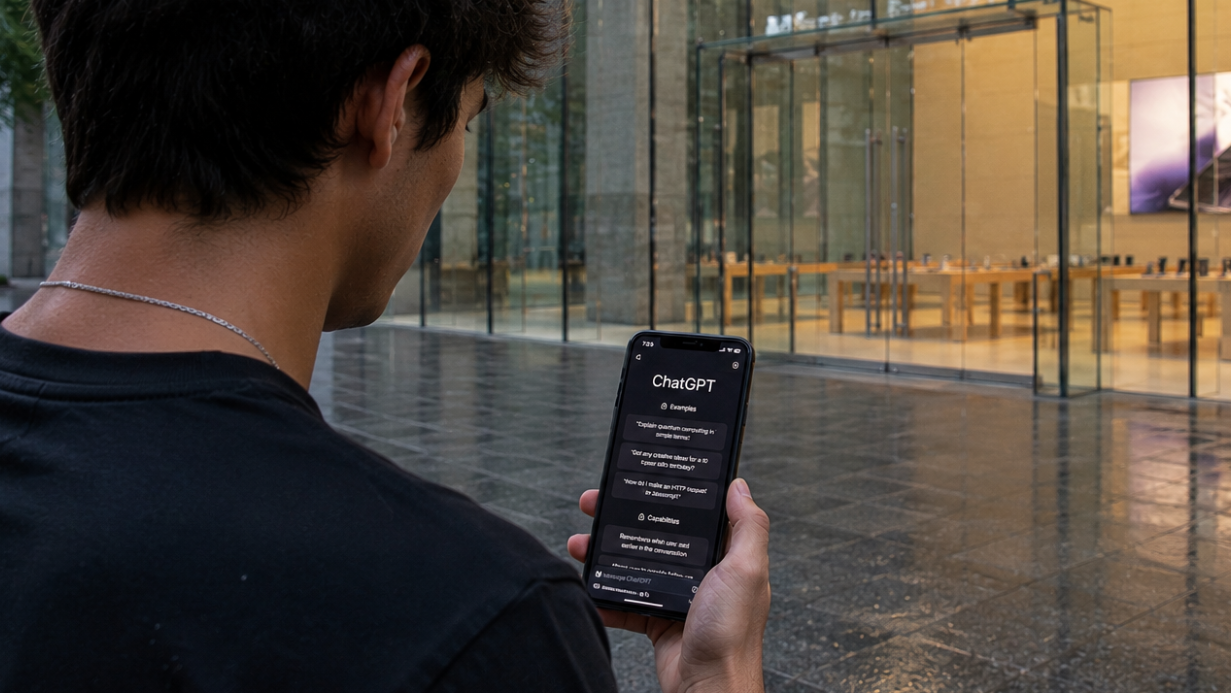
ChatGPT.

Like many people, Siri was my first glimpse at what was possible with AI. Naturally, I imagined the future of artificial intelligence would look exactly like the voice assistants we already had in our pockets. We would ask questions, set reminders, send messages and perhaps get slightly more coherent answers than before. When ChatGPT first launched, I assumed it was the beginning of a smarter Siri. But then AI evolved while Siri stayed the same.

That thought kept coming back to me during Apple's reveal of the new Siri AI at WWDC. To Apple's credit, the company has finally addressed the core complaints users have harbored for a decade. Siri can now understand personal context, parse what is on your screen, work across native apps, hold natural multi-turn conversations and take actions on your behalf. In many ways, this is the definitive version of Siri people have been asking for since the early days of voice assistants.

The problem is that while Apple spent years rebuilding Siri, the rest of the AI industry was busy changing what people expect from AI assistants altogether. In other words, we've moved on.

Apple finally fixed Siri

For years, Siri felt stuck in a loop. You could ask it to set a timer or check the weather, but the moment a request required a shred of contextual nuance, the experience completely fell apart. Meanwhile, platforms like OpenAI's ChatGPT, Google Gemini, and Anthropic's Claude advanced at a breakneck pace, making traditional voice assistants feel ancient by comparison.

Apple has finally given its assistant the ability to weave together information across messages, emails, photos and calendar events. And while these aren't trivial improvements; they are arguably not unique — they are what Siri needs to survive. Apple deserves credit for achieving what many critics thought might never happen: making Siri feel competitive again.

But that is exactly where the disconnect lies. While Apple was perfecting the assistant, AI quietly became something much bigger.

AI stopped being about answering questions long ago

(Image credit: Andrew Harnik/Getty Images/Future)

Today, millions of people still use AI models to look up facts or answer basic questions. But that is no longer the primary reason we open them.

We use AI to brainstorm complex projects, analyze deep institutional research, summarize massive text files, organize unstructured data and challenge our own thinking. Increasingly, we use it to build websites, complex spreadsheet formulas and to automate repetitive tasks.

The most profound developments in AI over the past year have not focused on making voice interfaces sound more human. They have focused on making software exponentially more capable.

Ironically, the news about Google's NotebookLM updates flew under the radar yesterday as WWDC viewers oohed and awed over the new Siri. But Google's tool can process vast collections of documents and surface hidden insights in minutes. Claude’s Artifacts feature allows users to build functioning, interactive tools on the fly.

ChatGPT remembers deep context across entirely separate threads, transforming the interface from a transactional chatbot into a legitimate collaborator. You see where I'm going here: Siri isn't doing anything unique.

The industry is no longer building assistants. It is building cognitive systems that help people create, research, code and execute workflows.

The rise of Autonomous AI

(Image credit: Future)

Perhaps the most significant paradigm shift is that modern AI is becoming less reactive.

The original promise of Siri was entirely transactional: you issue a voice command, and Siri delivers a response. Today's AI companies are chasing an entirely different horizon: autonomous agents.

We are witnessing the rollout of workflows where AI can proactively research an engineering problem, generate reports, monitor live code deployments and complete multi-step tasks with minimal supervision.

This represents a foundational shift in what consumers have come to expect. It almost seems like Apple perfected the wrong problem. As I watched the new Siri demos, it was hard to shake the feeling that Apple may have finally perfected the voice assistant at the exact moment the world moved past voice assistants entirely.

Siri AI looks exceptionally well-engineered; nobody can deny that. Apple has delivered precisely what its user base has demanded for years. But, the challenge is that power users are asking entirely different questions now.

When sitting down at a workstation, the goal is to find an AI partner that can help write, code, create and automate daily operations.

A few final thoughts

Apple may still be making the smartest long-term bet of all. While OpenAI and Anthropic are building destination apps that users must deliberately seek out, Apple is building systemic infrastructure.

The company's core vision relies on the premise that AI shouldn't live inside an isolated browser window or a standalone application. It should live invisibly inside the operating system itself.

But even with a smarter, context-aware Siri on the horizon, the broader reality remains that AI is moving extraordinarily fast. Apple has successfully fixed yesterday's assistant while the rest of the tech world is busy inventing what comes next.

More from Tom's Guide

Sign up to read this article
Read news from 100's of titles, curated specifically for you.
Already a member? Sign in here
Related Stories
Top stories on inkl right now
One subscription that gives you access to news from hundreds of sites
Already a member? Sign in here
Our Picks
Fourteen days free
Download the app
One app. One membership.
100+ trusted global sources.