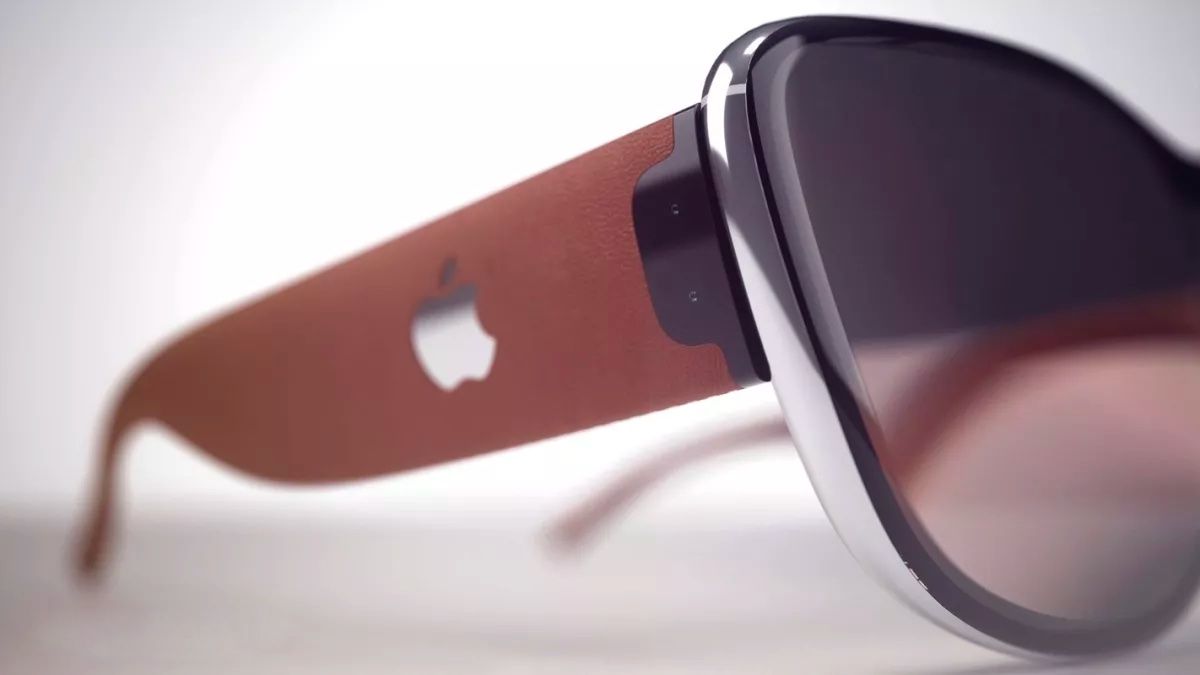
With Apple pulling back on its Vision Pro plans, it's now full steam ahead on its push for smart glasses, and a new report just gave us an expected timeline of when we can look forward to the long-rumored Apple AR smart glasses.
According to research firm Omdia, Apple is planning to release its upcoming Apple AR glasses in 2028, sporting OLEDoS (OLED on Silicon), otherwise known as Micro OLED display tech. You'll also find this in the Apple Vision Pro, but now in the form of glasses.

Notably, it will deliver 0.6-inch dual OLEDoS for both lenses. That's a step forward over the LCoS (Liquid Crystal on Silicon) the Meta Ray-Ban Display specs use.
Many of the best AR glasses use Micro OLED, with the upcoming Asus ROG Xreal R1 with dual OLEDoS panels boasting up to a 240Hz refresh rate, offering some stunning visuals at 1080p resolution per eye. As the report notes, the adoption of OLEDoS for smart glasses is dominating, and that's expected to increase over the next two years.

If this is the case, we'll be waiting a while before we see Apple's all-new AR glasses arrive. In fact, if the report's launch windows ring true, we'll see the next Meta AR glasses with dual OLEDoS panels and waveguide in 2027 first, along with more specs from RayNeo (also sporting 0.6-inch dual Micro OLED).
While the Cupertino tech giant's AR glasses may be a while, Apple is rumored to be launching AI glasses toward the end of 2026, though that release could slip to 2027. As reported, we can expect these to depend on Siri for AI capabilities, along with built-in speakers and cameras. Siri 2.0 is still expected to arrive in 2026, after all.
Otherwise, with OLEDoS display tech involved, we expect Apple's anticipated AR glasses to be powered by a form of VisionOS, with processing being done via an iPhone. For now, VisionOS looks to be a testing ground (of sorts) for what to expect, as we're now seeing the Vision Pro finally get a YouTube app.
The move to OLEDoS

As Omdia notes, OLEDoS display tech is thin and light, and offers less power consumption than others, including LCoS. This makes it ideal for next-gen AR glasses, and it's looking like Apple will be jumping on these panels for its own AR specs.
But so are many of the biggest players in the smart glasses space. With its Ray-Ban Meta smart glasses, Meta has been pulling ahead with smart specs for a while, and its introduction into the AR glasses space has already arrived in the form of the Meta Ray-Ban Display.
The report details that AR, VR and MR (mixed reality) revenue is estimated to reach $1.2 billion by the end of 2026, with a 200% year-on-year growth. Apparently, this is due to the growth of OLEDoS in AR glasses and head-mounted displays (HMDs).
We're big fans of Micro OLED on AR specs, with the Xreal 1S AR glasses delivering fantastic visuals with an upgraded 16:10 aspect ratio at a 1200p resolution, along with 3D picture conversion. Apple will have a lot to catch up with, especially with its AR specs now tipped to come in 2028. But at least it should finally enter the smart glasses race with its AI smart specs (hopefully by the end of 2026).
As a side note, Omdia also expects there to be a lightweight Meta MR headset with OLEDoS and pancake in 2026, along with a Quest Pro 2 MR headset also sporting OLEDoS and pancake lenses. These have been rumored, and with Meta indicating "leaked" headsets are still coming, it's a good sign there's more from Quest headsets to come.
While we won't be seeing Apple smart specs in the near future, the next Apple event in March is just around the corner, and we expect to hear more about the iPhone 17e, cheap MacBook and more.

Follow Tom's Guide on Google News and add us as a preferred source to get our up-to-date news, analysis, and reviews in your feeds.