Get all your news in one place.
100’s of premium titles.
One app.
Start reading
Fortune
Fortune
Dave Smith

Apple is experiencing its biggest leadership shake-up since Steve Jobs died, with over half a dozen key executives headed for the exits

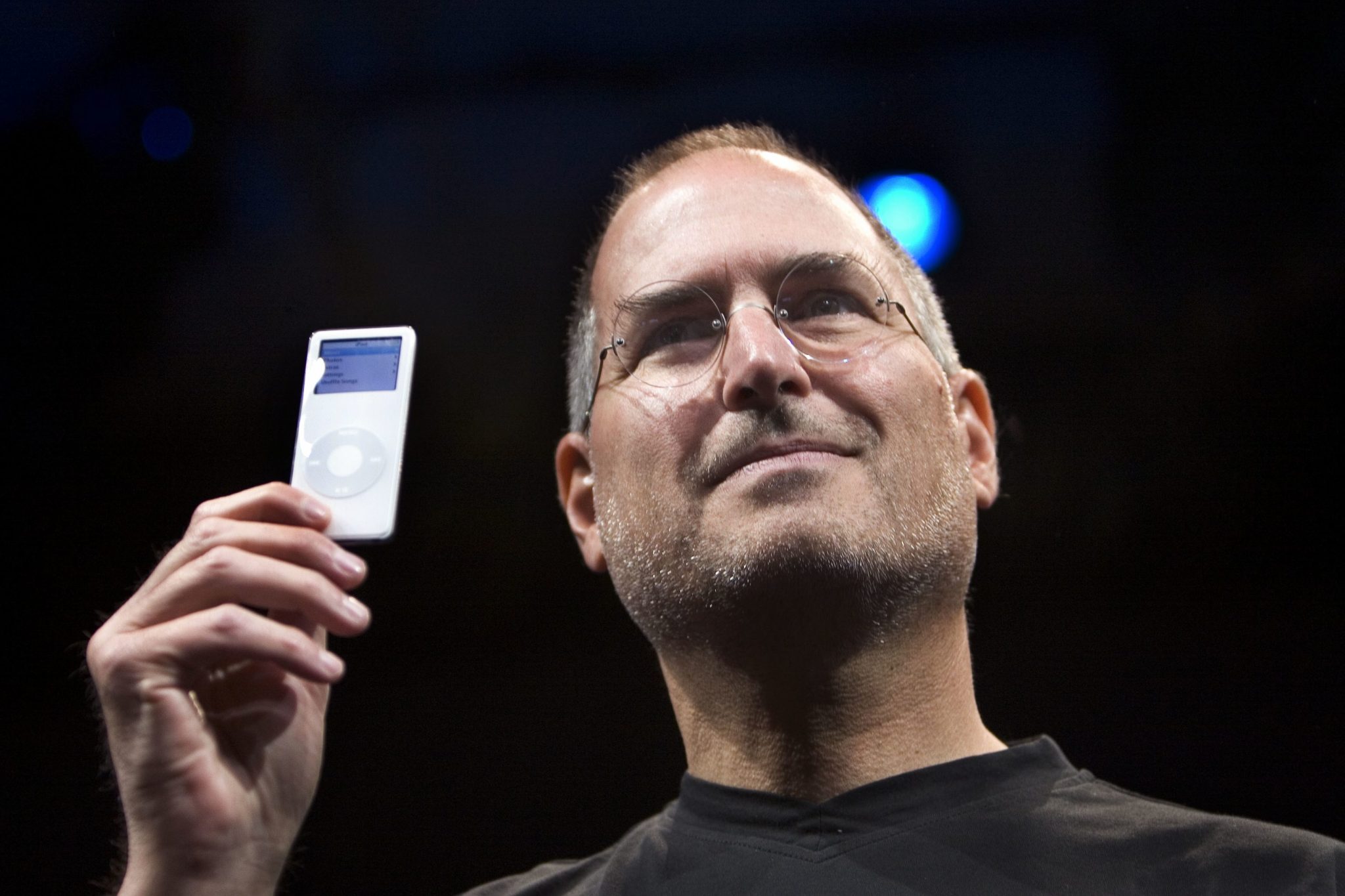
Steve Jobs holds up the first iPod Nano (Credit: Kim Kulish—Corbis/Getty Images)

Apple is currently undergoing the most extensive executive overhaul in recent history, with a wave of senior leadership departures that marks the company’s most significant management realignment since its visionary cofounder and CEO, Steve Jobs, died in 2011. The leadership exodus spans critical divisions from artificial intelligence to design, legal affairs, environmental policy, and operations, which will have major repercussions for Apple’s direction for the foreseeable future.

On Thursday, Apple announced Lisa Jackson, its VP of environment, policy, and social initiatives, as well as Kate Adams, the company’s general counsel, will both retire in 2026. Adams has been Apple’s chief legal officer since 2017, and Jackson joined Apple in 2013. Adams will step down late next year, while Jackson will leave next month.
Jackson and Adams join a growing list of top executives who have either left or announced their exits this year. AI chief John Giannandrea announced his retirement earlier this month, and its design lead, Alan Dye, who took charge of Apple’s all-important user interface design after Jony Ive left the company in 2019, was just poached by Mark Zuckerberg’s Meta this week.​

The scope of the turnover is unprecedented in the Tim Cook era. In July, Jeff Williams, Apple’s COO, who was long considered Cook’s successor as CEO, decided to retire after 27 years with the company. One month later, Apple’s CFO, Luca Maestri, also decided to step back from his role. And the design division, which just lost Dye, also lost Billy Sorrentino, a senior design director, who left for Meta with Dye. Things have been particularly turbulent for Apple’s AI team: Ruoming Pang, who headed its AI foundation models team, left for Meta in July and took about 100 engineers with him. Ke Yang, who led AI-driven web search for Siri, and Jian Zhang, Apple’s AI robotics lead, also both left for Meta.

Succession talks heat up

While all of these departures are a big deal for Apple, the timing may not be a coincidence. Both Bloomberg and the Financial Times have reported on Apple ramping up its succession plan efforts in preparation for Cook, who has led the company since 2011, to retire in 2026. Cook turned 65 in November and has grown Apple’s market cap from about $350 billion to a whopping $4 trillion under his tenure. Bloomberg reports John Ternus has emerged as the leading internal candidate to replace him.​

Apple choosing Ternus would be a pretty major departure from what’s worked for Apple during the past decade, which has been letting someone with an operational background and a strong grasp of the global supply chain lead the company. Ternus, meanwhile, is focused on hardware development, specifically for the iPhone, iPad, Mac, and Apple Watch. But it’s that technical expertise that’s made him an attractive candidate, especially as much of the recent criticism about Apple has revolved around the company entering new product categories (Vision Pro, but also the ill-fated Apple Car), as well as its struggling AI efforts.​

Now, of course, with so many executives leaving Apple, succession plans extend beyond the CEO role. Apple this week announced it’s bringing in Jennifer Newstead, who currently works as Meta’s chief legal officer, to replace Adams as the company’s general counsel starting March 1, 2026. Newstead is expected to handle both legal and government affairs, which is essentially a consolidation of responsibilities among Apple’s leadership team, merging the roles of Adams and Jackson into one.​

Alan Dye, meanwhile, will be replaced by Stephen Lemay, a move that’s reportedly being celebrated within Apple and its design team in particular. John Gruber, who’s reported on Apple for decades and has deep ties within the company, wrote a pretty scathing critique of Dye, and in that same breath said employees are borderline “giddy” about Lemay—who has worked on every major Apple interface design since 1999, including the very first iPhone—taking over.

Meanwhile, on the AI team, Giannandrea will be replaced by Amar Subramanya, who led AI strategy and development efforts at Google for about 16 years before a brief stint at Microsoft.

Hitting the reset button

All of the above departures cover critical functions for Apple: AI competitiveness, design innovation, regulatory navigation, and operational efficiency. Each replacement brings specialized expertise that aligns with the challenges Cook’s successor will inherit.

The real test will be execution across multiple fronts simultaneously. Can Subramanya accelerate Apple’s AI development to match competitive threats? Will Lemay’s design leadership maintain Apple’s interface advantages as AI reshapes user interaction? Can Newstead navigate regulatory challenges while preserving Apple’s privacy-first approach?

What’s certain is the company will look fundamentally different in 2026 as the executive team that grew Apple into a $4 trillion behemoth is departing. The transformation could be as profound as any since Jobs handed the reins to his COO at the time, Tim Cook, 14 years ago.

Sign up to read this article
Read news from 100’s of titles, curated specifically for you.
Already a member? Sign in here
Related Stories
Top stories on inkl right now
One subscription that gives you access to news from hundreds of sites
Already a member? Sign in here
Our Picks
Fourteen days free
Download the app
One app. One membership.
100+ trusted global sources.