
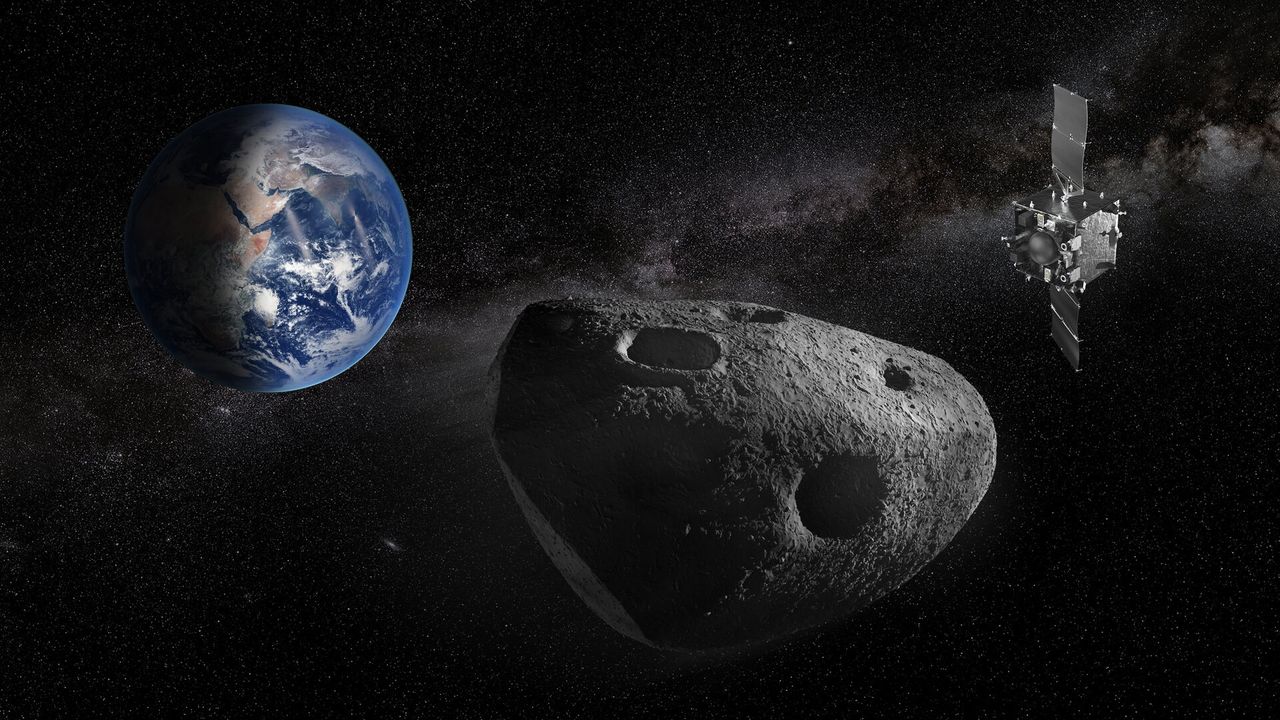
When the potentially hazardous asteroid 99942 Apophis makes its breathtakingly close flyby of Earth on April 13, 2029, more than 2 billion people across Africa and Western Europe will be able to watch it drift across the night sky. Under clear skies, the space rock will appear as a faint star — about as bright as the stars in the Big Dipper and easily visible to the unaided eye — gliding steadily overhead.
Apophis' flyby will mark "the first time in space history that a potentially hazardous asteroid is visible to the naked eye," Richard Binzel, a professor of planetary sciences at MIT, said Monday (Sept. 8) during a keynote address at the Europlanet Science Congress in Helsinki, Finland. Astronomers estimate that a close approach by an asteroid this large — 1,100 feet (340 meters) across, or roughly the height of the Eiffel Tower — occurs only once every 7,500 years.