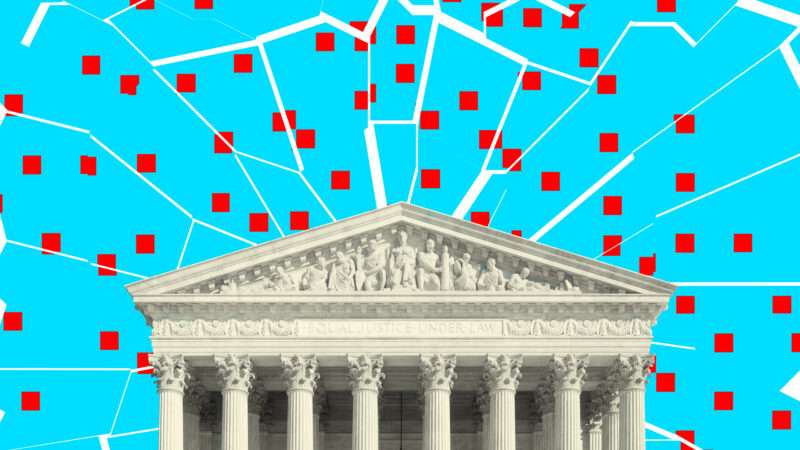
The Supreme Court just heard arguments in Gonzalez v. Google, a case which news outlets across the ideological spectrum agree will determine the future of free speech on the internet. The headlines are not wrong; a decision against Google could devastate the critical speech-enhancing statute that provides websites the protection they need to host user speech. But Gonzalez is only one of a few online speech cases facing the Court this year. The Court may soon grant review of two lawsuits brought by my employer, NetChoice—NetChoice & CCIA v. Moody and NetChoice & CCIA v. Paxton—which concern state-level efforts to control online speech. The cases will determine if 50 separate state governments can each decide what content is available to their residents online. While an anti-speech judgment in any of these three cases will have destructive consequences, the sum of these judgments could be catastrophic for online free speech.
To understand why, we need to begin with some history. From Ravelry and Roblox to Twitter and Truth Social, the diverse fora for expression and commerce on the internet today are the result of two actions the federal government took to protect speech in the mid-1990s.