
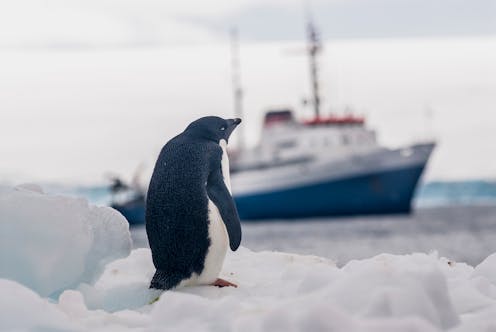
Every summer, as the sea ice surrounding Antarctica retreats, tens of thousands of tourists and scientists flock to the landmass by boat and plane. The remote continent is becoming increasingly accessible – during the 2019-20 season, the number of sightseeing visitors reached 74,000, with the vast majority travelling by ship. Scientific activities on the continent are also significant, with more than 70 research stations collectively housing thousands of researchers.
This activity, which is projected to increase in future, leaves a physical footprint with lasting consequences. In seeking to study or marvel at one of the last (nearly) undisturbed places on earth, humans are having a growing impact that can be measured and quantified.














