
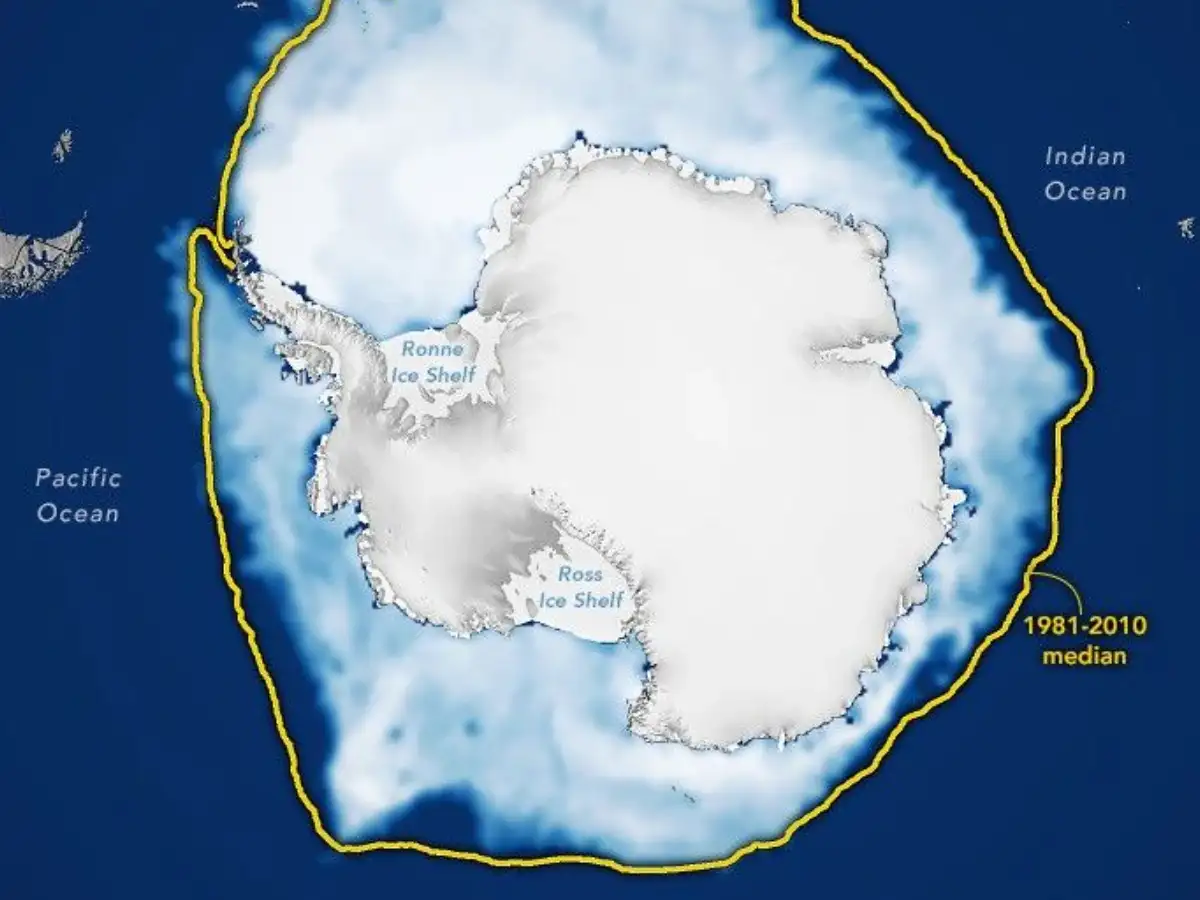
Unlike the Arctic, which is an ocean surrounded by land, Antarctica is a continent surrounded by the ocean. This geography allows sea ice to spread over a larger area during the Southern Hemisphere’s winter. However, as the ice extends into warmer waters, much of it melts during the summer. Antarctic sea ice typically reaches its maximum extent in September, near the end of winter, before shrinking to its annual minimum in February.
According to NASA and the National Snow and Ice Data Center (NSIDC), Antarctic sea ice likely reached its annual maximum on September 14, 2026. Ice covered an estimated 17.59 million square kilometres (6.79 million square miles) on that date, marking the third-lowest maximum extent recorded by satellites.














