Get all your news in one place.
100's of premium titles.
One app.
Start reading
AAP
AAP
Environment
Jennifer Dudley-Nicholson

Antarctic blind spot emerges as major sea-level threat

Australia is being urged to lead a study into a remote and under-studied part of Antarctica. (PR IMAGE PHOTO)

Australian scientists are calling for a multimillion-dollar international effort to investigate ''the last unexplored place in Antarctica'', which contains enough ice to raise global sea levels by up to four metres.

Researchers from 14 countries issued the call on Wednesday, warning that little was known about the vast Wilkes Subglacial Basin in East Antarctica and models could not reliably predict when major ice loss could occur.
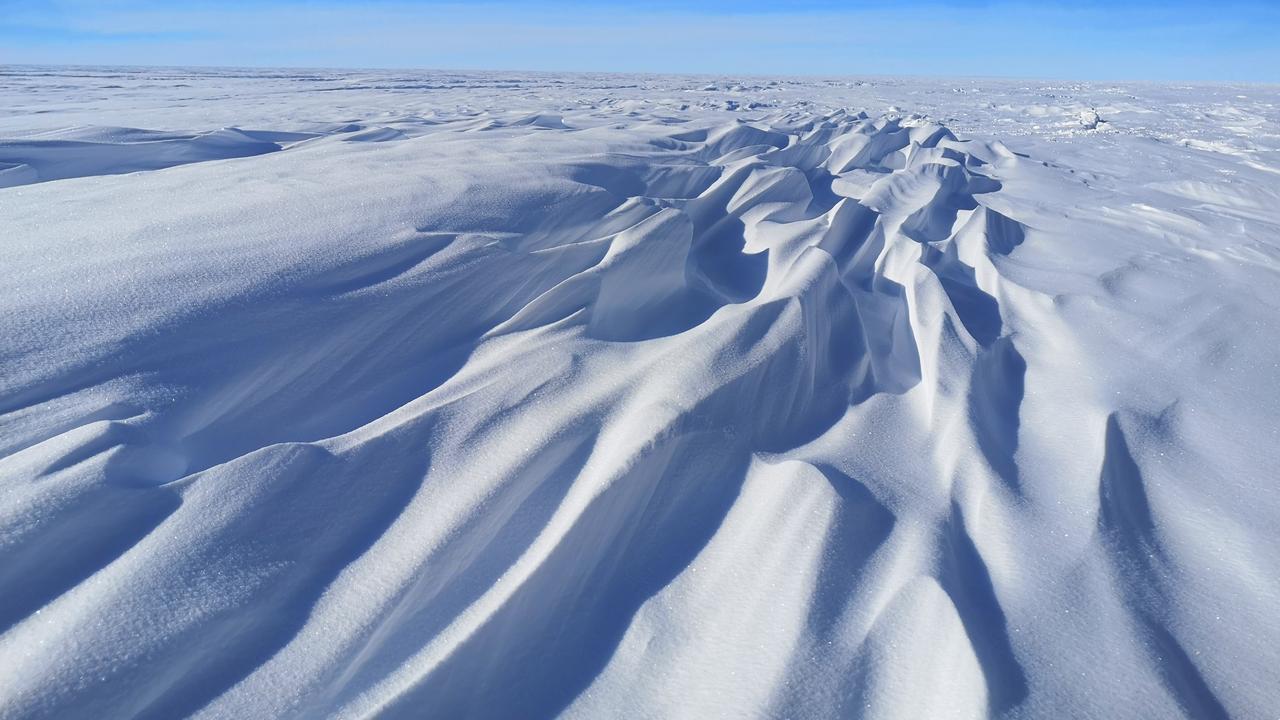
Australia could lead the study due to its proximity to the basin, they said, but no nation should undertake the research alone.

The warning comes weeks after a Climate Council study found more than 267,000 Australian properties would be at risk from rising seas and coastal flooding by 2100, in a trend that could cost $855 billion.

glacier
The Wilkes Subglacial Basin is described as arguably the last unexplored place in Antarctica. (PR IMAGE PHOTO)

The review, led by the Australian Centre for Excellence in Antarctic Science and published in Nature Reviews Earth and Environment, focused on an ice basin roughly 1400 kilometres long and 400km wide.

Its ice rests on bedrock more than 2000 metres below sea level in places, making it vulnerable to warm ocean waters.

Despite the risk, major research gaps meant scientists could not confidently predict its future, lead author and University of Tasmania Professor Matt King said.

''The Wilkes Subglacial Basin is arguably the last unexplored place in Antarctica,'' he said.

''What makes it tricky to get to is the extensive and persistent sea ice that surrounds it — that's the frozen ocean. That means that no ship has ever come within 150 kilometres of the Cook Glacier.''

The review found geological records showed the basin had retreated during warm periods and likely contributed to sea level rises in the past, but studies lacked information about the sea floor and conditions beneath the ice.

Monash University Professor Andrew Mackintosh said that to address the gaps, researchers would need to deploy two icebreakers to the region and conduct a multi-year study by air, land and sea.

Scientists would need to drill through the ice sheet to sample bedrock and sediment, and deploy aircraft and satellites to observe changes, he said.

whaling
An early 20th century whaling station adorns Antarctica's Deception Island. (Caroline Berdon/AAP PHOTOS)

''We can't do it alone,'' Prof Mackintosh said.

''There's so much vulnerability in a single nation taking this on and so much opportunity that comes from multinational collaboration.''

Prof King said Australia could lead the study, given the basin was mostly within its Antarctic territory, but nations such as New Zealand, South Korea, France and the US would be needed to share costs and accelerate findings.

''By the time you operate icebreakers and you get people into the field, you'll be talking in the many tens of millions of dollars but distributed across multiple nations I think that's affordable given the risks that are out there,'' he said.

Sign up to read this article
Read news from 100's of titles, curated specifically for you.
Already a member? Sign in here
Related Stories
Top stories on inkl right now
One subscription that gives you access to news from hundreds of sites
Already a member? Sign in here
Our Picks
Fourteen days free
Download the app
One app. One membership.
100+ trusted global sources.