
Get all your news in one place.
100’s of premium titles.
One app.
Start reading
Android Central
Android Central
Technology
Brady Snyder

Anna's Archive backed up 99% of Spotify listens in the name of 'preservation' — but is it really just piracy?

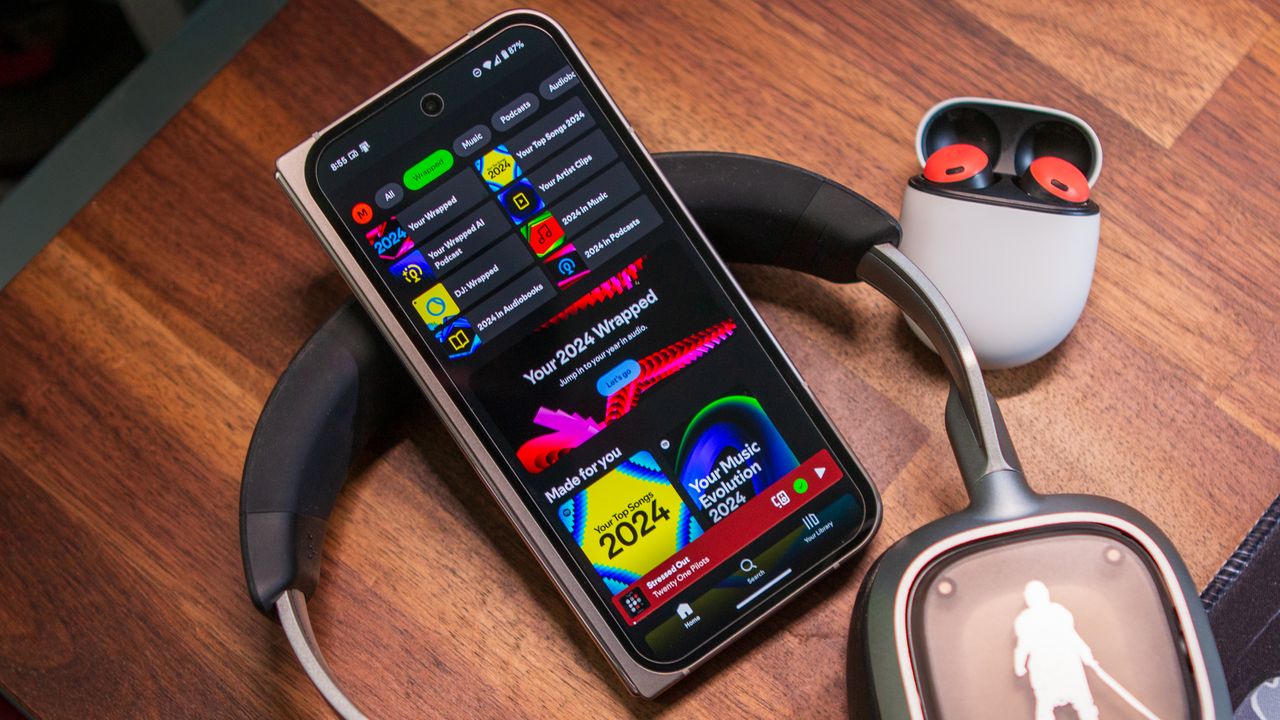
Andrew's Spotify Wrapped 2024 on the Pixel 9 Pro Fold.

Libraries are still an excellent resource for physical media, whether it be books, audio CDs, DVDs, or other content types. One thing libraries still haven't figured out how to consistently make available to communities at large is digital content. There are plenty of digital libraries available online, but concerns about piracy and proper compensation for media rights holders make the experience complicated. It's a problem Anna's Archive, self-described as "the largest truly open library in human history," is trying to solve.

In an absolutely stunning twist, Anna's Archive announced it backed up almost all of the music available on Spotify. The Dec. 20 blog post reveals Anna's Archive "discovered a way to scrape Spotify at scale," and the team "saw a role for us here to build a music archive primarily aimed at preservation." The data backup contains 86 million music files, which Anna's Archive says represents 99.6% of Spotify listens.

Anna's Archive began in 2022 as a torrent aggregator and search engine for primarily text-based files stored across LibGen, Sci-Hub, Z-Lib, and other torrents. It emerged in response to U.S. government efforts to shut down Z-Library. The group, made up on anonymous contributors, now wants to create something similar for music.

Understandably, Spotify isn't happy with the reports of Anna's Archive scraping its music files, with the company calling out the use of "illicit tactics" to bypass DRM and copyright protections. A ton of questions remain, like whether Spotify or regulators will attempt to take legal actions against Anna's Archive, or if a "free" database of Spotify songs will be made available for the average listener.

The massive music backup, unlike anything we've ever seen before, is going to force companies, regulators, and users to answer the following question: what separates preservation from piracy?

What Anna's Archive managed to back up

(Image credit: Apoorva Bhardwaj / Android Central)

Anna's Archive said it chose to back up Spotify tracks based on the company's own popularity metric. There are a ton of songs on Spotify that get virtually zero listens. For perspective, the archive estimates the top three songs on Spotify were streamed more than the bottom 20 to 100 million songs combined. In all, the backup includes metadata from 256 million tracks and audio files for 86 million songs.

Spotify defines its popularity metric as "a value between 0 and 100, with 100 being the most popular." It's calculated by an algorithm that's "based, in the most part, on the total number of plays the track has had and how recent those plays are."

Using this categorization, Anna's Archive backed up the 86 million most-popular songs, which accounts for 37% of Spotify's entire catalog. However, it also makes up 99.6% of listens. In other words, while the archive backed up less than half of Spotify songs, it covers almost all of the tracks people actually listen to.

(Image credit: Anna's Archive)

While Anna's Archive backed up Spotify metadata for 99.9% of tracks, making it the largest music metadata archive in the world, it stopped at only 37% of Spotify music files due to storage constraints. The 86 million archived songs represent 300TB of storage, and the rest would've required 700TB of additional storage "for minor benefit," according to the blog post.

The music files are formatted in OGG Vorbis at 160kbps for songs with a popularity metric greater than zero. Songs with a popularity of zero were re-encoded in OGG Vorbis at 75kbps. Anna's Archive added metadata to the audio files, including "including title, url, ISRC, UPC, album art, and replaygain information." Audio files typically contain no metadata of their own, so this is significant.

Spotify says this is just scraping using 'illicit tactics'

(Image credit: Apoorva Bhardwaj / Android Central)

We have to point out that Anna's Archive backup is illegal for a variety of reasons. The scraping of Spotify's databases violate the company's terms of service, and the removal of digital rights management (DRM) features and sharing of copyrighted material both violate copyright law. By definition, the Anna's Archive music backup is piracy.

Spotify seems to agree, as it made statements to both Android Authority and Ars Technica commenting on the Anna's Archive release.

"An investigation into unauthorized access identified that a third party scraped public metadata and used illicit tactics to circumvent DRM to access some of the platform’s audio files," Spotify told Android Authority. "We are actively investigating the incident."

Notably, Spotify doesn't confirm the scope of the Anna's Archive backup, only saying that "some" of the site's audio files were accessed. In a separate statement, Spotify said it is taking action to prevent something like this from happening again.

"We've implemented new safeguards for these types of anti-copyright attacks and are actively monitoring for suspicious behavior," a Spotify spokesperson told Ars Technica. "Since day one, we have stood with the artist community against piracy, and we are actively working with our industry partners to protect creators and defend their rights."

(Image credit: Android Central)

While Anna's Archive cites altruistic motivations as their reasons for trying to "preserve" Spotify's music catalog, there are major concerns for artists, record labels, and streaming services. The backup could create ways for listeners to stream music without paying for it, hurting the music industry. As it is currently released, it would be difficult for the average listener to find or stream individual songs within the 300TB backup, but that could change.

"For now this is a torrents-only archive aimed at preservation, but if there is enough interest, we could add downloading of individual files to Anna’s Archive," the archive's blog post notes. "Please let us know if you’d like this."

It's currently unclear what, if any, legal action could be taken against Anna's Archive as a result of this move. Theoretically, the archive's decentralized network structure prevents it from being shuttered completely. However, when it comes to music, there's a lot of money on the line — giving rights holders and regulators incentive to protect copyrighted material.

In September 2025, the Internet Archive settled a lawsuit claiming it served as an "illegal record store" for 4,000 songs (via Reuters). As a reminder, Anna's Archive just backed up 86 million.

Is this preservation or piracy?

(Image credit: Android Central)

As a music enjoyer and someone who closely follows the industry, I see both sides here. There is a valid argument to be made for the need to preserve digital media.

On a high level, songs can quickly become "lost media" without preservation — lost media is usually defined as "any type of media thought to no longer exist in any format, or for which no copies can be located, partial or otherwise." The idea of music becoming lost media is terrifying, and if archival can prevent that from happening, a preservation angle starts to make sense.

Just this month, Taylor Swift replaced the original versions of two songs with new recordings with altered lyrics. Without physical media or digital archives, those original recordings could disappear forever.

Another reason I buy the altruistic goal of the Anna's Archive backup is the quality of the songs scraped. At 160kbps, the highest-quality songs are very low-quality, making them less appealing to listeners. These music files are lower-quality than 256kbps AAC and far worse than any lossless format. The archive could've backed up fewer songs at higher quality, but it didn't, which tells me this really was about preservation.

Here's the problem: from a legal perspective, it doesn't matter. This is piracy according to U.S. copyright law. I can't tell you whether Anna's Archive is correct on a moral or ethical basis, but I can tell you its actions are illegal. And if the songs stripped from Spotify are made easily available for consumers as an alternative to paying for music, it could do irreparable harm to the music industry.

Android Central does not condone the sharing or distribution of copyrighted material. You are responsible for following the local copyright laws in your country or region.

Sign up to read this article
Read news from 100’s of titles, curated specifically for you.
Already a member? Sign in here
Related Stories
Top stories on inkl right now
One subscription that gives you access to news from hundreds of sites
Already a member? Sign in here
Our Picks
Fourteen days free
Download the app
One app. One membership.
100+ trusted global sources.