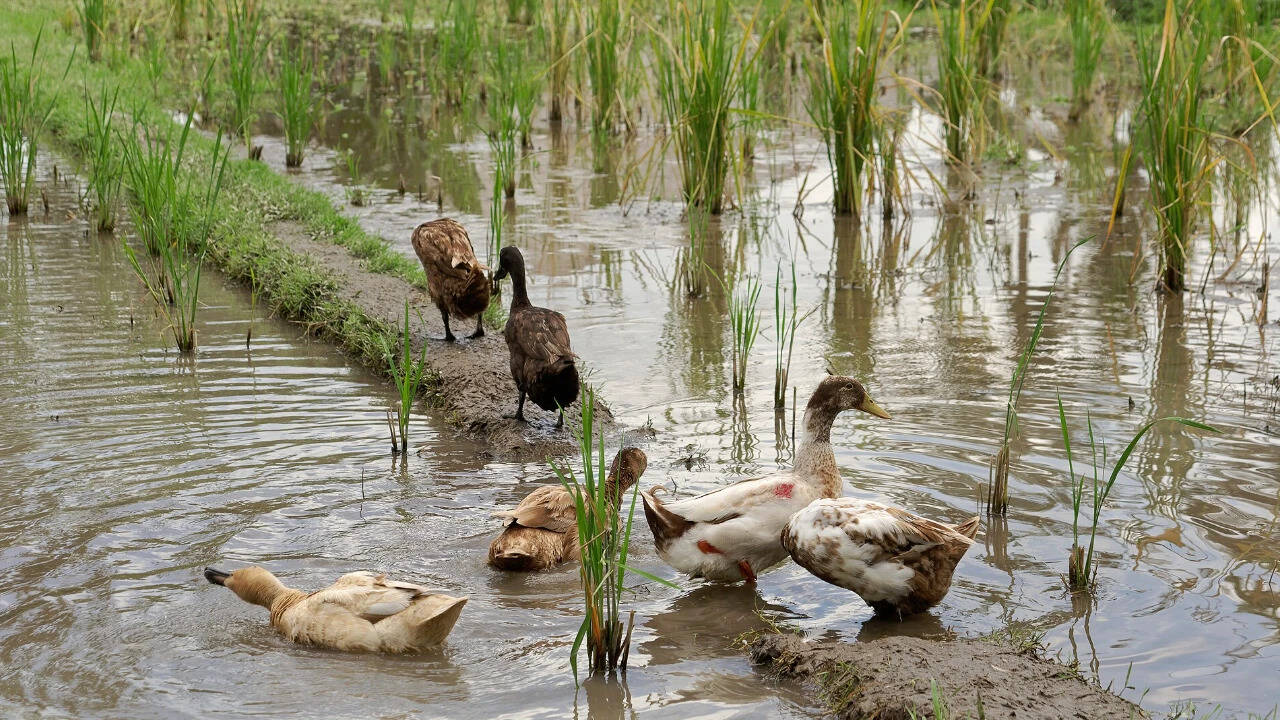
In rice-growing regions of southern China, a flooded paddy is often more than a place to grow a single crop. In many rice-duck systems, ducklings are put into the paddy during the early growth stage of the rice and, as a 1999 trial reported in Livestock Research for Rural Development describes, forage between the rows for insects, weeds, and snails. These are called rice-duck and rice-fish co-cultivation systems. The principle behind these systems is straightforward: animals can perform some of the functions traditionally served by herbicides, pesticides, and fertilizers in conventional farming. In many rice-duck systems, the ducks are removed before harvest, so the crop remains intact and farmers get both rice and ducks from one plot of land. Researchers have tested how well the idea works, and the results are less clear-cut than they first appear, especially for pest control by ducks.
Get breaking news anytime, anywhere. Download the TOI app now!