
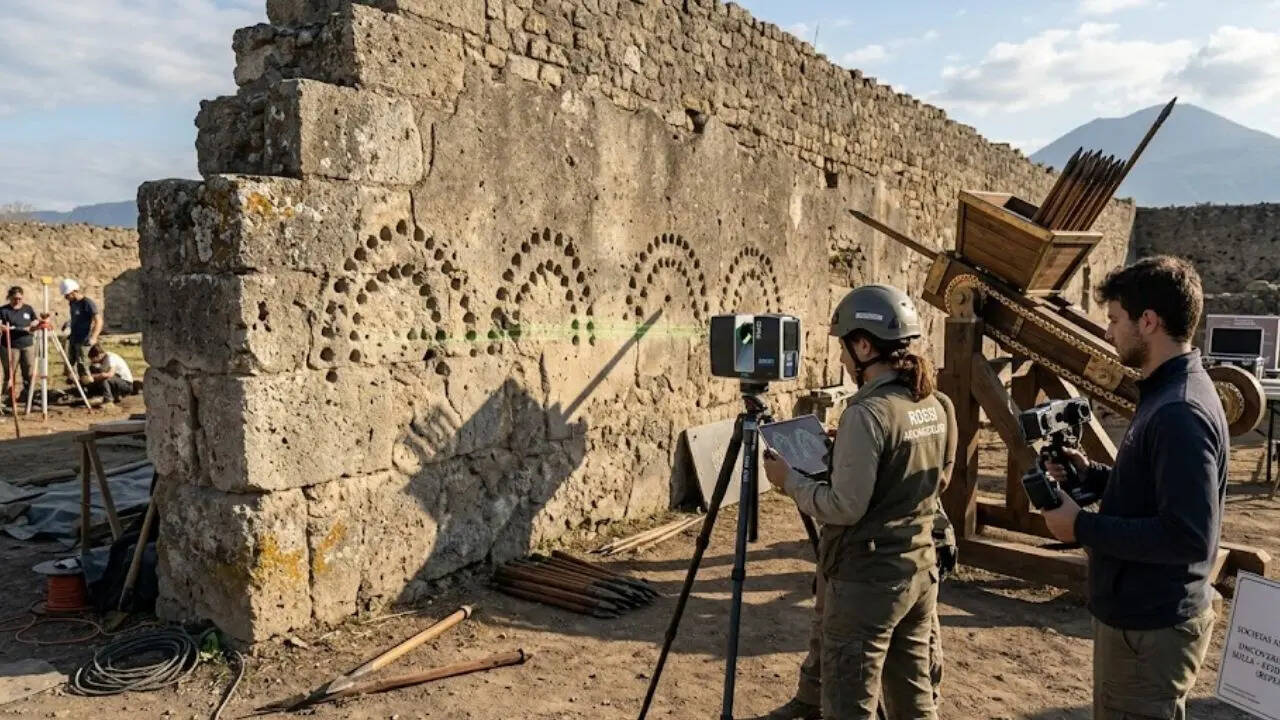
Pompeii's archaeological excavations have primarily centred on the severe eruption of Mount Vesuvius during AD 79; however, new investigations have shifted the spotlight to a violent chapter nearly 170 years earlier. Using advanced laser scanning and 3D digital imaging, Adriana Rossi, the lead researcher and team, discovered various unique and identifiable ballistic signatures on the town's northern fortification walls.
According to research published in MDPI, the presence of these specific patterns suggests the use of the polybolos (a multiple-shot or repeating catapult), which has been described as the equivalent of an ancient machine gun, in the siege of Pompeii. The polybolos exemplified a revolution in chain-driven projectile launching from Hellenistic engineering and dramatically advanced siege warfare in the Roman world. This technological revelation fundamentally reshapes our understanding of pre-imperial Roman siege tactics and the sophisticated lethality of ancient battlefield engineering.















