
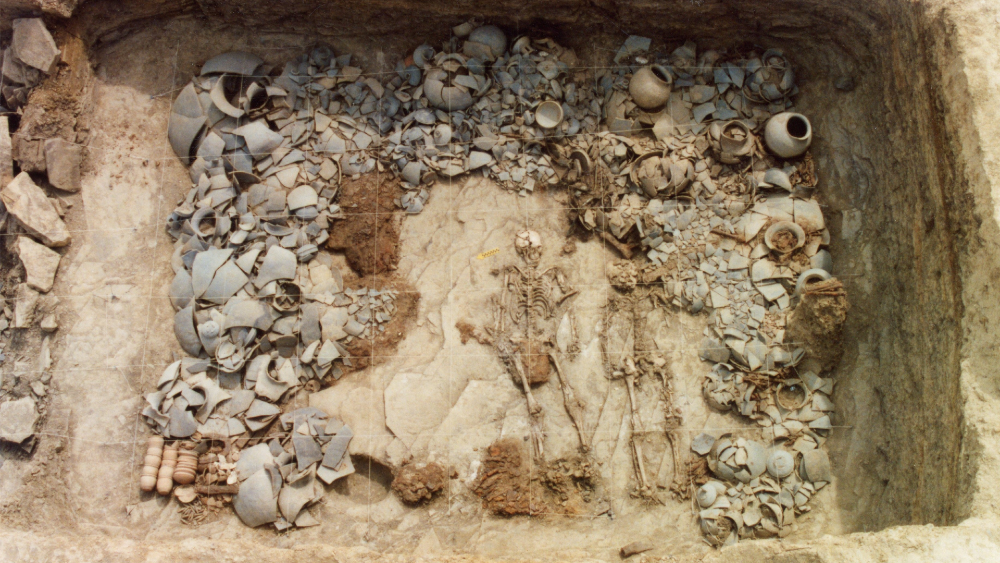
About 1,500 years ago, entire families were sacrificed to honor local royalty in what is now South Korea, a new genetic study finds. The analysis also reveals a dense kinship system focused on women and their descendants.
In a study published Wednesday (April 8) in the journal Science Advances, an international team of researchers investigated 78 skeletons from the Imdang-Joyeong burial complex in Gyeongsan, located in the southeast region of the Korean Peninsula. The tombs in this cemetery were constructed between the fourth and sixth centuries, during the Three Kingdoms period (circa 57 B.C. to A.D. 668). Historical records suggest that, in the Silla kingdom, people practiced "sunjang," a form of human sacrifice in which servants, or "retainers," were killed and buried with the local elite, and that the society favored "consanguineous" marriage between related individuals.













