
Get all your news in one place.
100's of premium titles.
One app.
Start reading
LiveScience
LiveScience
Sascha Pare

Ancient burrowing bees made their nests in the tooth cavities and vertebrae of dead rodents, scientists discover

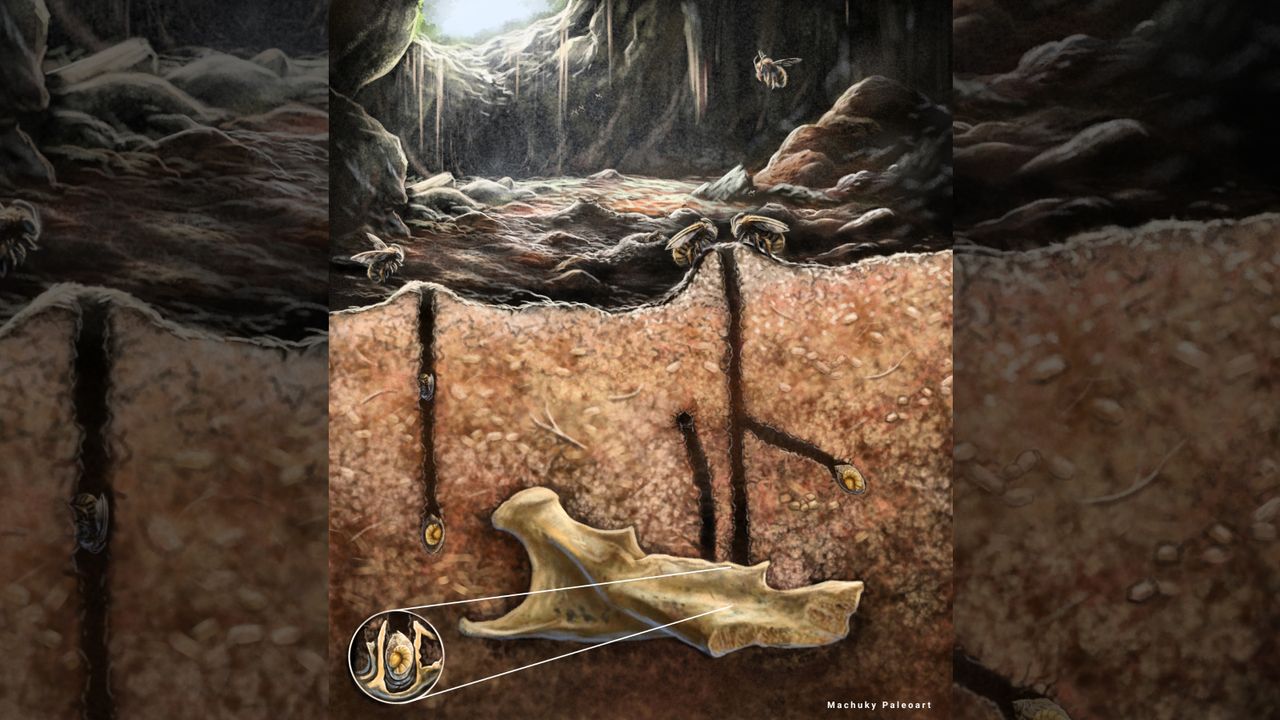
Illustration of bee nests inside fossilized bones buried underground in a cave.

More than 5,000 years ago, burrowing bees made their homes inside heaps of rodent bones buried in a cave on Hispaniola, the Caribbean island that comprises the Dominican Republic and Haiti, a new fossil study suggests.

The bees encountered the bones while digging to their preferred depth in the soil. They stopped to build nests inside tooth and vertebra cavities, which turned out to be the perfect size, researchers found. Most of the bones the scientists recovered were from hutias — chunky rodents that look like a cross between squirrels and beavers — but a handful were the remains of an extinct type of sloth.

Sign up to read this article
Read news from 100's of titles, curated specifically for you.
Already a member? Sign in here
Related Stories
Top stories on inkl right now
One subscription that gives you access to news from hundreds of sites
Already a member? Sign in here
Our Picks
Fourteen days free
Download the app
One app. One membership.
100+ trusted global sources.