
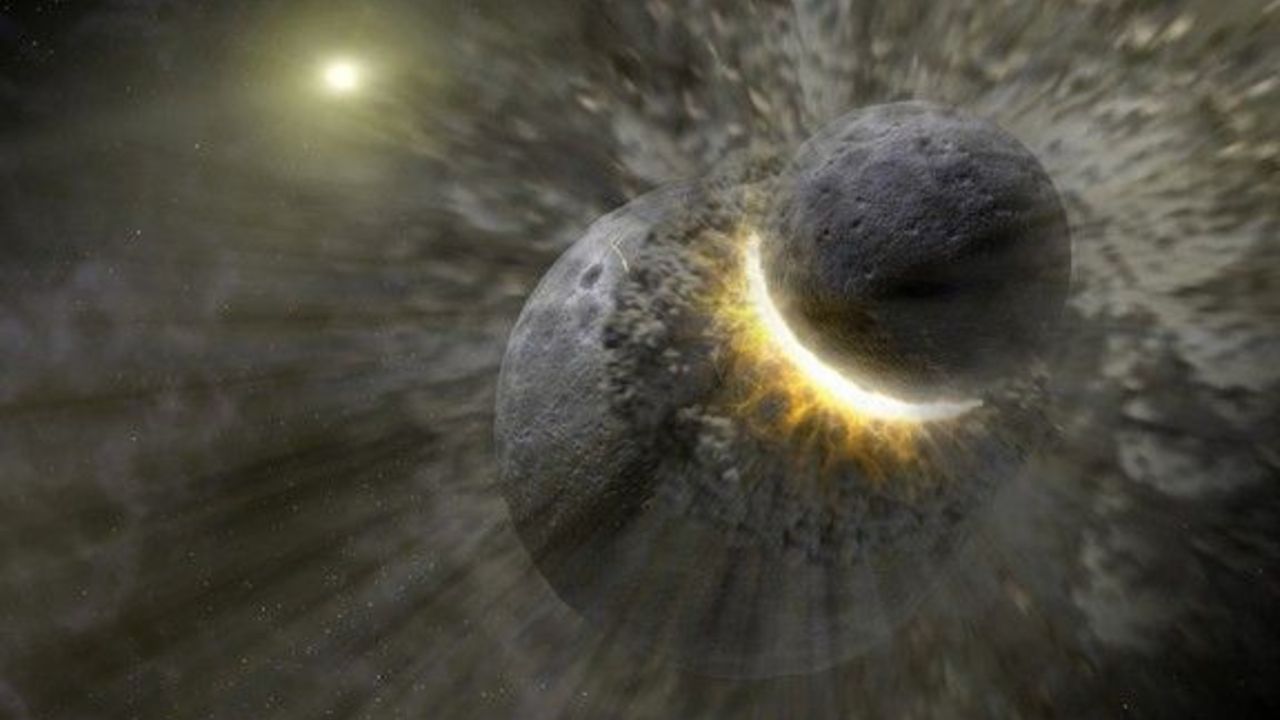
Some of Earth's oldest rocks buried deep in Western Australia may hold new clues about the dramatic event that gave rise to our moon.
In a new study led by the University of Western Australia (UWA), researchers analyzed 3.7-billion-year-old feldspar crystals found within magmatic anorthosite rocks from the Murchison region — among the oldest surviving pieces of Earth's crust — to uncover chemical fingerprints from our planet's earliest days. These anorthosites are particularly intriguing because while they're very common on the moon, they are rarely found on Earth, hinting at a deep connection between the two worlds, according to a statement from UWA.














