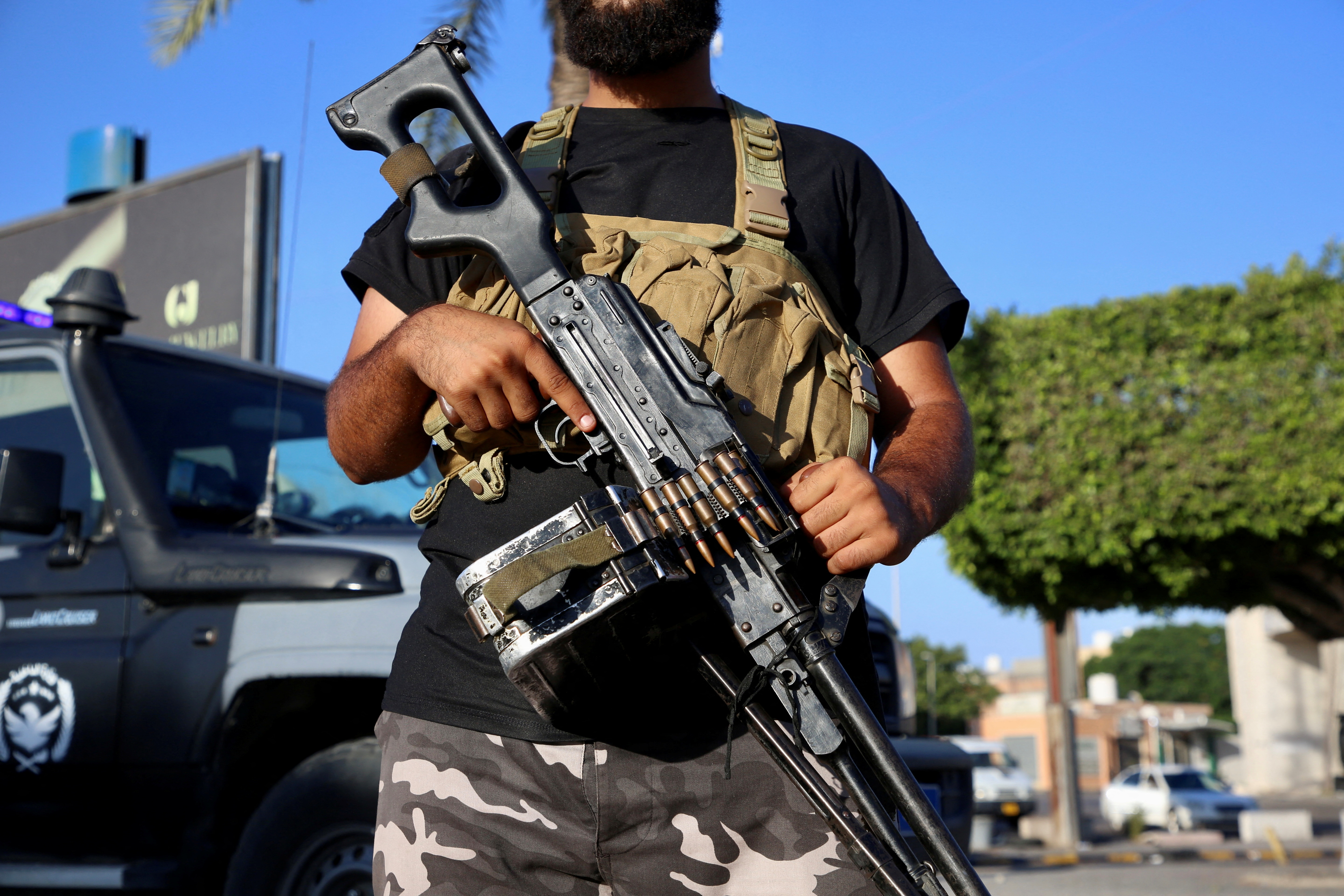
Last month’s meeting between the Libyan and Israeli foreign ministers may ultimately achieve little but provide public justification for renewed fighting between Tripoli’s armed groups and the weakening, perhaps critically, of Libya’s interim prime minister, Abdul Hamid Dbeibah, analysts have said.
Since emerging from the ashes of the country’s 2011 revolution, Libya’s many militias have maintained a series of uneasy alliances with the country’s shifting leadership, who rely upon the armed groups to project power across the 1.8 million square kilometres ( nearly 700,000 square miles) of oil-rich territory.