Get all your news in one place.
100's of premium titles.
One app.
Start reading
Medical Daily
Medical Daily
Health
Dorothy Brooks

An Eye Drug Used Off-Label for Two Decades Now Has Formal Approval for Wet Macular Degeneration

The most widely used drug in American retina clinics has been injected into eyes for about twenty years without an FDA-approved formulation for that purpose. That changed on July 24, when the Food and Drug Administration approved Lytenava, an ophthalmic version of bevacizumab, for neovascular age-related macular degeneration.

The distinction sounds technical. It is not. Bevacizumab was approved for cancer and supplied as a large vial for intravenous infusion. To use it in the eye, compounding pharmacies have been dividing those vials into small syringes. That process has no FDA-reviewed standard for sterility, potency, or labeling written specifically for injection into the eye, and sterile compounding carries real risk when it is done poorly.
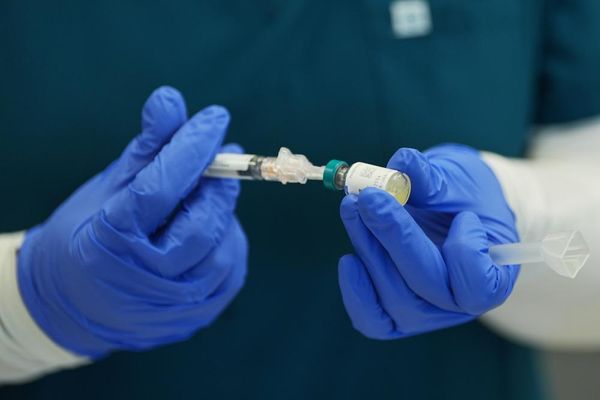
For the roughly one million Americans living with the wet form of macular degeneration, the practical question is whether an approved product changes what they receive at their next appointment. In the near term, probably not. The company says it expects Lytenava to reach eligible U.S. patients before the end of the year, and whether retina practices switch will depend heavily on what Medicare pays.


What Was Actually Missing Before This Approval

Wet AMD occurs when abnormal blood vessels grow beneath the retina and leak fluid or blood, damaging central vision. Anti-VEGF drugs, injected into the eye at intervals of a few weeks to a few months, block the growth signal driving those vessels. Bevacizumab, aflibercept and ranibizumab all work through that pathway.

Bevacizumab became the workhorse because of price. Off-label repackaged bevacizumab has historically cost roughly $60 to $70 per dose, while aflibercept and ranibizumab were available at average sales prices near $1,877 and $1,717 per dose in 2019, according to a peer-reviewed analysis of anti-VEGF pricing. Patients often need many injections per year.

What the compounding route could not provide was regulatory oversight of the finished product. Outlook Therapeutics says the approval establishes Lytenava as the first and only FDA-approved ophthalmic formulation of bevacizumab in the United States. Chief executive Bob Jahr described the product as "the first FDA-approved ophthalmic bevacizumab developed specifically for the eye." That framing comes from the manufacturer and reflects a commercial position, though the underlying regulatory fact is accurate.

What the Trial Evidence Shows, and What It Does Not

The approval rests principally on NORSE TWO, a Phase 3 trial that enrolled 228 patients with wet AMD across 39 U.S. sites. In the intent-to-treat analysis, 41.7 percent of patients treated with bevacizumab-vikg gained at least 15 letters of best corrected visual acuity at 11 months, compared with 23.1 percent of patients treated with ranibizumab.

That gap deserves careful reading, and the limitation belongs here rather than at the end. NORSE TWO was designed as a superiority trial in which bevacizumab-vikg was dosed monthly while the ranibizumab comparator followed a loading-then-quarterly schedule. Reviewers writing in touchOPHTHALMOLOGY noted that quarterly ranibizumab is known to perform worse than monthly ranibizumab, and argued the comparison was therefore not like for like. The result should not be read as evidence that this product outperforms other anti-VEGF drugs given on standard schedules.

A later trial, NORSE EIGHT, missed its primary endpoint at week 8 but showed noninferiority to ranibizumab at week 12, according to AJMC. Safety across the registration program was reassuring on the measure clinicians watch most closely, with a single reported ocular inflammation event.

The regulatory path was unusually contested. The FDA issued three complete response letters before Outlook pursued formal dispute resolution. The agency's Office of New Drugs granted the appeal in May, concluding that substantial evidence of effectiveness had been established, and the resubmitted application was accepted in June.


Why Cost Is the Real Question for Patients

Outlook expects 12 years of reference product exclusivity under the Biologics Price Competition and Innovation Act. The company has not announced a U.S. price.

That single unknown will determine almost everything patients experience. If Lytenava is priced near compounded bevacizumab, adoption could be broad, and the quality gain would come essentially for free. If it is priced toward the branded anti-VEGF range, high-volume retina practices treating Medicare patients will face a genuine trade-off between a regulated product and a far cheaper familiar one, and coverage designations under Medicare Part B will decide the outcome.

Patients on Medicare Part B typically owe 20 percent coinsurance for drugs administered in a physician's office unless they carry supplemental coverage or Medicaid. A meaningful price difference between products therefore lands partly on households, not only on practices and payers.


What Patients Currently Receiving Eye Injections Should Know

Nothing about this approval requires anyone to change treatment. People doing well on their current anti-VEGF regimen, whether that is compounded bevacizumab, aflibercept, ranibizumab or faricimab, have no reason to alter it based on a news report, and no one should stop or delay scheduled injections. Missed injections in wet AMD are associated with vision loss that is often not recoverable.

Reasonable questions for a next appointment include which product is currently being used, whether the practice plans to stock the approved formulation, and what the out-of-pocket cost would be under the patient's coverage. Patients facing cost barriers can ask the practice about manufacturer patient assistance programs, which Outlook says it is building as part of the launch.

Symptoms that warrant prompt contact with a retina specialist rather than waiting for a scheduled visit include a sudden increase in blurred or distorted central vision, straight lines that begin to appear wavy, a new dark or empty spot in the center of vision, or pain, redness or sharply worsening vision after an injection.


What Happens Next

Outlook has said it is initiating a commercial launch and expects availability before year-end. The prescribing information will define the approved dosing regimen, and payer coverage decisions are the next milestone worth watching. The product already holds marketing authorization in the European Union and the United Kingdom, where it launched in 2025, so ex-U.S. real-world data will accumulate in parallel.

The confirmed fact is that an ophthalmic formulation of bevacizumab now has FDA approval for wet AMD after two decades of off-label use. The people most affected are older adults receiving repeated eye injections and the practices that buy those drugs. The most reasonable action is to keep scheduled appointments and raise product and cost questions with the treating ophthalmologist. The central uncertainty is price, which has not been announced and which will determine whether this approval changes practice or remains a regulatory footnote.


Frequently Asked Questions

What happened? The FDA approved Lytenava, an ophthalmic formulation of bevacizumab, for neovascular age-related macular degeneration. It is the first bevacizumab product approved in the United States specifically for injection into the eye.

Why was bevacizumab used in eyes without approval? Bevacizumab was approved for cancer as an intravenous drug. Retina specialists have used it off-label for wet AMD because it is far cheaper than approved alternatives, with compounding pharmacies repackaging vials into injection-sized doses.

Does this mean compounded bevacizumab was unsafe? No. It has been used successfully for years and compared favorably to branded drugs in trials such as CATT. The gap was regulatory: no FDA-reviewed standard for sterility, potency and labeling written for intraocular use.

Is the new product better than other anti-VEGF drugs? The trial data do not establish that. The pivotal trial compared monthly dosing of this product against a less frequent ranibizumab schedule, a design reviewers have criticized as not directly comparable.

How much will it cost? The company has not announced a U.S. price. Coverage under Medicare Part B will be the main factor determining what patients pay and whether practices adopt it.

Should patients change their treatment? No one should stop, delay or switch injections based on this news. Missed injections in wet AMD can cause vision loss that does not recover. Discuss options with a retina specialist.

When will it be available? The company expects availability to eligible U.S. patients before the end of 2026.

Sign up to read this article
Read news from 100's of titles, curated specifically for you.
Already a member? Sign in here
Related Stories
Top stories on inkl right now
One subscription that gives you access to news from hundreds of sites
Already a member? Sign in here
Our Picks
Fourteen days free
Download the app
One app. One membership.
100+ trusted global sources.