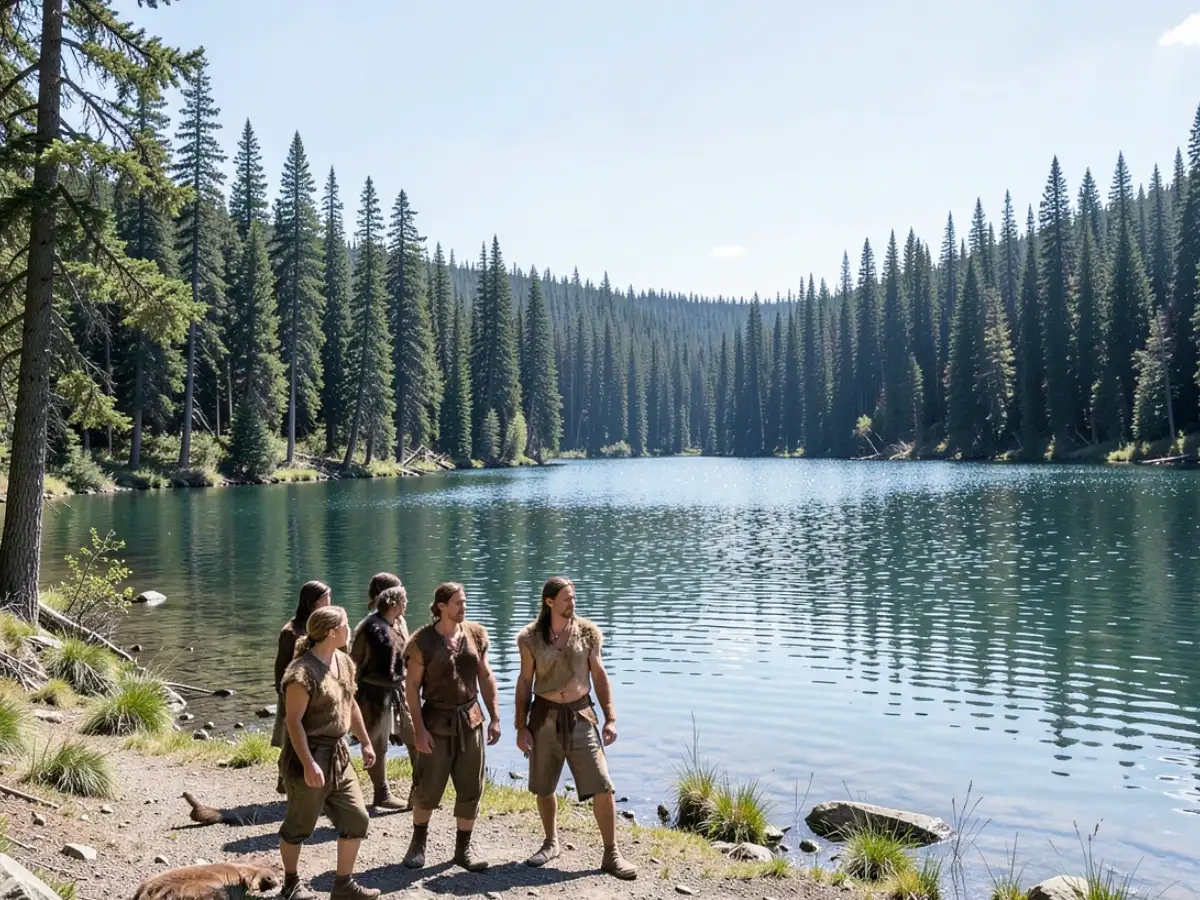
Over 20,000 years ago, when much of the Northern Hemisphere was suffering the effects of the last ice age, people were thriving in an environment that bore little resemblance to the modern American Southwest. In what is today known as White Sands National Park, in the state of New Mexico, a huge lake occupied the region, the surrounding mountains had conifer forests growing in them, and it was a few degrees cooler than today. Scientists have discovered new information about the environment in which these early Americans lived through the study of the famous human footprints at the park.
This information indicates that there were quite significant changes in the landscape in about 2,000 years, including warmer weather, changing vegetation and the drying up of the lake.