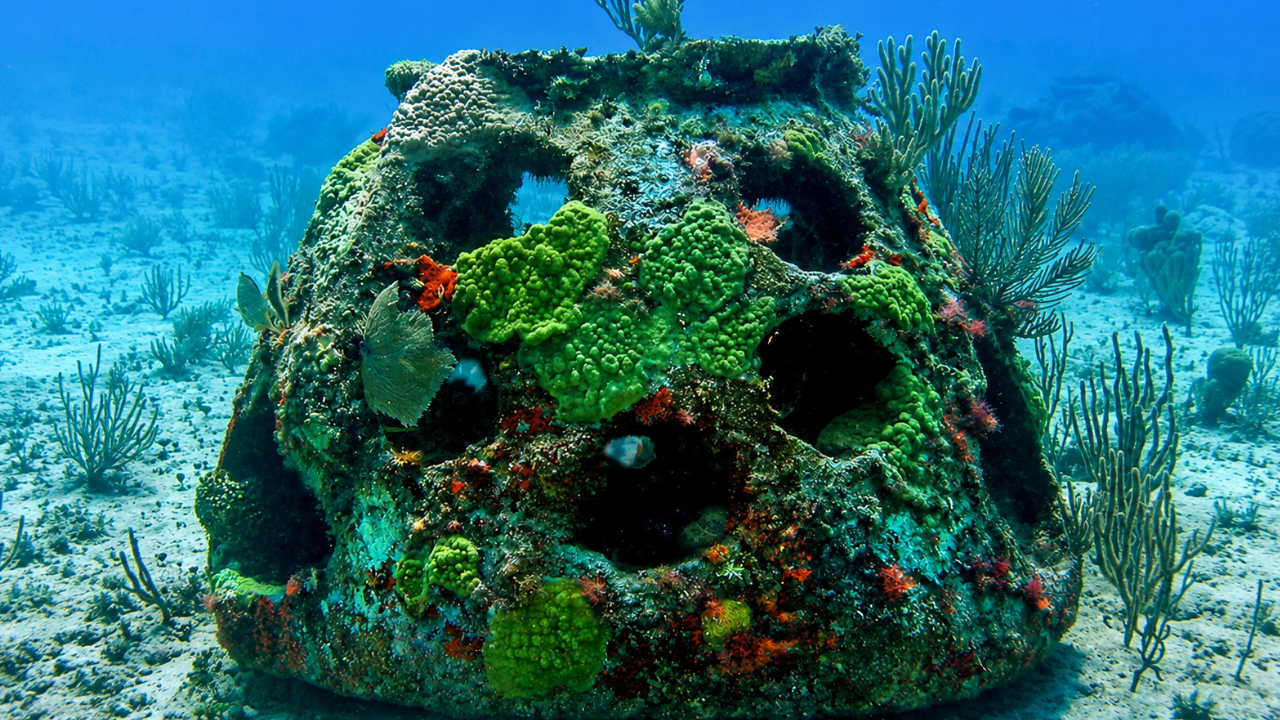
Somewhere off the coast of Florida, a diver kicks past a coral-covered dome the size of a small car, and inside it, probably someone's grandmother. This isn't a shipwreck or a sculpture. It's a grave. According to Eternal Reefs , a non-profit organisation based in Florida, the ashes of human beings are currently being mixed with pH-neutral concrete to create dome-shaped “reef balls” that sink to the bottom of the ocean floor and gradually become artificial coral reefs. These reef balls can weigh between 550 and 4,000 pounds, and about 3,000 have already been deployed at 25 locations along the U.S. coast.
Get breaking news anytime, anywhere. Download the TOI app now!

What actually happens to the ashes
According to Eternal Reefs, the process begins with cremation. The ashes are blended into a marine-grade concrete formula that’s safe for sea life, and poured into a dome-shaped mould with holes for water and fish to pass through. Families are welcome to add their handprints or short messages to the concrete before it sets. Once hardened, the organisation attaches the ball to a bronze plaque, lowers it by crane onto a barge and places it at a GPS-marked location on the seafloor. The family is then given the exact coordinates so they can return and dive down to visit.
Why more people are choosing the sea over soil
This fascination reflects a broader shift in how Americans think about death. A 2017 study published in the International Journal of Life Cycle Assessment , led by Dutch researcher Elisabeth Keijzer, compared the overall environmental impact of burial and cremation across their full life cycle, everything from coffins and cemetery land to crematorium energy use. The study reports that burial's total environmental cost runs about 30% higher than cremation's, largely because of land use, though the gap narrows sharply once land use is set aside. Cremation, in other words, isn't consequence-free; it simply shifts the environmental cost elsewhere rather than removing it. A reef ball doesn't undo that cost, but it gives the remains somewhere lasting and useful to go.
How a lump of concrete becomes a coral reef
A 2022 study, ‘ A systematic review of artificial reefs as platforms for coral reef research and conservation ,’ published in PLOS ONE, analysed several decades of research testing whether artificial reefs were successfully meeting their conservation goals. More than half of the successful projects had a reported increase in fish abundance near the reef, and a third had an increase in usable habitat.
It also cautioned that results would vary widely depending on the design and location of the reef, so results were not guaranteed everywhere.
The reef balls are designed with this variability in mind; the surface of the reef ball is covered with pitting and ledges to create an artificial reef texture where algae, coral larvae, crabs and small fishes can attach within days of deployment. According to Eternal Reefs, first indicators of marine growth show up within a few weeks.
A grave you can visit with a dive tank
Eternal Reefs prices its memorials in three fixed tiers based on size. The smallest, at 550 to 700 pounds, costs $5,250. The largest, weighing up to 4,000 pounds, costs $9,250. Each price covers the concrete casting, the placement at sea, and a GPS survey marking the exact location, though families cover the cost of their own boat trip out to witness the placement separately. The organisation says the appeal is strongest for people who lived near water or want to be part of something living rather than memorialised on a headstone. Divers and snorkelers can come back to the location in later years and, in many cases, see the growth of corals and sponges covering the place where the name of their loved one is engraved in bronze.
Is this where American funerals are heading?
Reef ball burials remain a niche choice, not a mainstream one. It exists alongside other alternative funeral options, such as aquamation and human composting, which have recently become popular among people seeking environmentally friendly ways of saying goodbye. Whether reef balls become common or remain a coastal niche, they reflect a broader desire for memorials that leave behind something living rather than a headstone.