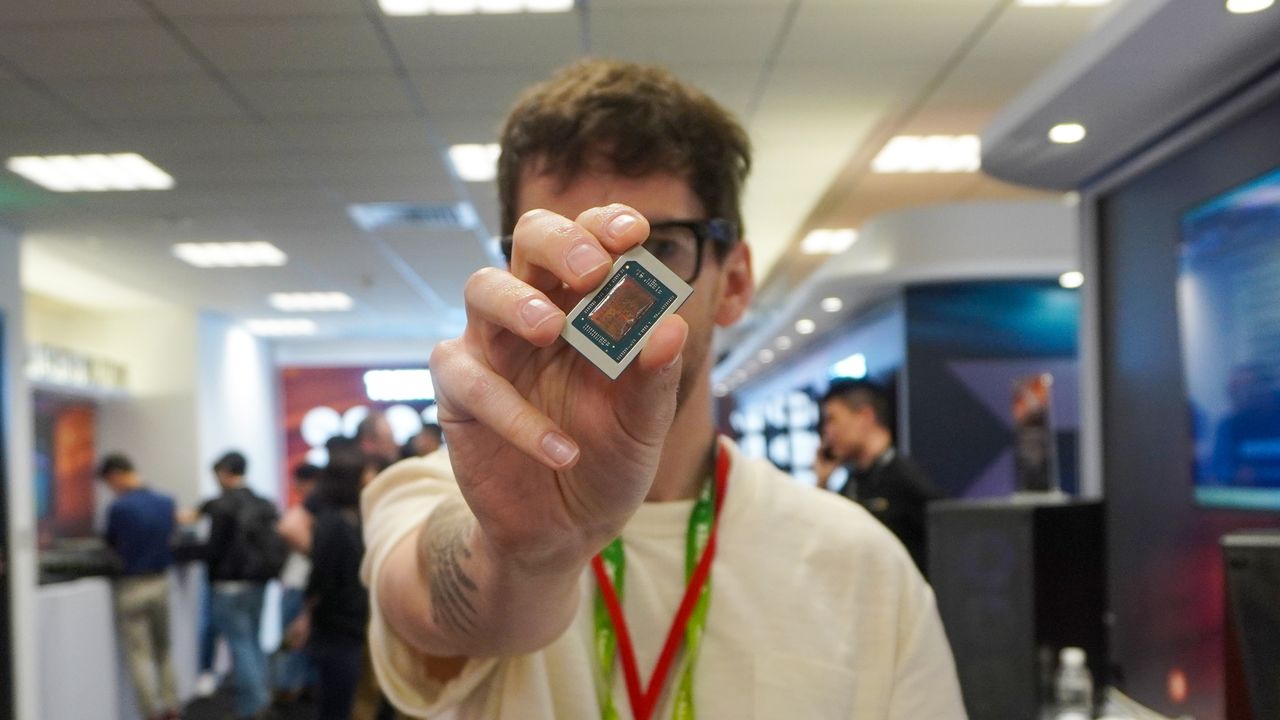
2026 is the year of the laptop, and the CPU wars are critical to that. I’ve tested Intel’s Core Ultra 300 Series chips and Qualcomm Snapdragon X2 Elite, but there’s one more player in the Windows laptop space.
AMD is back and the rumors are true — Ryzen AI 400 Series chips (codenamed “Gorgon Point”) have just been made official at CES 2026. Here’s everything you need to know about the new silicon from Team Red.

AMD Ryzen AI 400 Series Processor specs
Chip |
Cores / Threads |
Max boost |
Memory speed |
NPU TOPs |
GPU cores |
|---|---|---|---|---|---|
Ryzen AI 9 HX 475 |
12 / 24 |
5.2 GHz |
8533 MT/s |
60 |
16 |
Ryzen AI 9 HX 470 |
12 / 24 |
5.2 GHz |
8533 MT/s |
55 |
16 |
Ryzen AI 9 465 |
10 / 20 |
5.0 GHz |
8533 MT/s |
50 |
12 |
Ryzen AI 7 450 |
8 / 16 |
5.1 GHz |
8533 MT/s |
50 |
8 |
Ryzen AI 7 445 |
6 / 12 |
4.6 GHz |
8000 MT/s |
50 |
4 |
Ryzen AI 5 435 |
6 / 12 |
4.5 GHz |
8000 MT/s |
50 |
4 |
Ryzen AI 5 430 |
4 / 8 |
4.5 GHz |
8000 MT/s |
50 |
4 |
The same, but much better

With Ryzen AI 300 Series chips (codenamed “Strix Point”), AMD tore up the rulebook and overhauled its architecture to point their laptop chips at zippier performance, better local AI, improved graphics and power efficiency.
And now, Ryzen AI 400 Series (“Gorgon Point”) looks set to take that to a new level with a suite of chips that you’ll find in budget, mid-range and premium notebooks that focus on three key things — faster multitasking, better graphics and AI, and improved power efficiency.
Starting with the first, that CPU boost clock has been increased up to 5.2 GHz and RAM speed support has been upped to 8,533 Mega Transfers per Second (MT/s). So faster CPU cores and zippier RAM.
Second, those RDNA 3.5 GPU cores now run at a faster boost clock of up to 3.1 GHz, and the next-gen NPU on the chip die contains up to 60 TOPs of AI performance. And finally, the low power architecture on the chip has been optimized to allow for not just faster unplugged performance, but improved power efficiency too.
By the numbers
Much like everyone else reporting on these chips, we won’t have specific numbers until we are able to give it a full test in our labs. However, there have been several leaks — all of which I’m keeping an eye on in my CPU wars report.
This can give us context as to whether AMD’s numbers can be backed up, and when we take our Geekbench tests of laptops we reviewed over the past 18 months and compare, Team Red’s claims are legit.
But of course, this is looking at it through a vacuum of comparing old to new. Seeing the numbers when compared to the competition of 2026 shows that it’s neck and neck with Intel, whereas the Arm-based likes of Snapdragon X2 Elite have a considerable lead.
That being said, there’s compatibility on AMD’s side here running on x86 architecture and not needing an emulation layer. For tests on the likes of the company’s battery life, gaming and NPU claims, we’ll have to wait and see when we get to properly test these.
Outlook

Geekbench is only half the story here when it comes to chips, but an effective part in showing that AMD has stepped up its game performance-wise for the next generation of laptops and mini PCs coming this year.
But it's also the attention paid to tackling the issues with x86 that make people go for the Arm likes of a MacBook that could pay off for them in the long run — faster performance when unplugged, speedier content creation workloads and multitasking, and of course that overhauled low power architecture for multi-day battery life.
Whether these claims will be backed up, we’ll see when laptops from the likes of Acer, Asus, Dell and more launch over the next few months. But signs point to optimism.

Follow Tom's Guide on Google News and add us as a preferred source to get our up-to-date news, analysis, and reviews in your feeds.
More from Tom's Guide
- I went hands-on with the redesigned MSI Stealth 16 AI+ — it’s actually stealthy now, and gunning for the MacBook Pro
- Gaming on Snapdragon X Elite laptops just got a whole lot better — I tested the latest update and saw 40% faster gameplay
- Intel Panther Lake vs Snapdragon X2 Elite vs AMD Gorgon Point — one chip is already pulling ahead in 2026's CPU war