
Get all your news in one place.
100's of premium titles.
One app.
Start reading
LiveScience
LiveScience
Emily Cooke

Alzheimer's is transmissible in extremely rare scenarios

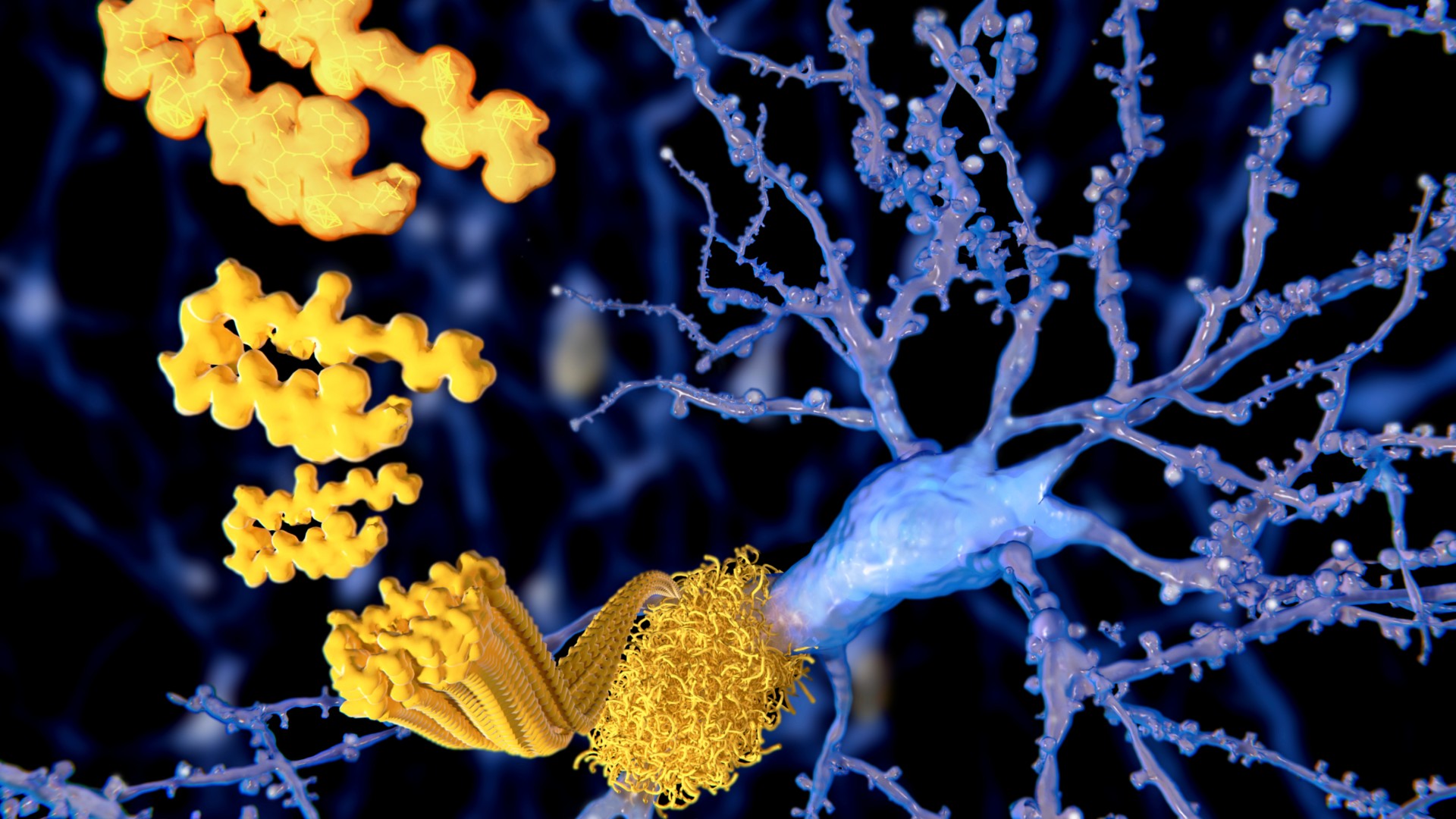
Medical illustration of a neuron, in blue, in the background being surrounded by a plaque of amyloid-beta protein, in yellow with the illustration visualizing how the proteins join together .

For the first time, scientists have identified people with Alzheimer's whose disease was likely triggered by a medical treatment — one that's now been banned for decades. 

Alzheimer's is caused partly by the gradual accumulation of amyloid-beta and tau proteins in the brain, which trigger a cascade of events that lead to the death of brain cells. Now, a new study provides what may be the first clinical evidence that the "seeds" of these proteins can be extracted from one person and planted into another, sparking disease. However, this seed transfer occurred in a very specific and extraordinary medical context. 

Sign up to read this article
Read news from 100's of titles, curated specifically for you.
Already a member? Sign in here
Related Stories
Top stories on inkl right now
One subscription that gives you access to news from hundreds of sites
Already a member? Sign in here
Our Picks
Fourteen days free
Download the app
One app. One membership.
100+ trusted global sources.