Get all your news in one place.
100’s of premium titles.
One app.
Start reading
Tom’s Guide
Tom’s Guide
Technology
Frances Daniels

Always tired? Experts share 5 signs that your mattress is to blame and how to fix it

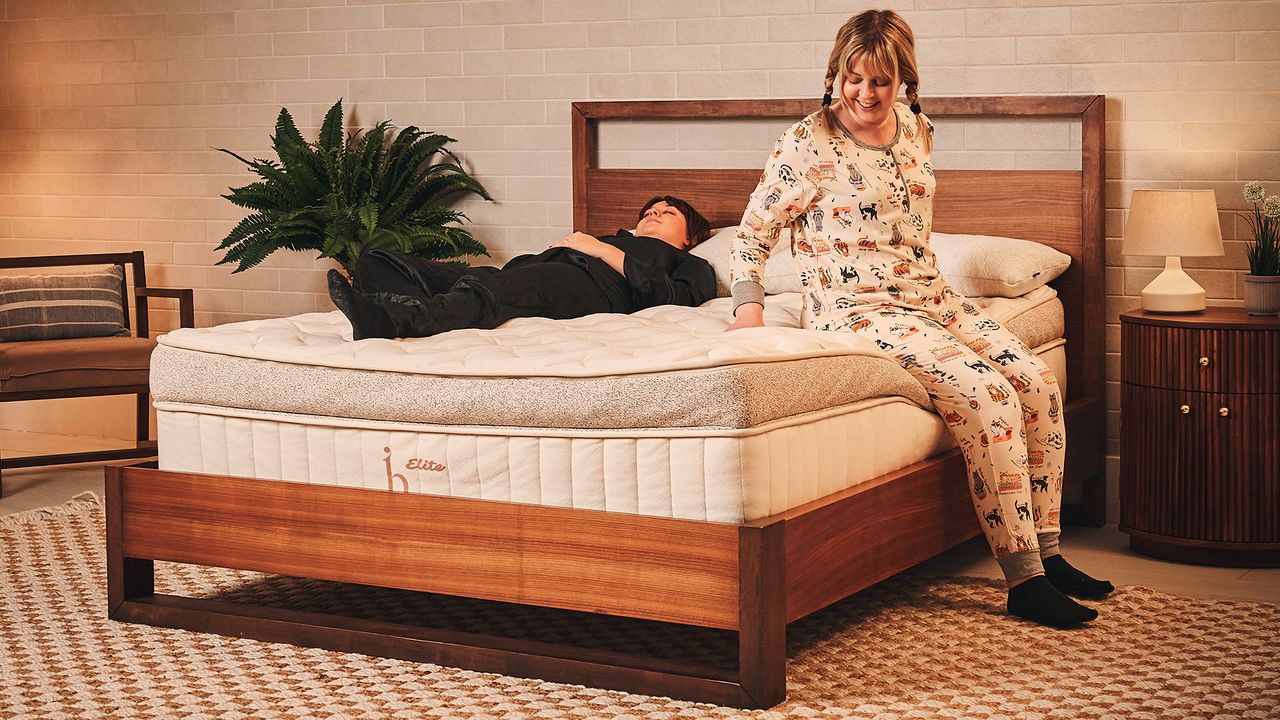
The Birch Elite Natural Mattress on a bed frame in a bedroom. A member of our testing team lies on the left side of the mattress on her back, while another mattress tester sits on the right hand side of the mattress. They're testing the motion isolation, to determine if one person getting into a bed disturbs the other.

Not getting enough sleep is the usual cause of daytime fatigue, but identifying the cause of this sleep deprivation can be less easy.

It took a recent bout of insomnia for me to see there's a whole bunch of reasons behind being unable to fall asleep, and the wrong mattress is usually among them.

However, it can also be tricky to tell if your mattress needs replacing, or whether or not buying a new bed is even worth the hassle.

To find out the common signs that your mattress is why you feel so tired all the time, I spoke to the The Sleep Doctor, Dr Michael Breus. I also caught up with Megan Anderson, director of merchandising at Mattress Firm, and Byron Golub, the Head of Product and Merchandising at the brand behind the Saatva Classic, the best mattress you can buy online in 2026.

Here's what the experts had to say about the drawbacks of sleeping on the wrong mattress, the benefits of sleeping on the right mattress for your sleep, and how to tell if snapping up a new bed in the Presidents' Day mattress sales could solve your insomnia.

Can a mattress really ruin your sleep?

(Image credit: Getty)

In short, yes.

Dr Breus, a double boarded Clinical Psychologist and a Clinical Sleep Specialist, emphasises how important a mattress is to sleep and your overall health, so sleeping on the wrong one can be detrimental.

A mattress can actively harm sleep

Dr Michael Breus, a board-certified Clinical Sleep Specialist

"I think that a mattress can meaningfully improve sleep via four pathways: by increasing comfort, supporting the spine, regulating temperature, and reducing pain," says the sleep expert.

"All influence both objective sleep and how rested you feel in the morning."

However, if the mattress doesn't perform the above four benefits, Dr Breus warns that it effectively ruins your sleep.

"Over my years of practice, I have noticed that a mattress can actively harm sleep in three areas: when it causes pain, restlessness, or overheating," he explains. "This leads to fragmented and non-restorative nights."

5 signs your mattress is behind your fatigue

1. It's over seven years old

(Image credit: Getty)

With the exception of a latex bed, the average lifespan of a mattress is around a decade. Keep it longer than that, and it's bound to show its age.

Your body may be trying to tell you that your current mattress isn’t cutting it

Byron Golub, the Head of Product and Merchandising at Saatva

"A good mattress should last about seven to 10 years, so if yours is older, it may simply be time for an upgrade," says luxury mattress expert Golub.

If you're unsure of how old your mattress is, you can compare how you sleep in your own bed to how you sleep when away — especially when sleeping at hotels, where mattresses are replaced more often.

"If you find yourself sleeping better on hotel mattresses or at a friend’s house," Golub shares "your body may be trying to tell you that your current mattress isn’t cutting it."

2. It's sagging or creaking

(Image credit: Getty Images)

Next, check your mattress for any visual or audible signs of age and general wear and tear, such as sagging or creaking. "Visible indentations, creaking sounds, or a change in how the mattress feels are red flags," says Golub.

Anderson also agrees, explaining that mattress sagging (and the lack of support that comes with it) is a common reason why her customers look for a replacement.

"This is sometimes called 'the valley', in which your mattress starts to develop a dip in the center," says the director behind one of the biggest bed retailers.

3. You're waking up with aches and pains

With a lack of a lack of support (either from sagging, a hard surface, or a too-soft feel) comes improper spinal alignment. So, if you can't spot any visible sagging, you may want to take note of how you feel in the morning.

"If you start to notice that you’re not waking up feeling refreshed or if you feel new aches and pains, these can be indicators that it’s time for a new sleep system," shares Anderson.

Dr Breus agrees, saying that waking up to pain, or noticing an absence of morning pain when sleeping in a different bed, can affect your sleep comfort and how you feel during the day.

"Mattresses that are too soft or too firm can disrupt spinal alignment, increasing joint stiffness and morning discomfort," says Dr Breus. "My review of the current research shows that new or worsening back, hip, or shoulder pain is a strong sign of poor spinal support or incorrect firmness."

(Image credit: Getty Images)

4. You're constantly switching sleep positions

If you're a restless sleeper and find yourself tossing and turning at night, there could be a lot of reasons behind this nocturnal movement — including racing thoughts and nighttime anxiety.

However, Golub says it could be a sign that your mattress won't allow you to get comfortable.

"An overlooked sign is restlessness," says the Saatva product designer. "If you’re constantly changing positions to get comfortable, your mattress may be creating pressure points or failing to support your spine."

5. You feel hot and bothered in bed

(Image credit: Getty Images)

Many mattresses nowadays come wth cooling features. However, as the years go by, the cooling performance can deteriorate. This deterioration, Dr Breus warns, can lead to sleep deprivation.

Overheating is a huge red flag, as sleeping too warm is linked to poorer sleep quality and more awakenings

Dr Michael Breus, a board-certified Clinical Sleep Specialist

"Overheating is a huge red flag, as sleeping too warm is linked to poorer sleep quality and more awakenings, with mattress materials playing a major role," warns the sleep specialist.

"I find that when poor nights consistently lead to daytime fatigue, worse mood, and increased pain, the mattress is likely part of the problem."

Expert tips for finding the perfect mattress for your sleep

When talking to experts about how to choose the right mattress, the golden rule appears to be that you should find one that supports your sleep and body type.

"When a mattress is properly matched to your body and sleep style, sleep tends to be deeper, more stable, and more restorative," says Dr Breus.

The sleep expert also says that, if you're unsure what your dominant sleep position is or what your body type needs, then he recommends selecting one of the best medium-firm mattresses.

"I have found when interviewing my patients and looking at the literature that medium-firm mattresses tend to perform best overall, offering the right balance of comfort and spinal alignment, particularly for people with low back pain," he notes.

Sign up to read this article
Read news from 100’s of titles, curated specifically for you.

Already a member? Sign in here
Related Stories
Top stories on inkl right now
Our Picks
Fourteen days free
Download the app
One app. One membership.
100+ trusted global sources.