Get all your news in one place.
100’s of premium titles.
One app.
Start reading
Tom’s Guide
Tom’s Guide
Technology
Nikita Achanta

'Always be prepared for anything’: here are my 7 expert tips for amazing wildlife photography

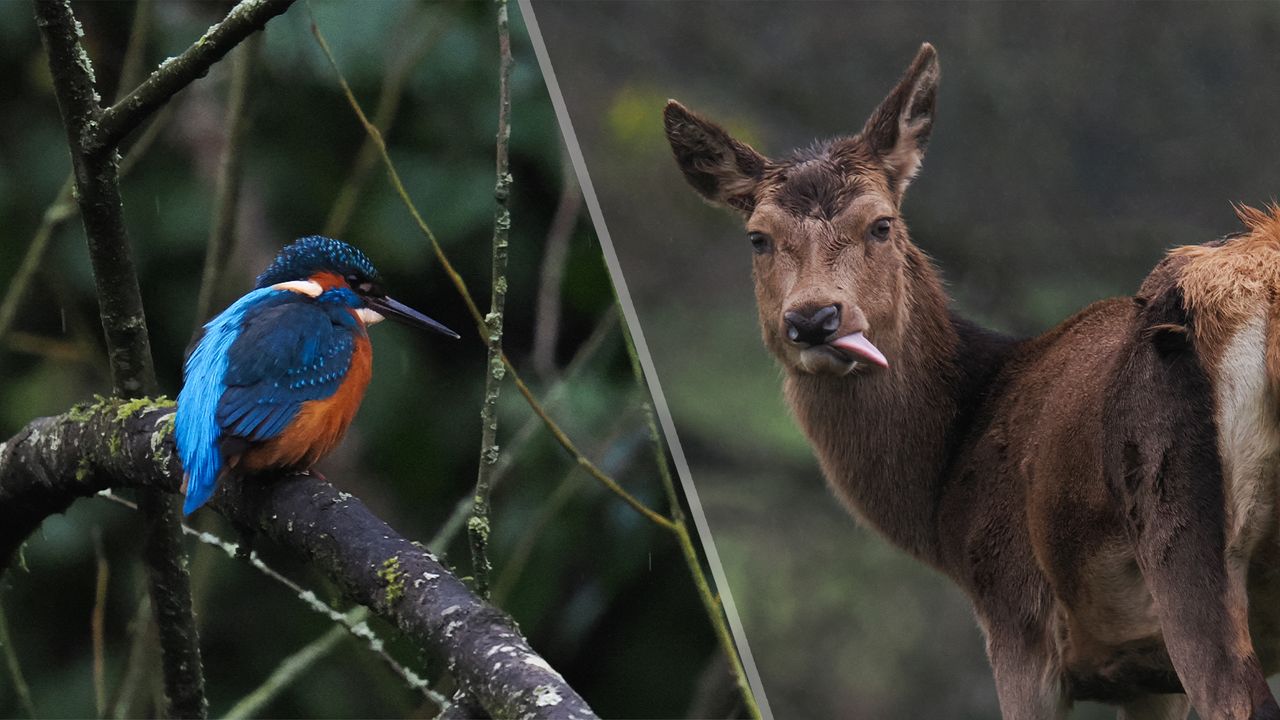
A photo of a common kingfisher and a photo of a red deer, taken on an OM System OM-1 Mark II Micro Four Thirds mirrorless camera.

Photography is a great pastime to pick up, and you can take it to the next level by making it your profession too — it's certainly my own favorite hobby. I review the best mirrorless cameras at Tom's Guide, and whenever I'm testing a camera, I always take photos of birds and animals. Wildlife photography is my niche, and I absolutely love it.

There are many reasons why I love wildlife over other genres of photography. I adore animals, and observing them in their natural habitat brings me joy. I find it very fulfilling, and it gives me a sense of purpose. It also means that I have an excuse to stop playing video games and literally go touch some grass.

I've reviewed and used many cameras in my time and having spent many hours amongst animals and in nature, I've learnt a thing or two. If you're looking to dip your toes into the world of wildlife photography, you've come to the right place. I'll share my best seven tips for wildlife photography here, and if you have any of your own tips, feel free to share them in the comments below!

1. Pick the right gear

(Image credit: Tom's Guide)

The number one thing you need to do is pick the right camera and lens. There are many options out there so it can be overwhelming, but there are a few features you should consider when buying your kit. I've recently been testing the OM System OM-1 Mark II, which is a Micro Four Thirds camera, and is great for wildlife photography, especially if you're an enthusiast.

One of its key selling points is that the OM-1 Mark II is extremely easy to use, thanks to its straightforward control scheme, well-signposted dials and buttons, and an easy-to-read menu system. What makes it fantastic for wildlife is its 120fps sequential shooting capabilities, and the high-res electronic viewfinder (EVF) which is bright and detailed, and blackout-free too. This means that there are no black screens between shots, so you can keep tracking your subject without any disruption.

The OM-1 Mark II's autofocus system and subject detection are ridiculously good too, as the camera quickly locks onto birds and animals, no matter the size. In fact, when I was testing the camera, it was able to find birds obscured by branches and leaves, and the autofocus worked better than my own eyes! Subject detection also includes humans and vehicles, making this a versatile camera.

You also get up to 8.5-stops of in-body image stabilization (IBIS) so you can shoot at slower shutter speeds, even handheld. The camera is fully weather-sealed too, carrying an IP53 rating, so it's protected against dust and ruin, and can be used in freezing temperatures down to -14°F / -10°C. Pair this camera with a 150-600mm lens so that you can take photos of wildlife from afar and without disturbing them.

2. Research the location

(Image credit: Nikita Achanta / Tom's Guide)

Before you head out, it's good to do a bit of research. There are plenty of resources online, so research the animals and birds that are local to your area — you don't have to venture far from home to find wildlife. Animal and bird populations and species vary from area to area. I highly advise finding out which wildlife resides wherever you decide to go.

Knowing the wildlife in that area will also give you a good starting point. It's better than diving into the deep end without having any prior knowledge. This way, you'll know where to start. It's also a great idea to join groups on, say, Facebook and Reddit, where locals talk about wildlife.

3. Learn animal behavior

(Image credit: Nikita Achanta / Tom's Guide)

It's important to learn animal and bird behavior. I don't mean that you need to be ecology expert, but you should know how wildlife behaves. A kingfisher won't necessarily act like a barn owl, for instance. Google (or an AI chatbot) is your best friend here, so don't be afraid to put in your questions, regardless of how simple or complex they may sound to you.

Birds have different calls, and some animals travel in herds or packs. Some of them come out only at dusk or dawn. Just like humans, animals and birds have unique personalities, so do your research.

4. Pack appropriate clothing

(Image credit: Nikita Achanta / Tom's Guide)

Now that you've done your research on the location and animal behavior, it's time to head out! This is the most fun part, as you get to see the animals and birds in action. I, personally, really enjoy finding wildlife, and I'm sure you will to — there's something very rewarding about following a trail of footprints or hooves and finally coming across the animal you've been tracking.

But hold your horses. Before you head out, pack appropriate clothing as you should always be prepared for anything. For example, if it's looking even a little cloudy outside (as it often does in the U.K. where I live), pack a raincoat or a waterproof jacket, and wear waterproof shoes. There's nothing worse than being outside miles from home and getting caught unawares.

I'd also recommend carrying some snacks and drinks for yourself in a backpack, especially if you're heading into the woods or an area where there may not be a grocery store nearby. Patience wears thin when you're hungry or thirsty, and wildlife photography is a waiting game, so it's best to be prepared. I always have a bar of chocolate for an instant energy boost in my pocket.

5. Talk to those around you

(Image credit: Nikita Achanta / Tom's Guide)

One thing I've noticed when I'm out and about with a camera and telephoto lens, strangers will often ask me if I've photographed anything good. I think it's important to engage with these people. A lot of times, strangers have kindly shared their knowledge of the local wildlife with me. Someone told me they saw a woodpecker a mile away, and one of them even pointed out a kingfisher to me.

Talking to locals and people at the scene can be extremely useful. Some might even share their own photography tips, or tips for spotting certain wildlife.

6. Be patient

(Image credit: Nikita Achanta / Tom's Guide)

Like I said, wildlife photography is a waiting game, and requires a bit of luck. You won't always spot an owl in the area where someone said they saw one a while ago, so be patient. Patience is a virtue and it really pays off. Observe animals, wait around, keep an ear out for birdsong or movement.

Remember: these are wild animals and birds whose behavior can sometimes be unpredictable. You might not always get the shot you want, and that's okay. There have been many instances where I've barely taken any photos when I've been out, and I've still thoroughly enjoyed being outside. Sometimes, after I've taken a bird's photo, I'll often just sit or stand there and watch them. Listening to birdsong isn't a bad way to start or end your day.

7. Respect the birds and animals

(Image credit: Nikita Achanta / Tom's Guide)

Last but not least, it's crucial that you respect the animals and birds. Again, these are wild creatures, and you shouldn't expect them to act like they're your pets. Give them their space, and watch them from a distance. Do not try to approach them too close, and don't try to pet them.

I also strongly advise against feeding or baiting them to get them to behave in a particular way. You shouldn't disrupt their natural way of being just because you want to get a photo.

(Image credit: Nikita Achanta / Tom's Guide)

And there you have it! These are my seven tips for wildlife photography, and these have all come about as a result of me having spent many hours testing cameras. To recap:

  • Pick the right gear
  • Research the location
  • Learn animal behavior
  • Pack appropriate clothing
  • Talk to people around you
  • Be patient
  • Respect the birds and animals

If you'd like to know more, I'm always available to answer questions, and you can either email me via the button below or message me on my Instagram, and I will try my best to answer.

Or if you want to share any wildlife photos you've captured and just want to talk about our shared love of animals, I'm open!


Follow Tom's Guide on Google News and add us as a preferred source to get our up-to-date news, analysis, and reviews in your feeds.


More from Tom's Guide

Sign up to read this article
Read news from 100’s of titles, curated specifically for you.
Already a member? Sign in here
Related Stories
Top stories on inkl right now
One subscription that gives you access to news from hundreds of sites
Already a member? Sign in here
Our Picks
Fourteen days free
Download the app
One app. One membership.
100+ trusted global sources.