
Get all your news in one place.
100's of premium titles.
One app.
Start reading
Salon
Salon
Lifestyle
Joy Saha

All you need is rice and lentils

One of the greatest lessons of adulthood took place in the quiet confines of my apartment kitchen. It’s on appreciation, namely for the recipes and rituals I took for granted, or rolled my eyes at, growing up. Spices that I once despised purely for being too aromatic (as if that could even be a complaint) or pungent are now always found in abundance inside my pantry shelves. Ingredients that I once felt so much shame around now grace the insides of my refrigerator. And meals that I once complained about eating are now some of my most-eaten, especially on days when I’m craving comfort and nostalgia.

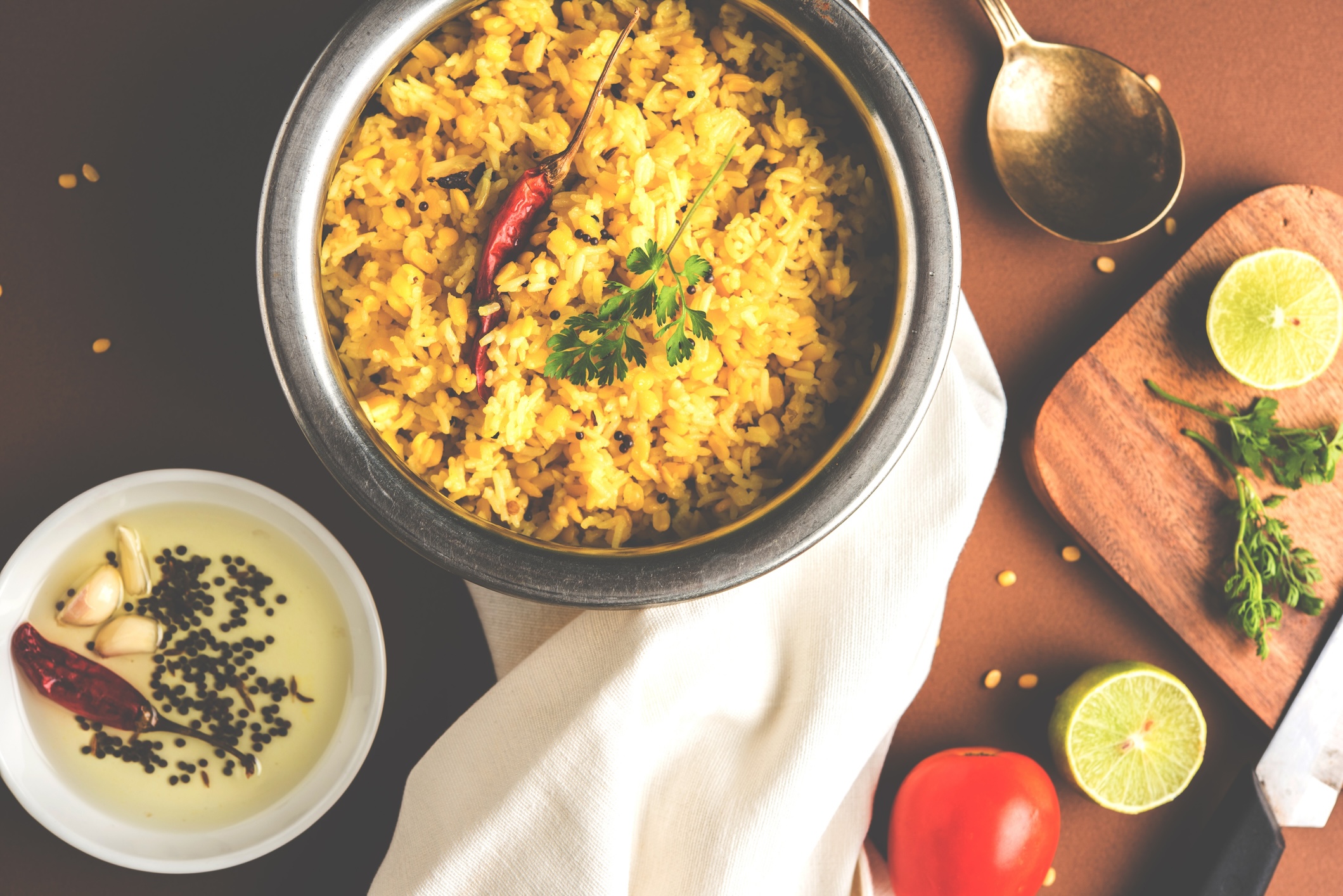
In recent years, I found myself falling in love with khichuri. My earliest memories of the one-pot dish are of rainy days spent either lounging on the couch or under the sheets. I used to hate the rain as a child, simply because I knew, with utmost certainty, that my mother would be making khichuri for dinner. By late afternoon, a pressure cooker filled with moong dal (yellow split lentils), rice, vegetables and spices would be set on the stove. Within a few minutes, we’d hear the soft bubbling of everything cooking together, followed by a shrill whistle, letting us know that it was time to eat. Our plates brimmed with color — yellow, green, red and orange — unlike the gloom outside. There’s something incredibly medicinal about khichuri that younger me couldn’t appreciate at the time. The earthy fragrance of cinnamon, cardamom, cloves and cumin. The porridge-like consistency of the entire dish. The fact that it’s best enjoyed piping hot, with steam rising in thin streams from spoonfuls of rice.

Despite its sheer simplicity, khichuri, also known as khichdi, flaunts a rich history. Khichdi, derived from the Sanskrit word khicca, meaning a dish made with rice and legumes, dates back to the ninth century B.C. It’s believed to have first appeared in text in the Mahabharata, one of two major Sanskrit epics of ancient India.

“In the 14th century A.D., a Moroccan explorer named Ibn Battuta documented that a buttery variation of khichuri was eaten daily in South Asia,” wrote Rachael Grow for Mashed. “It wasn’t until the Mughal Empire of the 1500s that it rose to popularity, as it was one of Emperor Akbar’s favorite meals. His attendant is said to have cooked up over 2,600 kilograms of tasty khichuri every day.”

A recipe from the court of Akbar reportedly called for equal parts of lentils, rice and ghee, according to NPR. Other renditions were more sweet than savory, calling for sugar, khoya (a milk reduction that’s commonly used in many South Asian desserts), cardamom, cinnamon, clove and saffron.

Khichuri was so beloved that its influence later transcended geographical boundaries and cultures. British colonists transformed khichuri into their own dish, called kedgeree, swapping out lentils for boiled eggs and smoked haddock. The British Indian Army, when stationed in Cairo during World War II, is also said to have introduced khichuri to Egypt, ultimately creating the country’s national dish koshari, made with rice, lentils and macaroni.

The concept of eating rice and lentils has existed for centuries — and it’s certainly not exclusive to khichuri. There’s mujadara, a classic Middle Eastern and Levantine dish made with cooked lentils and rice, caramelized onions, herbs and yogurt or tahini. There’s arroz con lentejas, a vegetarian take on “arroz con gandules” that literally translates to rice with lentils. And there’s dal makhani, a North Indian dish that calls for black lentils, kidney beans and cream, and is typically enjoyed with rice.

Khichuri’s beauty and widespread appeal lie in its versatility. As written by Rhitu Chatterjee, there are different variations of khichuri across the diaspora. Some enjoy a gingery khichuri alongside yogurt and pickles. Some enjoy a spicier and tangier version, traditionally called bisi bele bath. Some enjoy their khichuri bland, with no vegetables or seasonings. And some eat theirs with meat, even though khichuri is traditionally a vegetarian dish.

As I’ve gotten older and refined my own palate, khichuri has become my dish of all trades. It’s an easy comfort meal for when I’m missing home and craving a dish that feels like a warm hug, whether it’s raining outside or not. It’s also cost-effective, perfect for when I’m trying to eat on a budget (which is all the time) without sacrificing nutrition or flavor.

Like many of my recipes, this one is inspired by my mother’s. If you’ve never had khichuri before, I encourage you to try making this yourself. Seriously. This may become one of your favorite go-to weeknight meals.

One-Pot Rice and Lentils (Khichuri)

Yields: 4 servings

Prep Time: 25 minutes

Cook Time: 45 minutes

Ingredients

1 cup Gobindobhog rice (any short-grain rice works well)

1 cup Moong Dal (yellow split lentil)

2 tablespoons Ghee (clarified butter)

1 stick of cinnamon

2 green cardamom

3 cloves

1 teaspoon cumin seeds (or cumin powder)

1 bay leaf

1 tablespoon grated ginger

1 green chili, finely chopped

1/2 teaspoon red chili powder

1/2 teaspoon turmeric powder

2 or 3 small potatoes, peeled and cut into bite-sized chunks

1/2 cup cauliflower, cut

2 large carrots, cut into small pieces

1/2 cup frozen green peas

Salt

Directions

    1. Start by preparing your rice. Wash and rinse the rice before soaking it in a fresh bowl of water for 20 to 25 minutes. Drain and set the rice aside.

    2. Dry roast the lentils in a pan over medium heat until they turn golden-yellow and smell nutty and toasty. Using a wooden spoon, stir the lentils often to avoid burning them. Once they’re well roasted, transfer the lentils to a bowl and soak in two cups of water.

    3. In a large pot, heat the ghee over medium-low heat. Fry the whole spices (cinnamon stick, cardamom pods, cloves, cumin seeds and bay leaf) until fragrant. Reduce the heat to low if the spices are darkening in color too quickly. Don’t be afraid of any crackling; cumin seeds should sizzle when fried.

    4. Stir often to avoid burning the spices, which will result in a bitter taste.

    5. Add the grated ginger and sauté. Then, add the chopped green chili.

    6. Add the chopped potatoes, carrots and cauliflower. Sprinkle in the turmeric powder and red chili powder. Stir and sauté, making sure everything is incorporated.

    7. Pour in the lentils with water and sprinkle a pinch of salt. Cover the pot and cook until the water starts to boil. The lentils are well-cooked when they are tender — you should be able to press and mash the individual grains between your fingers.

    8. Transfer everything into a stovetop pressure cooker. Add the rice, frozen peas and two additional cups of water. Stir and mix with a wooden spoon.

    9. Pressure cook for 4 whistles on medium to high heat before turning off the stove. The finished khichuri should have a consistency similar to porridge.

    10. Serve and enjoy hot with a dollop of ghee.

Sign up to read this article
Read news from 100's of titles, curated specifically for you.
Already a member? Sign in here
Related Stories
Top stories on inkl right now
One subscription that gives you access to news from hundreds of sites
Already a member? Sign in here
Our Picks
Fourteen days free
Download the app
One app. One membership.
100+ trusted global sources.