
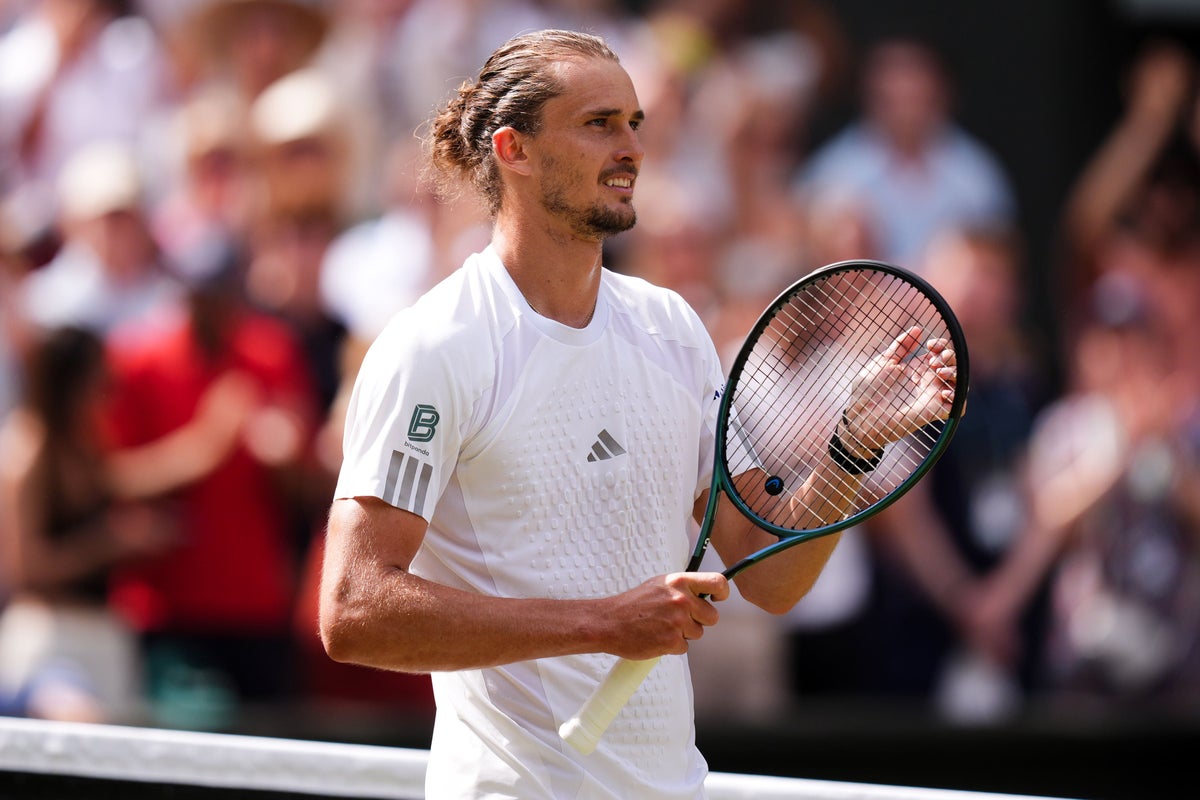
Alexander Zverev’s run to a first Wimbledon final is clouded by domestic abuse allegations that have marred his career.
The 29-year-old German is a polarising figure after being accused of domestic violence by two ex-girlfriends, Olya Sharypova and Brenda Patea.

He has strenuously denied all the accusations but Patea, who is also the mother of his daughter, took her case to court before Zverev reached a financial settlement two years ago.
Meanwhile, a 15-month ATP investigation into the accusations, during which Zverev was allowed to continue playing, concluded in 2023 after finding “insufficient evidence to substantiate published allegations of abuse”.
As such, Zverev’s French Open triumph last month, his first major title, was not universally welcomed.
France’s leading daily sports newspaper L’Equipe took the unusual step of not putting Zverev’s win on its front page.
When Britain’s Arthur Fery was being interviewed on court after his quarter-final victory over Flavio Cobolli, Zverev’s name was booed by some members of the Centre Court crowd.
That may have merely been pantomime booing, as their semi-final was not marred by any heckling.
But when Zverev collected his runner-up trophy after the Australian Open final last year, a spectator shouted: “Australia believes Olya and Brenda.”
So there remains an uncomfortable background to Zverev’s story, with his continued presence and success in the sport a highly triggering subject for many domestic abuse survivors.
“Men of influence – whether they are in sport, in the media, in politics – must be held to higher standards than they currently are, not least because of the influence they have with boys, men and society at large,” a spokesperson for Women’s Aid told the Press Association.
“It is vital that when allegations are made, they are taken seriously and thorough investigations take place.”
Zverev, who will be the new world number two on Monday, takes on top-ranked Italian and defending champion Jannik Sinner in Sunday’s final.







