Get all your news in one place.
100's of premium titles.
One app.
Start reading
Tom’s Hardware
Tom’s Hardware
Technology
Luke James

AI data centers require 36 times more fiber than designs with standard servers — severe glass shortages push cable lead times out to a full year

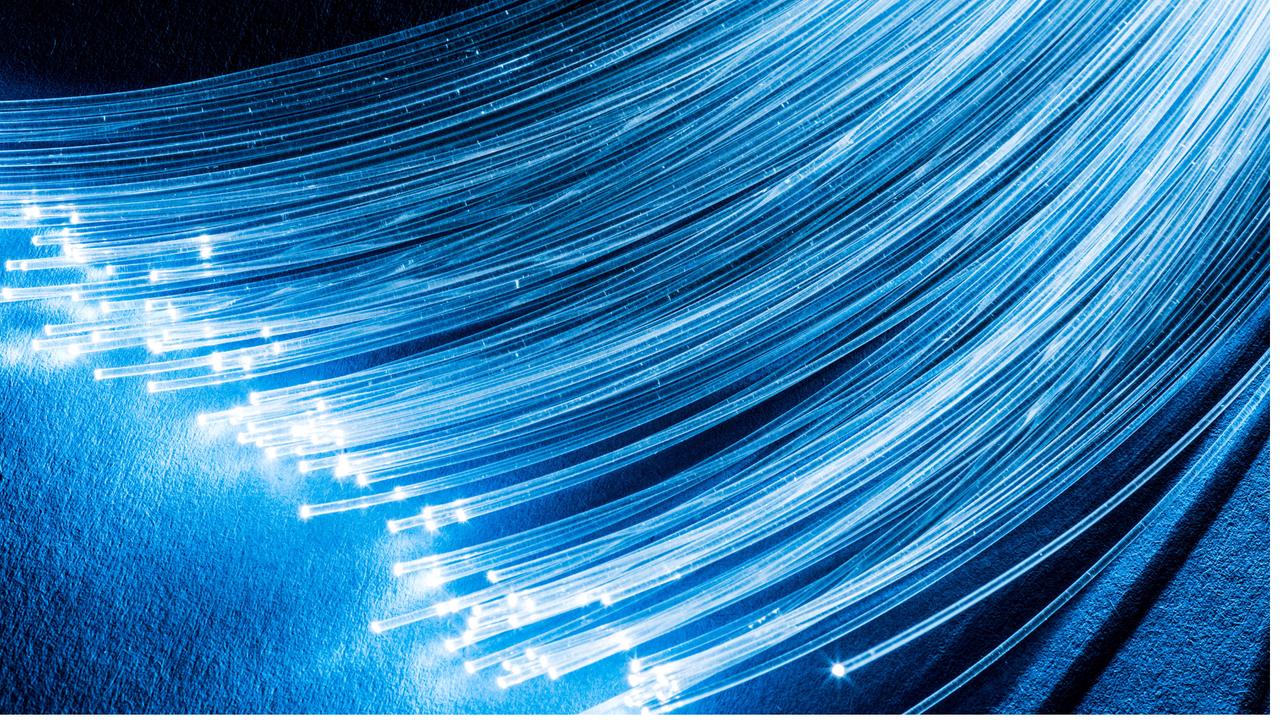
A bundle of blue fiber optic cables. .

Major Chinese optical fiber manufacturers have booked orders stretching into early 2027, as AI data center construction drives demand growth that the supply chain cannot match, according to a DigiTimes report. Hengtong and FiberHome told the publication their production lines are running at full capacity, with delivery cycles for some products extending from weeks to months.

The scale of demand from AI infrastructure dwarfs anything the fiber industry could ever have planned for. Data center fiber demand grew roughly 76% year-on-year in 2025, according to CRU data cited by various industry publications, and the segment is projected to account for 30% of total global fiber demand by 2027. In 2024, that figure was below 5%.

All this is because AI training and inference clusters require far denser interconnect fabrics than conventional cloud infrastructure. Rahul Puri, CEO of STL's Optical Networking Business, told Fierce Network in December that AI-focused data centers need approximately 36 times more fiber than traditional CPU server racks.

Unfortunately, manufacturing optical fiber preforms, the glass rods from which fiber is drawn, is a technically demanding process with high barriers to entry. New preform capacity typically takes 18 to 24 months to build, according to industry sources cited by DigiTimes, which limits near-term supply regardless of how quickly downstream cable production can scale.

Compounding the bottleneck, manufacturers have shifted production from standard G.652D fiber used in telecom networks to higher-margin G.657A fiber suited to AI data centers and drone applications. That reallocation has created secondary shortages in conventional telecom-grade fiber and contributed to broad price increases. Global fiber prices have risen roughly 70% from a 2021 trough of $3.70 to approximately $6.30 per fiber-kilometer.

Companies like Meta are responding by locking in multiyear commitments. It signed a $6 billion supply agreement with manufacturer Corning in January, which also disclosed two additional deals of similar scale with unnamed hyperscalers in its Q1 2026 earnings. Earlier this month, Nvidia invested $300 million in Corning to build three new fiber manufacturing plants in North Carolina and Texas.

North American demand growth is projected at 22% to 25% this year, while supply expansion trails at 12% to 19%, according to Rebio Group estimates. Data Center Dynamics reported that lead times have stretched to 20 weeks for large-volume buyers and up to a year for smaller purchasers.

Corning plans to expand its Hickory, North Carolina, plant under the Meta deal and will build three additional facilities under the Nvidia agreement. Still, new capacity from those projects isn’t expected to come online until 2027 or later.

Sign up to read this article
Read news from 100's of titles, curated specifically for you.
Already a member? Sign in here
Related Stories
Top stories on inkl right now
One subscription that gives you access to news from hundreds of sites
Already a member? Sign in here
Our Picks
Fourteen days free
Download the app
One app. One membership.
100+ trusted global sources.