Get all your news in one place.
100’s of premium titles.
One app.
Start reading
International Business Times UK
Michael Toledo

AI Actress Tilly Norwood Explained: What She Is, How She Was Built and Why Hollywood Is Alarmed

Tilly Norwood (Credit: Tilly Norwood/Instagram)

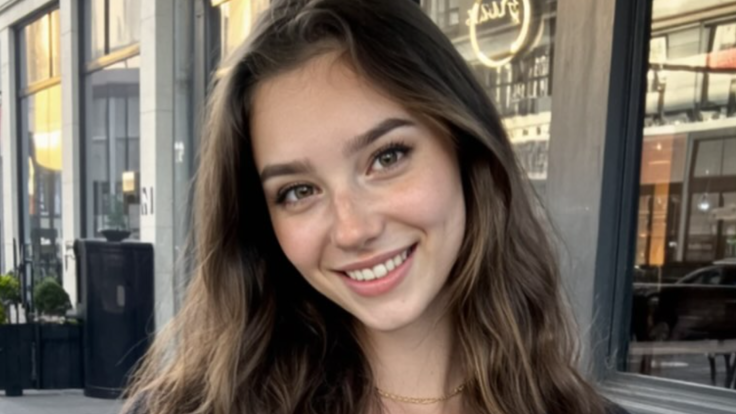
AI actress Tilly Norwood has become one of the most talked-about names in global entertainment, yet she is not a human actress. She is an entirely AI-generated performer created by the production studio Particle6 through its artificial intelligence division, Xicoia.

Her sudden emergence has sparked sharp debate across Hollywood, where actors, unions and industry observers are assessing how a synthetic performer could shape the future of film and television.

As her online presence grows and her debut projects circulate, questions about authenticity, labour protection and creative ethics have intensified, placing Norwood at the centre of a fast-moving industry discussion.

What the AI Actress Actually Is

Norwood was developed as a hyper-real digital creation capable of performing in filmed scenes, promotional assets and social media content. She first appeared publicly in July 2025 through a short comedy sketch titled AI Commissioner.

Before that debut, her Instagram account had already gained attention for posting AI-rendered portraits, mock film stills and behind-the-scenes images.

Particle6 stated that its intention was to explore how artificial intelligence could be used to produce content more efficiently while still maintaining cinematic quality. The company said AI performers like Norwood could eventually reduce traditional film-making costs by as much as 50%.

How Tilly Norwood Was Built

AI actress Tilly Norwood (Credit: Tilly Norwood/Instagram)

Creating the AI actress required a multi-step digital process involving image generation, facial modelling, animation systems and voice algorithms. Reports indicate that the developers relied on several AI tools to refine her movements, expressions and vocal patterns.

According to Tilly Norwood creator Eline Van der Velden, as reported by Deadline, more than 2,000 iterations were produced before the team approved the final version of Norwood seen today.

Van der Velden has also described the project as a technological experiment designed to test the limits of AI-generated performance. She also confirmed that Particle6 intends to create up to 40 additional AI actors to expand what the studio calls a new digital talent universe.

Why Hollywood Is Alarmed

Norwood's arrival has coincided with heightened concerns about the role of artificial intelligence in entertainment. SAG-AFTRA leaders voiced strong criticism shortly after her debut, arguing that AI-generated performers pose a threat to the livelihoods of real actors.

Union representatives said synthetic characters rely on data built from the work of human performers without providing those performers with consent or compensation. Others in the industry said AI actresses lack the lived experience and emotional depth that underpin real acting, raising concerns about the long-term effects on storytelling and creative labour.

Ethical and Artistic Issues Raised

Reviews of Norwood's debut sketch noted several technical limitations, including stiff movements, unnatural expressions and occasional visual inconsistencies that created an uncanny effect.

Alongside the technical reactions, commentators highlighted broader questions about representation. Some expressed concern that AI-generated women could reinforce idealised and highly controlled versions of femininity, given that these characters do not possess independent histories or agency.

Media analysts warned that these patterns could influence how digital creators design future AI actresses and how audiences interpret synthetic performances.

What Her Creators Say About the Backlash

Van der Velden has publicly addressed the controversy, stating that Norwood is not intended to replace real actors but to expand creative possibilities. She said the goal is to enable greater production output and to use AI as a new tool for filmmakers.

She emphasised that audience engagement depends on strong storytelling rather than whether the performer is human or artificially generated.

Sign up to read this article
Read news from 100’s of titles, curated specifically for you.
Already a member? Sign in here
Related Stories
Top stories on inkl right now
One subscription that gives you access to news from hundreds of sites
Already a member? Sign in here
Our Picks
Fourteen days free
Download the app
One app. One membership.
100+ trusted global sources.