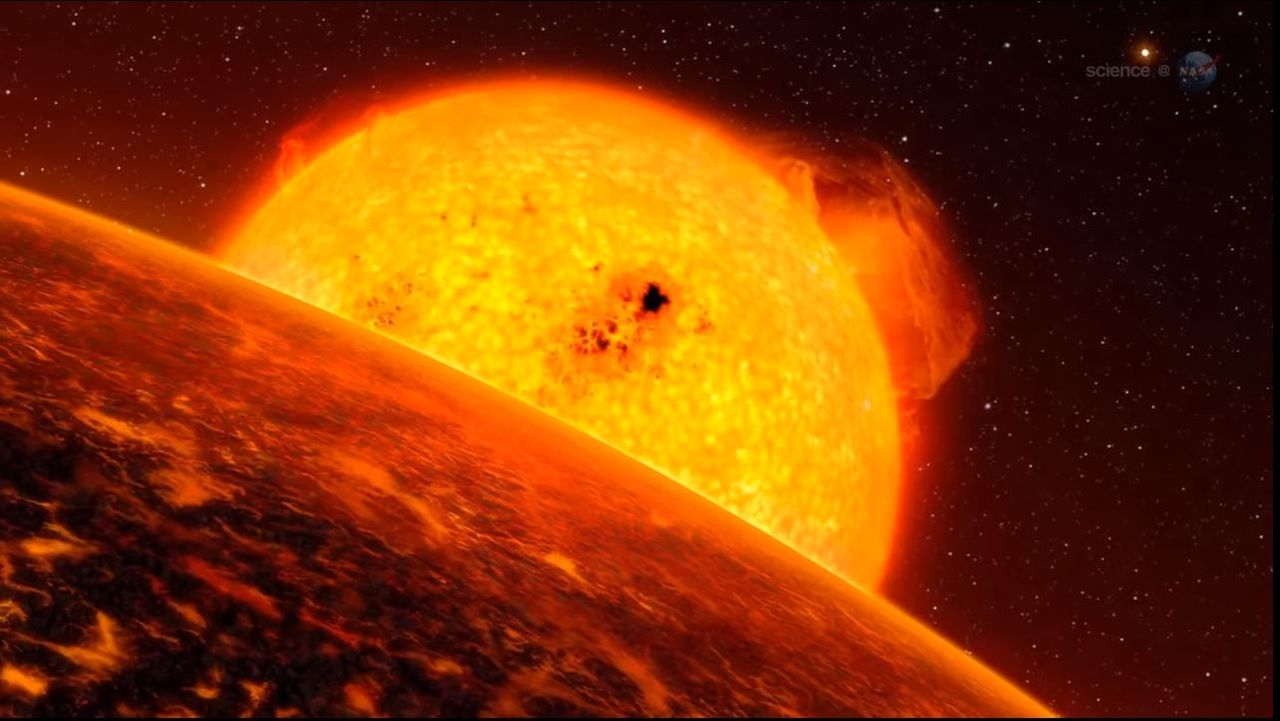
Using NASA's Transiting Exoplanet Survey Satellite (TESS), astronomers have discovered that aging stars in their so-called "red giant" phase are even more destructive to their orbiting planets than previously suspected. What does this tell us about what will happen to Earth and the rest of our solar system when the sun undergoes this violent transformation?
Scientists use TESS to hunt for extrasolar planets, or "exoplanets," by observing the dips in starlight they cause as they cross or "transit" the face of their star from its viewing angle around Earth. Beginning with almost half a million planetary systems, a team of researchers worked this down to a sample of 15,000 possible planetary signals detected by TESS. The team then applied a computer algorithm that helped them identify only those planet candidates that orbit stars just beginning to become red giants, finding the number to be around 130, including 33 that were new candidates detected for the first time.