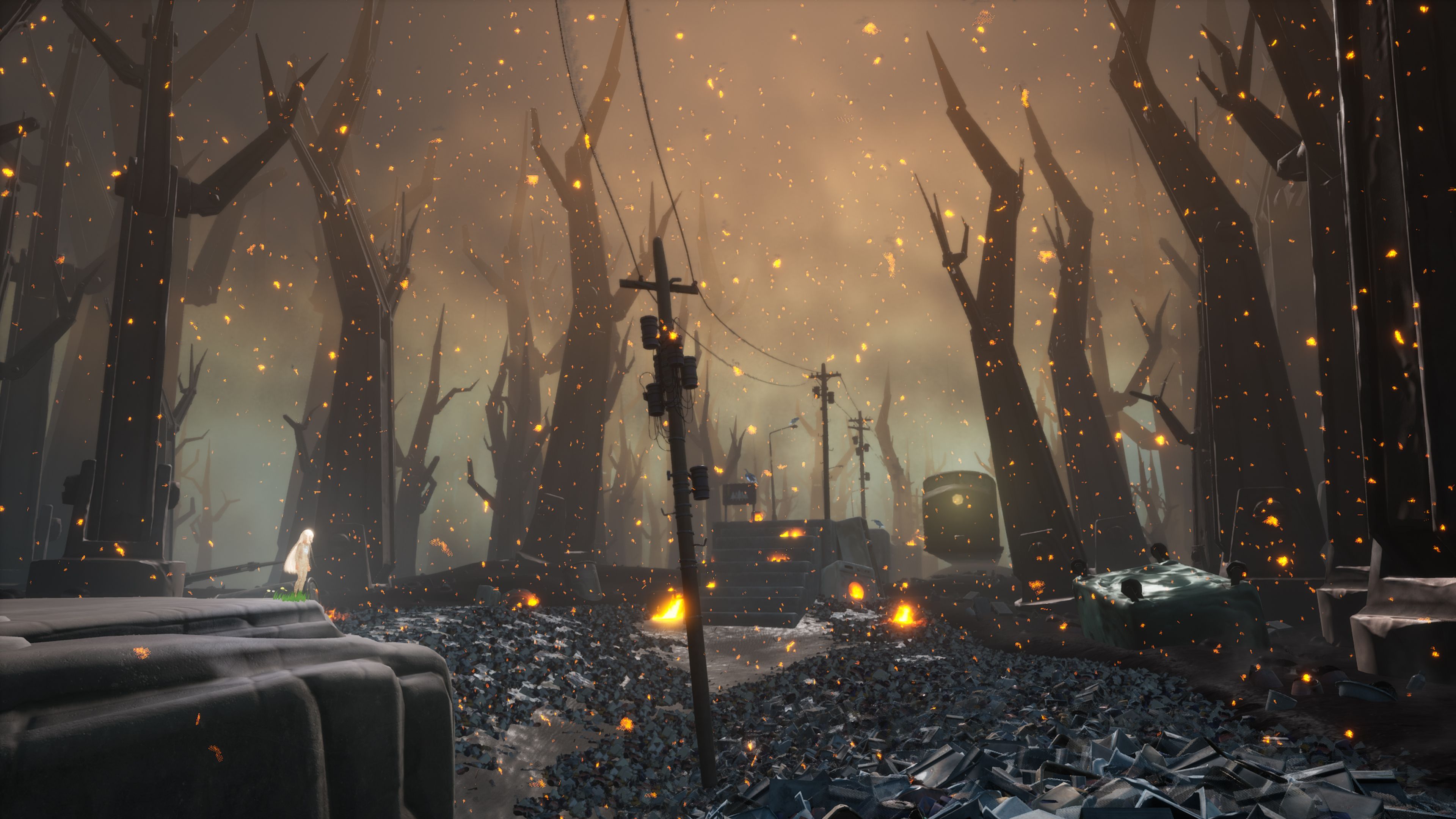
In After Us, I'm standing in the looming shadow of a naked, petrified human being whose resting expression is one of despair. With both feet planted on the ground, one rigid arm reaches up to the sky, while the other hangs by her side. To her left, another statuette woman with a smaller frame holds both hands aloft; and to her right, a man rests on his knees with an arm across his chest. It's unclear at this stage what happened before things turned to shit here, but I suspect the industrial oil well-aping monolith these stony figures have gathered around is a metaphor for the downfall of society.
As Gaia, a pint-sized fairy-like protagonist whose footsteps leave a trail of colorful flowers against this surrealist world's endless grays, I skirt around the base of the statues as disused plastic bags rain down from above like artillery fire. The world as we once knew it has gone to hell in a handbasket, it seems, and it's up to Gaia to breathe new life back into it.