
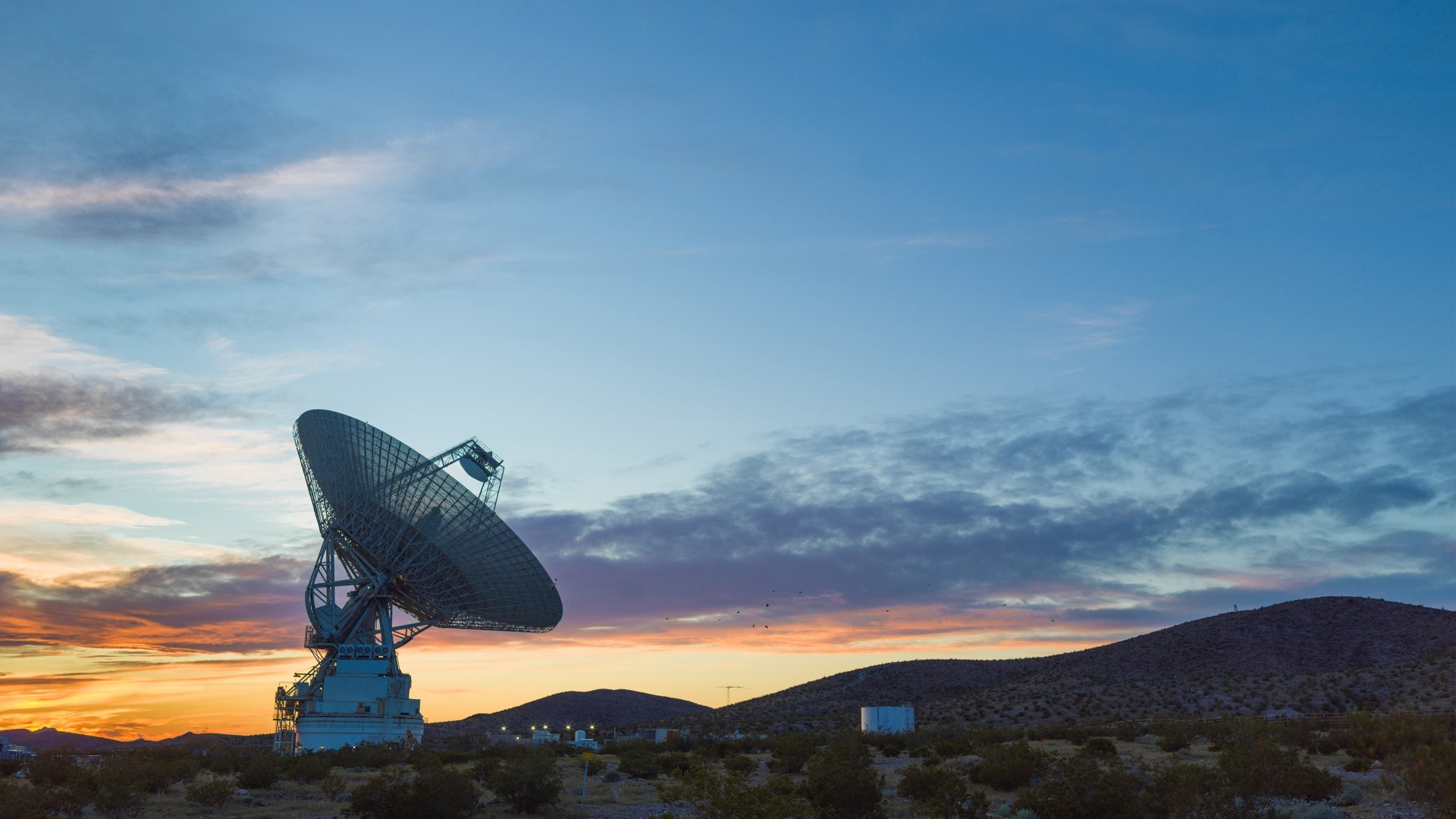
Rising out of the remote Mojave Desert, NASA's Goldstone Solar System Radar is a solitary satellite dish that communicates with spacecraft. In its downtime, the facility's antennas can track objects in space as they pass by Earth, improving measurements of their orbits that help scientists calculate if a particular target has a chance of colliding with our planet. By the end of 2024, Goldstone had detected 55 Near-Earth Asteroids, setting a new annual record for the facility.
In 1968, scientists used Goldstone to make the first radar asteroid observations. In the decades that followed, researchers leaned more heavily on the Arecibo Observatory, a larger dish in Puerto Rico that could make more detailed studies. "While Arecibo was in operation, about 2.5 times as many binary system satellites had been found there relative to Goldstone," asteroid hunter and planetary scientist Lance Benner, of the Jet Propulsion Laboratory, told Space.com by email.














