
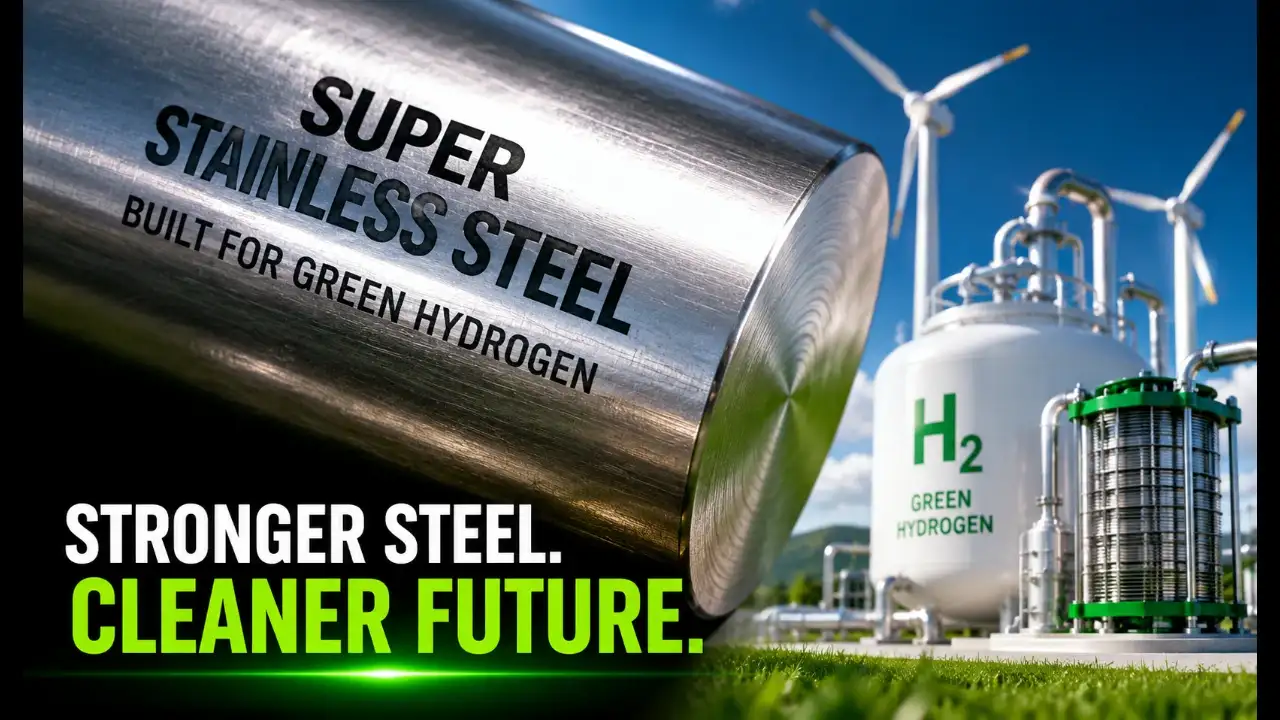
Green hydrogen has a strange problem: the fuel itself can be clean, but the machinery needed to make it can be extremely expensive. Now, researchers at the University of Hong Kong have developed a stainless steel that may change that equation. Called SS-H₂, the material can withstand the intense electrochemical conditions that cause ordinary stainless steel to fail, including the highly corrosive environment created during water electrolysis.
The important discovery is not simply that this steel resists rust. Stainless steel has done that for more than a century. The surprise is what happens when the material is pushed to unusually high electrical potentials. Instead of relying on one protective surface film, SS-H₂ develops a second protective layer that takes over when the first begins to reach its limit. That unusual behavior could allow cheaper steel to replace expensive titanium components in hydrogen electrolyzers.














