
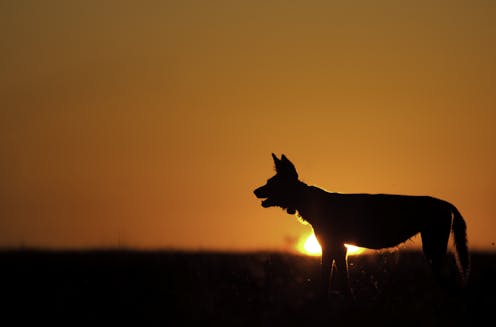
Large carnivores in Africa are important from ecological, economic and cultural perspectives, but human activities put them at risk. Increasingly, lions, hyenas and African wild dogs are restricted to protected areas like national parks. Within these limited areas, they must compete for the same food sources.
Competition is, of course, nothing new. For several million years, African wild dogs have evolved within a set of large carnivores that all prey on the same large herbivore species, like wildebeest and warthogs. Wild dogs are lanky, long-distance hunters that always live in groups, usually of eight to 10 adults. Cooperation with pack mates allows them to hunt prey much larger than themselves. Weighing in at about 40-62 pounds (18-28 kilograms), wild dogs have been shaped by the necessity to compete with larger species like the lion and spotted hyena.














