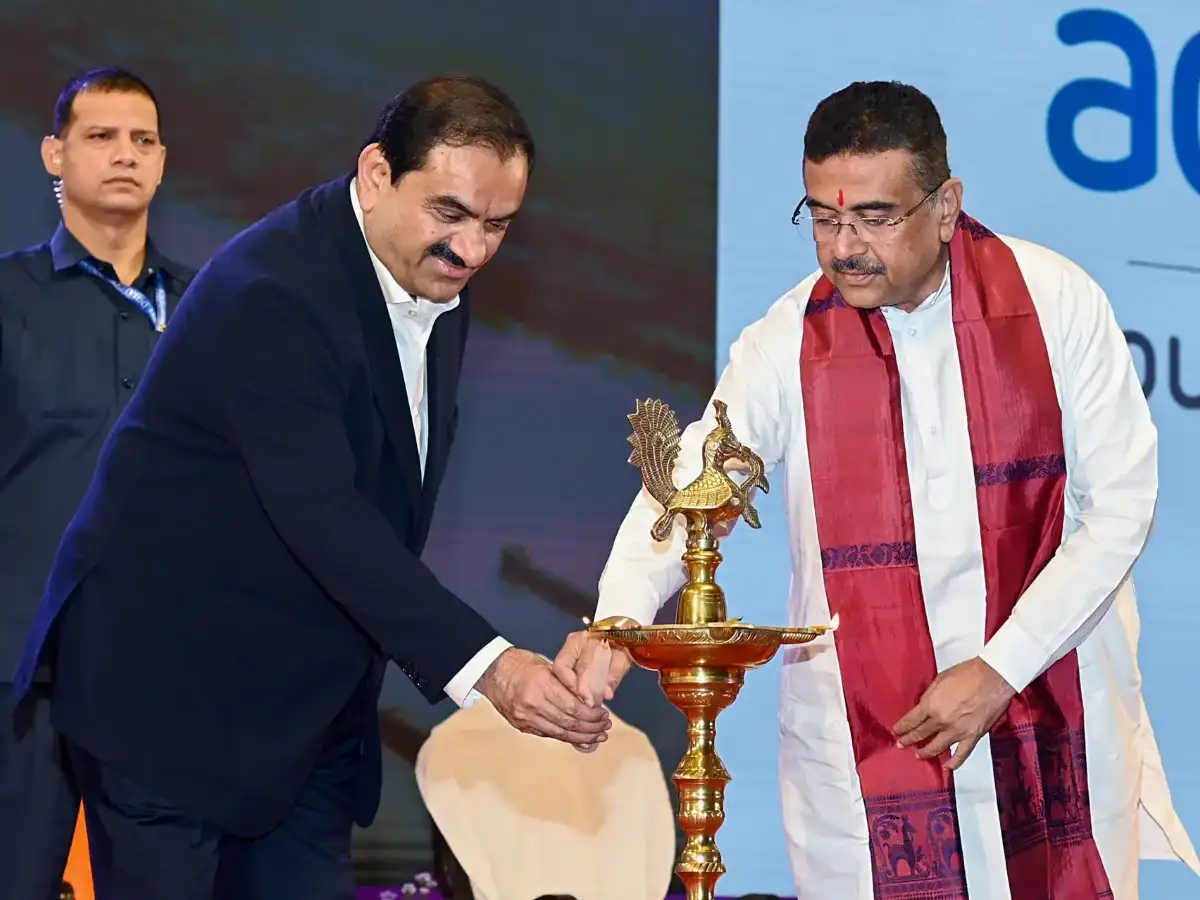
West Bengal needed to emerge as a key growth engine for India, Adani Group chairman Gautam Adani said on September 24, citing the state's strategic location and connectivity with both domestic industrial belts and overseas markets.
Speaking at an Indian Chamber of Commerce programme in Kolkata, Adani said the western and southern regions had driven a large part of India’s economic growth in recent decades.

The next phase, he said, would require new centres of economic activity, with the East playing a larger role.
He said West Bengal was critical to India’s ambition of becoming a Viksit Bharat and to generating the next trillion dollars of growth.
The state’s location gives it access to the mineral and industrial belts of Odisha, Jharkhand and Chhattisgarh, while the Bay of Bengal provides connectivity to rapidly expanding Southeast Asian and Indo-Pacific markets. Adani said this combination gave Bengal a distinct strategic advantage.
The Adani Group plans to invest more than Rs 1 lakh crore in West Bengal over the next decade. The proposed investments will span ports, logistics, power generation, transmission and distribution, roads, bridges, ropeways, green cement and hyperscale data centres.
Also read | Court rejects Adani plea that duty-free shops are beyond domestic laws
Adani also stressed that development should not be assessed only through indicators such as cargo handled, power generation capacity or data-centre capacity. Its ultimate measure, he said, had to be its impact on people.
Earlier on Thursday, the foundation stone was laid for the Adani Arogya Mandir, a 2,000-bed hospital in New Town near Kolkata. Half of its beds will be reserved for people who cannot afford quality healthcare, Adani said.
The group also announced initiatives beyond its core infrastructure and industrial investments. These include supporting the revitalisation of Kumartuli Ghat along the Hooghly river, organising a curated Durga Puja programme to showcase Bengal’s artists globally, and conserving the historic Writers’ Building.
Adani also drew a parallel with his association with Mundra port in Gujarat, which began three decades ago. He said Bengal could become his second major base of work and responsibility, following Mundra in the West.
He said West Bengal must build on its geographical advantages, intellectual capital and industrial heritage to play a larger role in India’s next phase of growth.