Get all your news in one place.
100's of premium titles.
One app.
Start reading
Tom’s Guide
Tom’s Guide
Technology
Jane McGuire

According to a personal trainer, this exercise is 100 times more effective than crunches. I tried it and was humbled

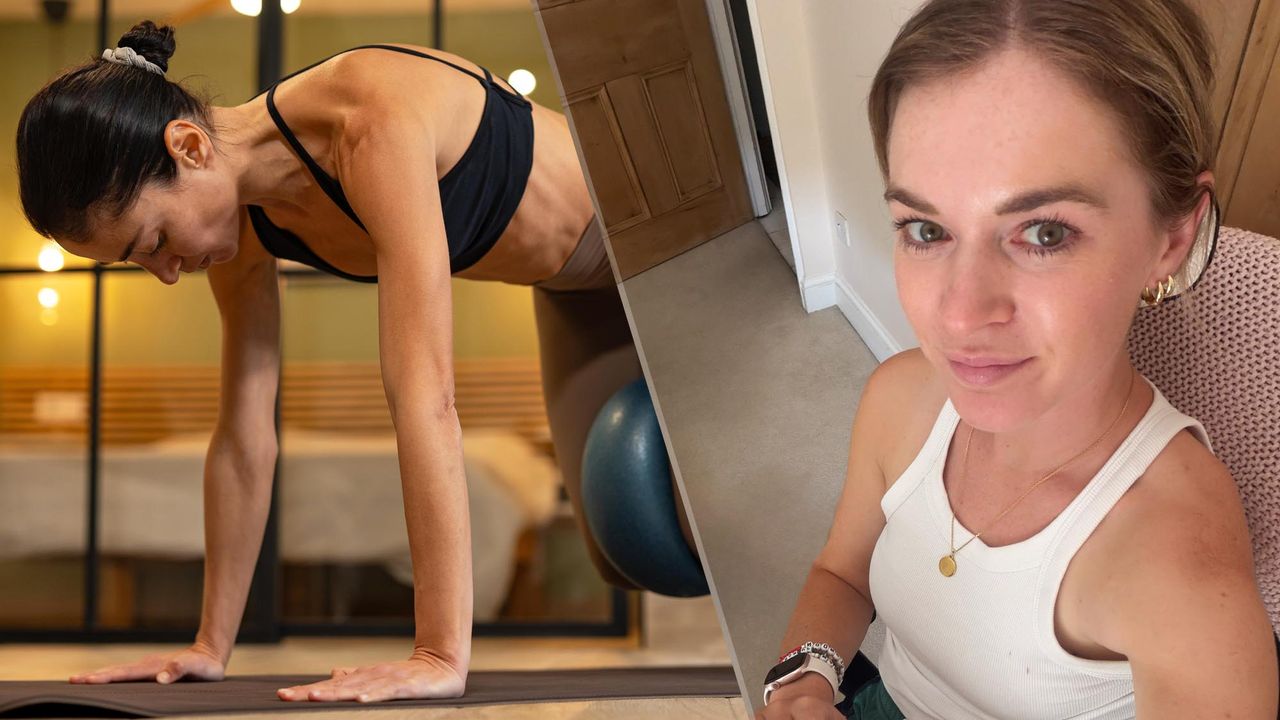
A photo of a woman doing a bear plank and fitness editor Jane McGuire .

When you think about ab workouts, chances are your brain will immediately think of endless sit-ups and crunches, lying prone on your exercise mat. While both exercises do a great job of working the six-pack muscles along the front of your core, they aren’t the best at building functional fitness, as you probably don’t find yourself lying on your back and crunching much in your day-to-day life.

This is why strength and run coach Melissa Kendter wants you to swap the exercise for the bear plank pull-through. “Reminding women this exercise is 100x more effective than crunches,” she writes on Instagram.

“Crunches train your abs in isolation. Bear plank pull-throughs train your core the way we actually use it,” she adds. As a female runner myself, I added this powerhouse ab exercise to my strength training routine for a month — read on to find out what happened next.

As a reminder, if you’re a complete beginner, you’re recovering from an injury, or you’re pregnant or postpartum, it’s always best to seek personalized advice from a qualified professional.

How to do a bear plank pull-through

All you’ll need for this exercise is a weight of some kind. You can check out the best adjustable dumbbells for your home workouts here, or you can use anything heavy, like a book or a milk carton.

In her video demonstration, Kendter is using a kettlebell. Remember, the right weight for you will feel challenging, but not impossible, by the final few reps.

Here’s how to do the bear plank pull-through with good form:

  • Place a heavy dumbbell or kettlebell to one side of you, and start on all fours. Make sure your wrists are stacked underneath your shoulders, and your knees are in line with your hips.
  • Squeeze your core, thinking about sucking your belly button into your spine, and push through your hands to raise into a bear plank, hovering your knees a few inches from the floor.
  • Check your form: your hips should be completely still, and your back should be straight. Imagine you have a drink balanced on the small of your back — it shouldn’t spill.
  • Reach under and across your body with the opposite hand to grab the weight and drag it underneath your body while staying lifted in the bear plank. Repeat on the opposite side.
  • Keep switching sides until you have completed the same number of reps on each side.

A post shared by MELISSA KENDTER (@melissa_kendter)

A photo posted by on

What are the benefits?

You’re getting a lot of bang for your buck with this move. “As a runner (and honestly for women in general), this move is 100x more functional because it builds deep core stability, hip and shoulder strength, anti-rotation control, balance and coordination, better posture when fatigued, and pelvic/core connection without endless crunches,” says Kendter.

I’ve run six marathons, and I do Pilates a few times a week, so I thought this move would be easy. I was wrong.

If you think about your posture as you run and walk, you aren’t in a crunch. Instead, your core has to work to stabilize your pelvis and resist rotation as you move, helping you stay balanced and run more efficiently.

This is an elite anti-rotation exercise that challenges your core by firing up your obliques and deep transverse abdominis to keep your body stable as you move. You’ll also be challenging your glutes and shoulders, as well as your quads, to keep you stable in the isometric hold.

(Image credit: Getty/Luca Sage)

I added this move to my routine for a month, and was humbled

I was humbled by this exercise. I’ve run six marathons, and I do Pilates a few times a week, so I thought this move would be easy. I was wrong. I had to really focus on keeping my hips steady as I dragged my dumbbell underneath my torso while holding the bear plank. I found I had to do five reps on each side before stopping to drop my knees down to the floor and reset to ensure I was moving with good form.

I spend a lot of time sitting down behind my desk, and have sciatica, so a tight lower back is a common occurrence. I often struggle to keep my hips level in traditional planks, but the bent-knee setup of the bear plank made it easier for me to ensure my back was flat.

Over the course of this challenge, the deep core shake I got throughout this exercise didn’t subside, although I definitely improved my form. Of course, my abs look the same — visible abs are the result of a low body fat percentage, not endless bear planks, but my deep core feels stronger, and I found I could really think about engaging my abs on the run. Give this one a go. You won’t regret it.

Follow Tom's Guide fitness on Instagram for more workouts, routines, tips, and tricks.

A post shared by Tom's Guide Fitness (@tomsguidefitness)

A photo posted by on

More from Tom's Guide

Sign up to read this article
Read news from 100's of titles, curated specifically for you.
Already a member? Sign in here
Related Stories
Top stories on inkl right now
One subscription that gives you access to news from hundreds of sites
Already a member? Sign in here
Our Picks
Fourteen days free
Download the app
One app. One membership.
100+ trusted global sources.