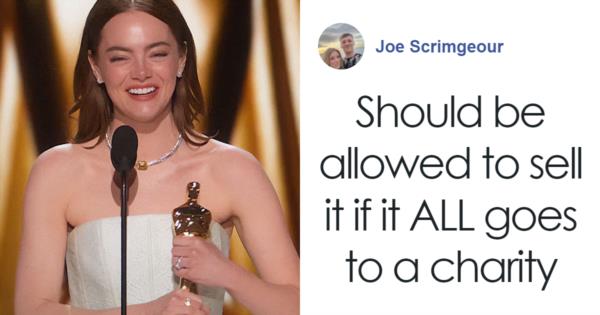
On March 10, the 96th Academy Awards took place at the Dolby Theater in Los Angeles, where the film industry's most prestigious accolades were handed out. Notably, Cillian Murphy won Best Actor for his role in 'Oppenheimer,' while Emma Stone received the Best Actress award for her performance in 'Poor Things.' Robert Downey Jr. also secured his first Oscar for Best Supporting Actor in 'Oppenheimer,' and Christopher Nolan won his first Best Director award.
However, what many may not realize is that all Oscar winners are required to sign an agreement that prohibits them from selling their statuette without first offering it back to the Academy for $1. This rule, implemented in 1951, applies to both winners and their heirs, even if the award was received through inheritance or as a gift.
In a notable case in 2015, the Academy sued a man who auctioned off an Oscar received by his uncle in 1943. The court ruled in favor of the Academy, emphasizing that the award should be based on merit, not commercial value. The Academy's CEO at the time stated that selling the Oscar would diminish its value as a symbol of creative achievement.
Furthermore, the Academy strictly protects its copyright and trademark of the Oscar statuette, prohibiting any unauthorized reproduction or use in productions not affiliated with the organization. The regulations also state that winners have no rights to the Academy's copyright or goodwill associated with the award.
These rules aim to uphold the integrity and prestige of the Academy Awards, ensuring that the statuettes are symbols of artistic excellence rather than commodities. The recent winners and their respective categories reflect the outstanding talent recognized at this year's ceremony, highlighting the exceptional contributions to the film industry.