Following the fall of Bashar al-Assad's regime in December 2024, one of Syria's priorities was to establish transitional justice to prevent the country from being engulfed in revenge. However, a year on, the country's new authorities have been slow to implement this, and new crimes are being added to the long list of those committed under Assad.
In the aftermath of the overthrow of Assad, demonstrators proclaimed the victorious unity of the Syrian people, from Idlib to Suwayda, Latakia to Raqqa.
A year later, following several outbreaks of violence, divisions between communities appear even more pronounced than at the end of the 50-year dictatorship.
Now, many in the country are calling for the creation of a federal system, while some regions are demanding independence.
In March, clashes between former soldiers loyal to Assad and forces of the new transitional authorities escalated into massacres of Alawites, the minority group to which Assad belongs.
Nearly 1,700 people were killed, according to the Syrian Observatory for Human Rights. Since then, violence and harassment have continued.
"Tensions persist and the Alawite population feels unsafe," said Rateb Shabo, himself a native of the Syrian west coast, where the majority of Alawites live.
"To give you an idea of what daily life is like, I was talking recently with a friend from the Syrian coast. He told me that the olive harvest had been poor this year and that it would not be enough to feed his family for the whole year. Then he said to me, but who's to say that one of the cars that drives past my house every day won't stop at my door to steal all my bags of olives and take me with them anyway? I'm powerless. We're considered remnants of the regime."
After the Alawites, the Druze
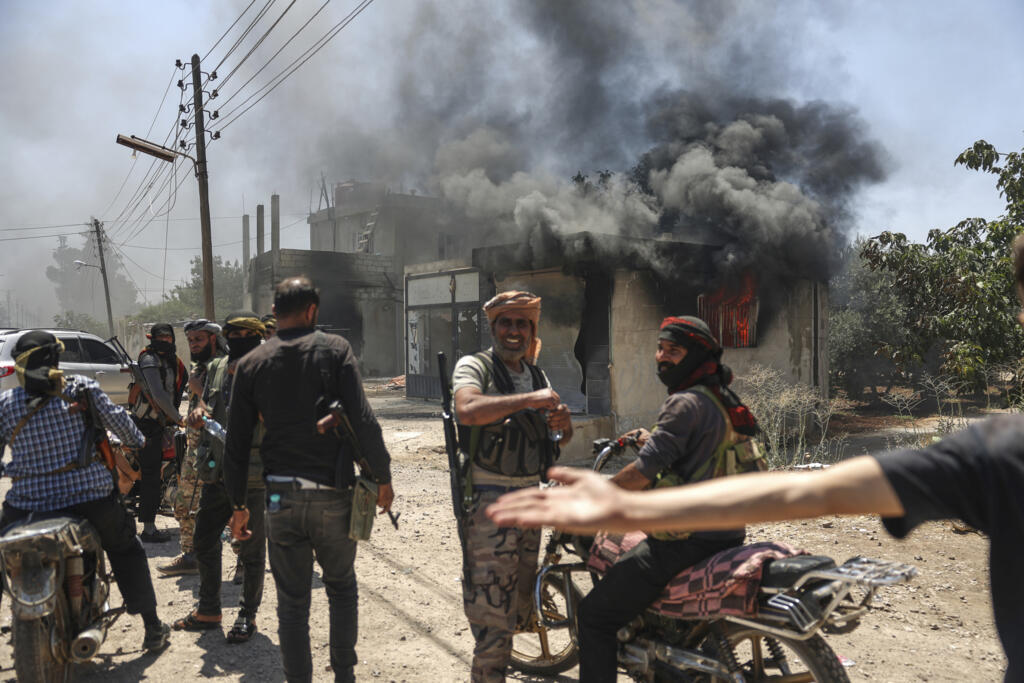
In July, southern Syria saw clashes between Druze and Bedouins who live together in the same region. Regime forces came to the aid of the Sunni Bedouins, who themselves called in reinforcements from across the country.
The Druze had had high hopes for the new government.
"They helped bring down Bashar al-Assad," explains one Druze source who chose to speak under the pseudonym Rafaël.
"Only a minority of people were calling for the independence of the Druze region. Since the massacre, the majority message has changed radically from 'we want a united Syria with everyone’ to ‘the Druze must be independent'," he said.
"The problem is that the government took part in these clashes by siding with the Bedouins. They armed them while asking the Druze to surrender their weapons. The Druze refused. When the massacre happened, there were also racist celebrations against the Druze throughout Syria. So people even lost confidence in their fellow citizens."
An investigation by Amnesty International revealed that government and affiliated forces have extrajudicially executed dozens of Druze.
France condemns reported atrocities against civilians in Syria’s Sweida
Justice or show trials?
Faced with these crises, the authorities have announced commissions of inquiry.
In connection with the violence last March, the Attorney General said he had brought charges against approximately 300 people linked to the transitional authorities and 265 people belonging to paramilitary groups loyal to Assad, accused of leading the armed rebellion that sparked the violence.
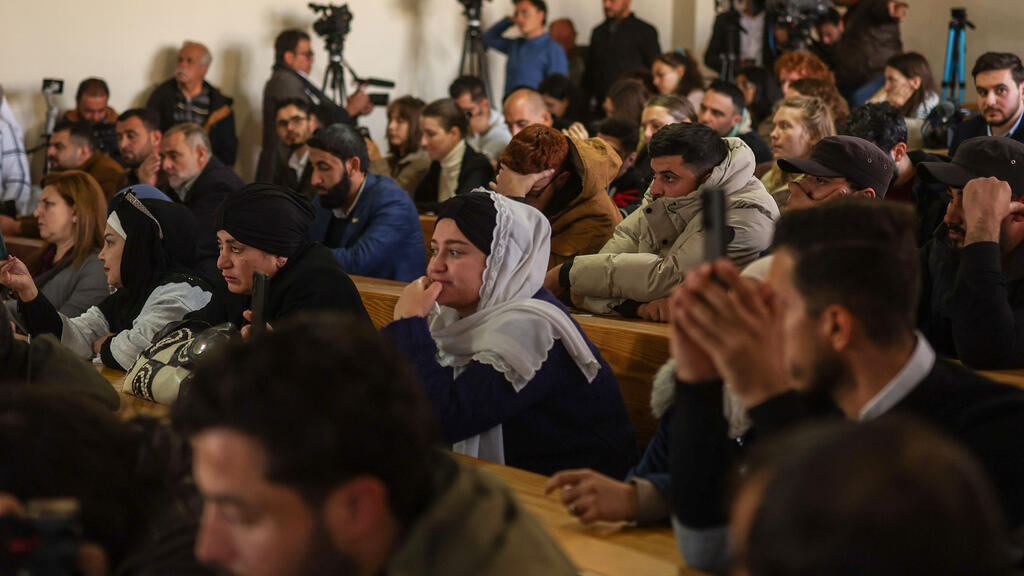
At the opening of the trial, only 14 detainees were present – half were former soldiers of the regime, the other half affiliated with the transitional authority forces. The majority pleaded not guilty, and the hearing was suspended and postponed.
What was seen by many human rights defenders as a first step towards ending impunity for crimes in the country was ultimately viewed as a farce by many Syrians.
"It was a political show," said Shabo. "The Sunni soldiers were released, while the Alawites are still in prison, even though in both cases the trial is not over."
Many observers question the independence of the Syrian judiciary.
"The Ministry of Justice belongs to the Islamist group Hayat Tahrir al-Sham [from which the new president Ahmed al-Charaa hails]. It is a sectarian organisation that is deeply hostile to Alawites." said Shabo.
"This trial is also based on the ordinary Syrian penal code. It does not recognise the political nature of the crime. Yet it was a deliberate massacre committed by militias affiliated with the new regime, as Amnesty International says. We cannot leave the investigation and judgement to local institutions. There is obvious bias."
Independent investigators appointed by the United Nations Human Rights Council concluded that the waves of violence committed by government forces against the Alawite minority were "widespread and systematic" and could constitute war crimes.
Syria’s interim president vows justice for Druze after deadly clashes
Transitional justice
Shabo says he finds it difficult to imagine Syria's future, and fears that any attempt to establish transitional justice will fail.
"‘Even if the authorities really wanted to implement it, it would be impossible because the armed forces that support them would also have to be tried for their crimes."
Yet activists insist the fight is not over, and continue to work alongside the authorities.
"The problem is that they are very slow," said lawyer Anwar al-Bunni, director of the Syrian Centre for Legal Studies and Research.
"We have been pushing for a long time for the establishment of a special court that would adopt the rules of the International Criminal Court. All criminals must be arrested, whether they are Sunni, Alawite, Kurdish... All these people must be given a fair trial. It seems that the authorities are now moving in that direction."
He says the violence committed against the Alawites and Druze has backed them into a corner.
"The problem is how long it will take the authorities to set the process in motion. I am sure that in the future we will succeed in creating a country that respects human rights."
For now, many Syrians must live with the fact that their tormentors walk free, while hundreds of Alawite families wait for imprisoned relatives to receive their basic legal rights, including visits and a fair trial.
Macron urges Syrian leader to protect minorities after deadly clashes
Civil society steps in
The slow march towards transitional justice, however, is not the sole preserve of the authorities.
On the ground, al-Bunni's organisation, like many other Syrian NGOs, provides training in citizenship and justice. It also trains lawyers in evidence gathering and case building.
Dima Moussa, a lawyer and transitional justice specialist, is involved in this process.
"The training provided by the authorities of the Transitional Justice Commission and the Commission for Missing Persons six months ago was a first step worth highlighting. It gives us people to talk to. In particular, it has helped to formalise our work within Syria. We are carrying out consultations with different communities to gather recommendations."
She acknowledges that the massacres against the Druze and Alawites have created new divisions. "But that pushes us to work harder. We have also seen initiatives emerge in different communities to take action against violence. We are also calling for crimes committed after the fall of Bashar al-Assad to be taken into account in this process. This will send a strong message."
Seventy Syrian civil society organisations have recently presented recommendations to the Syrian government and the Transitional Justice Commission. Al-Bunni and Moussa both hope the authorities will make good use of them.
This article has been adapted from the original version in French by Oriane Verdier.