Get all your news in one place.
100’s of premium titles.
One app.
Start reading
Euronews
Euronews
Rebecca Ann Hughes

‘A tourist attraction in their own right’: Two new metro stations open in Rome

Expanding Rome’s metro network is a notoriously complicated task, as excavations are regularly halted by the discovery of archaeological treasures.

So it’s big news that two new metro stations have just opened beneath the Italian capital.

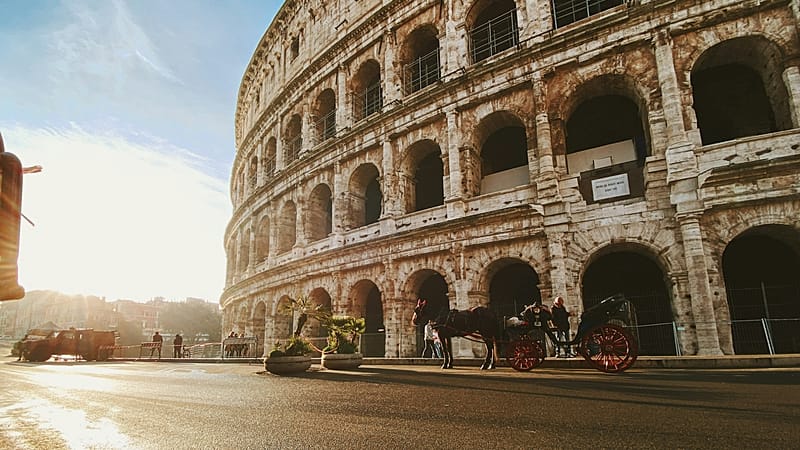
One is located deep underneath the Colosseum, a useful transport link for tourists that means avoiding the hectic traffic on ground level. The second is by Porta Metronia, a gate in the city’s third-century Aurelian Walls.

The two stations also feature displays of ancient artefacts, leading Rome’s mayor, Roberto Gualtieri, to hail them as “full-blown tourist and cultural attractions" in their own right.

Rome’s new ‘archeostations’ displaying ancient wonders

The new terminals have been dubbed ‘archeostations’, as both exhibit an array of archaeological riches that were unearthed during the construction process.

At the new Porta Metronia stop, a museum set to open in February will display the remains of a second-century AD barracks, as well as Roman frescoes and mosaics.

At the Colosseum stop, tourists on their way to the famed amphitheatre are already treated to a splendour of ancient objects.

There are cases of ceramic vases and plates, hefty stone wells, and the ruins of a cold plunge pool and a thermal bath from a first-century AD home.

Metro construction reveals ‘layers of the past we would never have known about’

At the Colosseumstop, screens play videos of the excavation process. They satisfy the curiosity of archaeology buffs, but are also there to explain why the station took so long to be ready.

The two new terminals are located on the C line of the city's metro system, which has been under construction for over a decade.

Progress has been hampered by bureaucratic and funding hiccups, but also, more forgivably, by the archaeological interruptions as workers stumbled across the remnants of imperial Roman and medieval civilisations.

“The challenge was to combine extraordinary archaeological heritagewith engineering works," Gualtieri said.

"Thanks to major projects like this, we are also rediscovering layers of the past that we would never have known about."

The C-line of the metro is expected to be completed by 2035 and have a total of 31 stations.

It aims to significantly improve public transport links in the Italian capital.

Already, the newly opened stations extend the line’s reach, and the Colosseum stop allows travellers to switch between the C and B lines.

The next stop on the line projected to open in 2033 is Piazza Venezia, a transport hub and a cultural heart of the city, lying near the Capitoline Hill and the ancient imperial forums.

Sign up to read this article
Read news from 100’s of titles, curated specifically for you.
Already a member? Sign in here
Related Stories
Top stories on inkl right now
Our Picks
Fourteen days free
Download the app
One app. One membership.
100+ trusted global sources.