Get all your news in one place.
100’s of premium titles.
One app.
Start reading
Tom’s Guide
Tom’s Guide
Technology
Katie Sims

A top Pilates instructor says these "anti-desk" exercises are the best thing you can do to counter the effects of sitting at any age

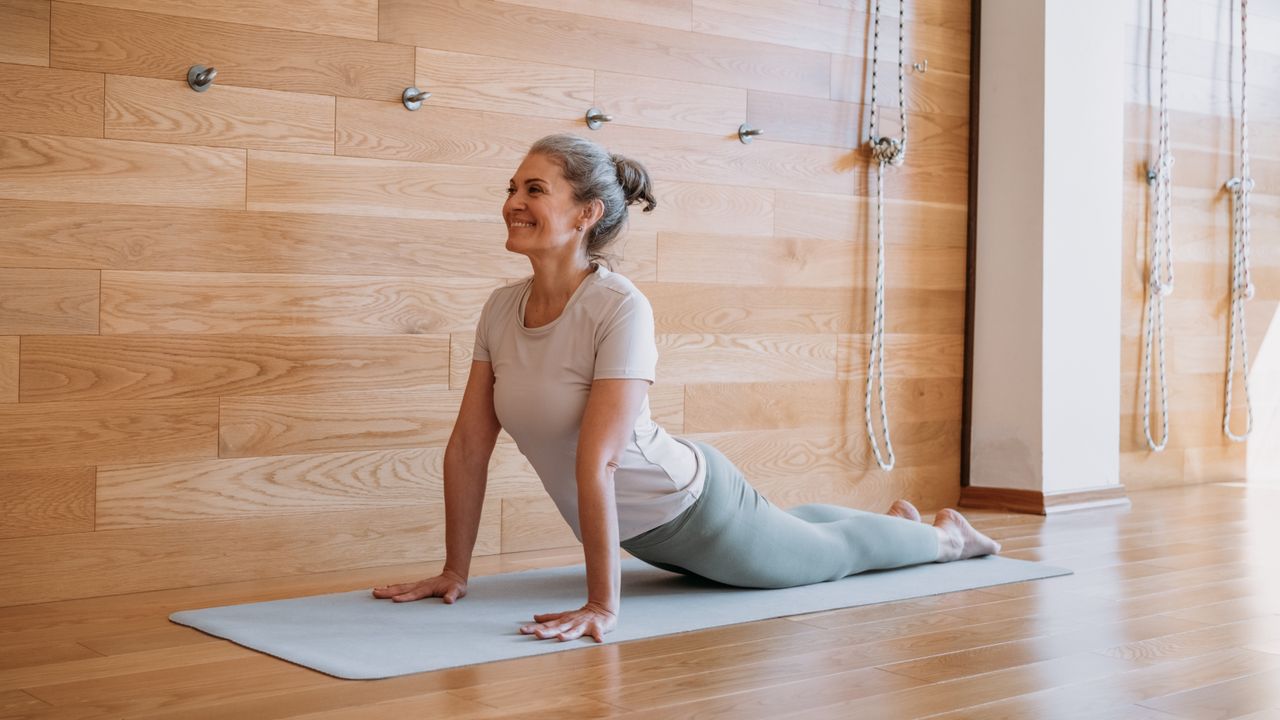
Senior woman doing Pilates .

If you spend most of your day sitting at a desk, in the car, on the sofa, or all of the above, you’re definitely not alone. The average adult can sit for over ten hours a day, according to Harvard Health, and our bodies feel it: tight hips, rounded shoulders, a stiff lower back and that general “compressed” feeling that hits the moment you stand up.

As someone who works from home and spends more time on a laptop than they’d like to admit, I’m constantly on the hunt for exercises that can undo hours of sitting. It didn’t take me long to realize that Pilates is our best friend when it comes to “anti-desk” movement with its focus on alignment, controlled strength and restoring balance to the body.
Pilates is practically made for reversing the postural aches and stiffness caused by sitting for long hours. With that in mind, I asked Pilates instructor Tara Riley to share her most recommended moves.

“A few targeted exercises can help combat a lot of the negative effects of sitting for prolonged periods,” Riley tells me. “The moves I’ve chosen will help re-wire and mobilize your body — try and do them daily if you can.” They are simple, equipment-free and take just a few minutes — but the difference they make to posture, mobility and overall comfort is huge.

A Pilates instructor's top “anti-desk” exercises

1. Swan extension

This is one of the best moves for undoing that rounded, slouchy desk posture. It opens the chest, wakes up the mid-back, and gently reminds your spine to extend.

  • Lie on your belly with one hand over the other, forehead resting on your hands.
  • Press gently into your elbows to draw your shoulders down toward your hips.
  • Lengthen through the crown of your head and lift your chest slightly.
  • Option to lift forearms off the floor and draw elbows toward your waist as you “shine your heart forward,” as Riley puts it.

2. Mermaid stretch

The mermaid stretch opens up the ribs, lats and the whole flank line that gets scrunched sitting all day. It’s also a lovely side-body stretch that encourages deep breathing, which helps us reset mentally as much as physically.

  • Sit or kneel with one hand on the floor and the other arm reaching overhead. You can have your legs in the 90/90 position if you want to engage your hip flexors as well.
  • Inhale as you lengthen upward, then exhale as you arc gently to the side.
  • Keep lifting through the underside of your waist so you don’t collapse into the supporting arm.
  • Breathe into your ribs and enjoy the stretch along the entire open side.
  • Repeat on the other side.

3. Single-leg kick

Hours of sitting leave the hip flexors tight, and the glutes switched off. Single-leg kicks are great for stretching the front of the hips while strengthening the back body — a perfect balance for “desk posture.”

  • Lie on your stomach propped up on your forearms with your chest lifted.
  • Draw your shoulders away from your ears and engage your core.
  • Bend one knee, bringing your heel toward your glutes in a controlled kicking motion.
  • Alternate legs while keeping your spine long and pelvis stable.

4. Low lunge with reach

Low lunges deeply lengthen the hip flexors, a key area to focus on in anti-desk movement. Adding the reach helps gently mobilize the spine and open the chest.

  • Step one foot forward into a lunge and square your hips.
  • Lower yourself to the ground and place your back knee on the floor.
  • Start with your hands on the floor, then lift your chest.
  • If comfortable, raise your arms to deepen the stretch through the back hip and torso.
  • Hold for several breaths, then switch sides.

5. Glute bridge

Strong, active glutes are essential for counteracting the posterior “sleepiness” caused by sitting. A classic glute bridge wakes up the whole backside of the body — glutes, hamstrings and lower back — and supports better posture.

  • Lie on your back with knees bent and feet hip-width apart.
  • Press into your heels to lift your hips, keeping the ribs and pelvis connected.
  • Squeeze the glutes at the top.
  • Slowly lower by pressing your spine into the mat, one vertebrae at a time.
  • Optional: add a small external rotation, taking the knees slightly outward while keeping the hips level.

6. Calf raise and ankle mobility

Another implication of sitting is stiffer ankles, which, in turn, reduces circulation down the legs. A bit of ankle mobility restores movement to the lower legs and supports better gait, balance and posture. This one is definitely best performed without shoes.

  • Sitting or standing, extend one leg and flex/point the toes fully.
  • Make slow circles, rotating through the full range.
  • Then stand and lift your heels so your weight is in the balls of your feet.
  • Gently lower your heels back down and repeat.

Takeaways

You don’t have to overhaul your whole day to undo hours of hunching — a handful of smart “anti-desk” moves sprinkled into your routine can make a massive difference. Riley suggests aiming for 2-3 mini movement breaks each day to reset stiff joints and wake up sleepy muscles. Think of these exercises as tiny investments for a body that feels looser, lighter and far less glued to your chair.

Follow Tom's Guide on Google News and add us as a preferred source to get our up-to-date news, analysis, and reviews in your feeds.

More from Tom's Guide

Sign up to read this article
Read news from 100’s of titles, curated specifically for you.
Already a member? Sign in here
Related Stories
Top stories on inkl right now
One subscription that gives you access to news from hundreds of sites
Already a member? Sign in here
Our Picks
Fourteen days free
Download the app
One app. One membership.
100+ trusted global sources.