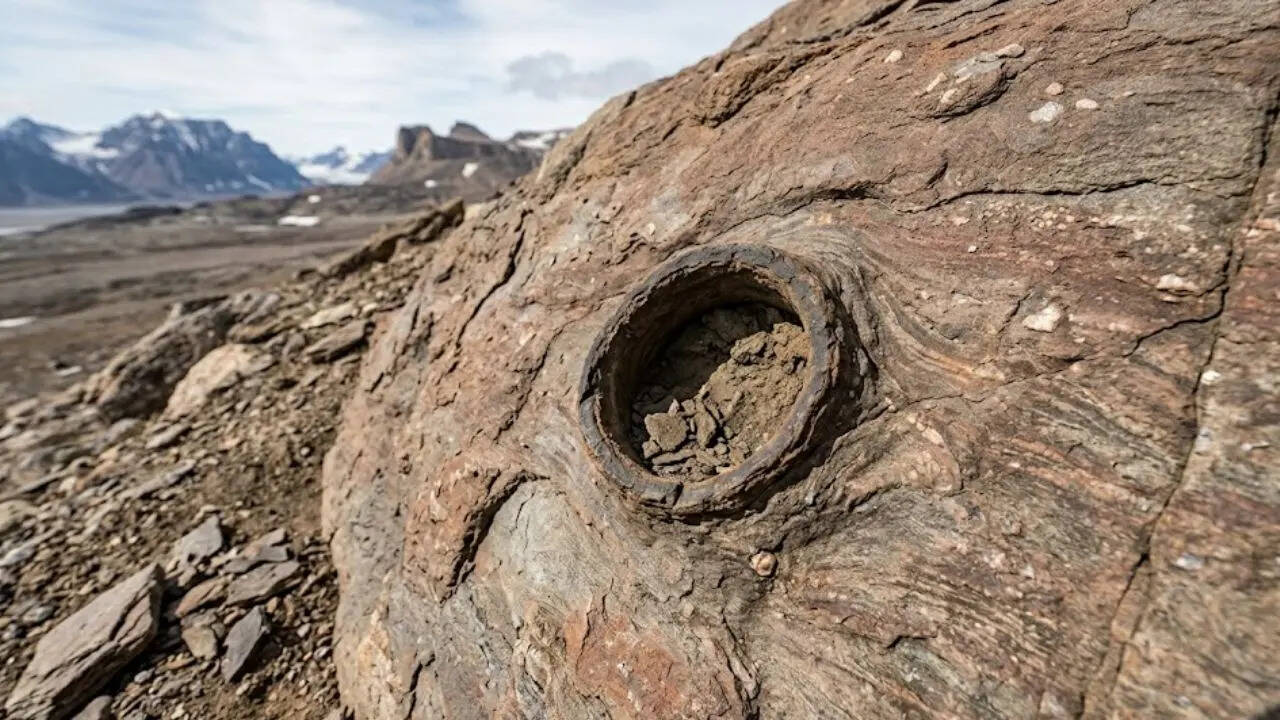
Located in East Greenland's Fleming Fjord Formation, the recently identified 210-million-year-old lungfish burrows provide valuable insight into the volatile nature of the Late Triassic climate throughout ancient Greenland. The fossilised burrows indicate that the lungfish had a strategy of digging into the mud to survive the seasonal droughts in Late Triassic Greenland through a biological process called 'aestivation', waiting for the environment to become hospitable again.
This research, published on ResearchGate, has increased our understanding (or lack thereof) of Norian-Rhaetian transitional periods, showing that environmental stress - not lush ecosystems - defined these ecosystems during the Late Triassic period. Geologists and palaeontologists are reconstructing the ancient world from these 'holes' in the rock, where animals retreated to survive beneath the earth's surface. These subterranean fossils serve as geological clocks, revealing how early vertebrates adapted their survival mechanisms to endure harsh, cyclical aridity.