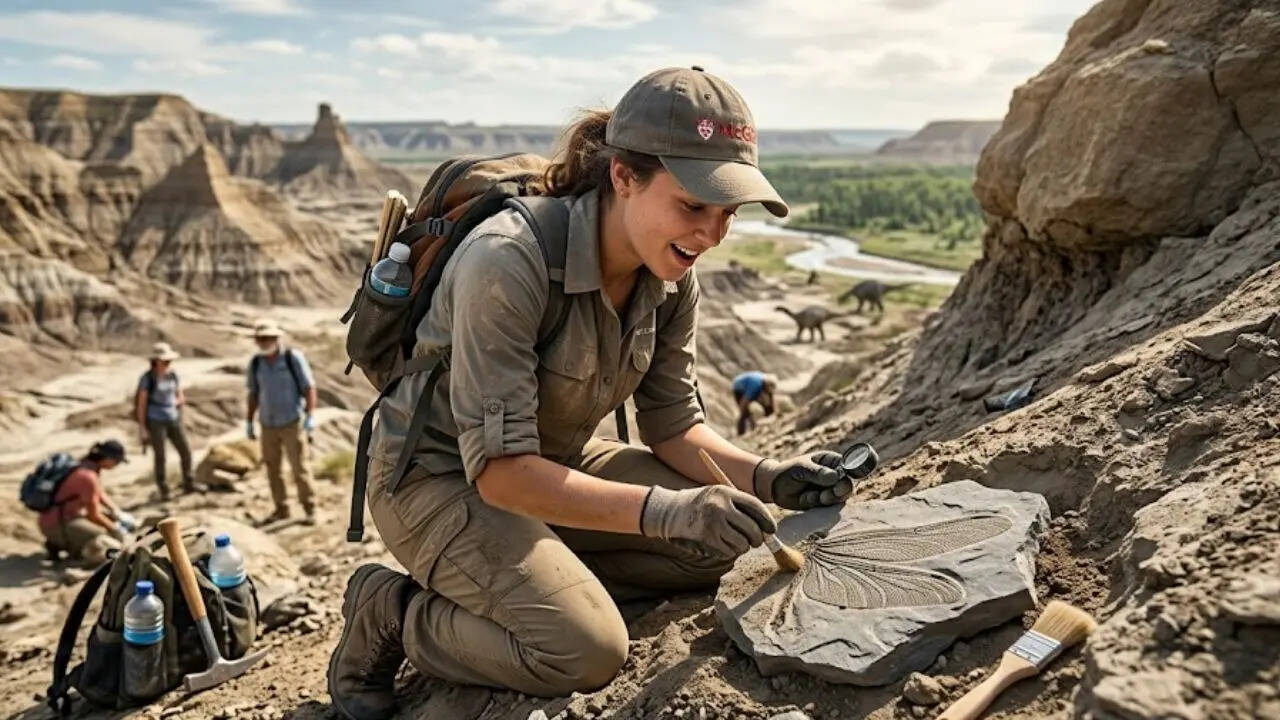
A student, exploring the barren ridges of Alberta's Dinosaur Provincial Park in search of ancient plant life, stumbled upon an extraordinary find that has changed how we view Cretaceous ecosystems. This discovery was a 75-million-year-old dragonfly wing, perfectly preserved, marking the first time an Odonata fossil from the dinosaur era has been found in Canada. Named Cordualadensa acorni, this specimen has led scientists to establish a new family called Cordualadensidae.
Moreover, according to McGill University, it fills a 30-million-year gap in the fossil record and offers crucial evidence of ancient biodiversity. It suggests that while dinosaurs roamed the earth, intricate aerial predators had already developed advanced gliding and migratory adaptations across prehistoric landscapes.