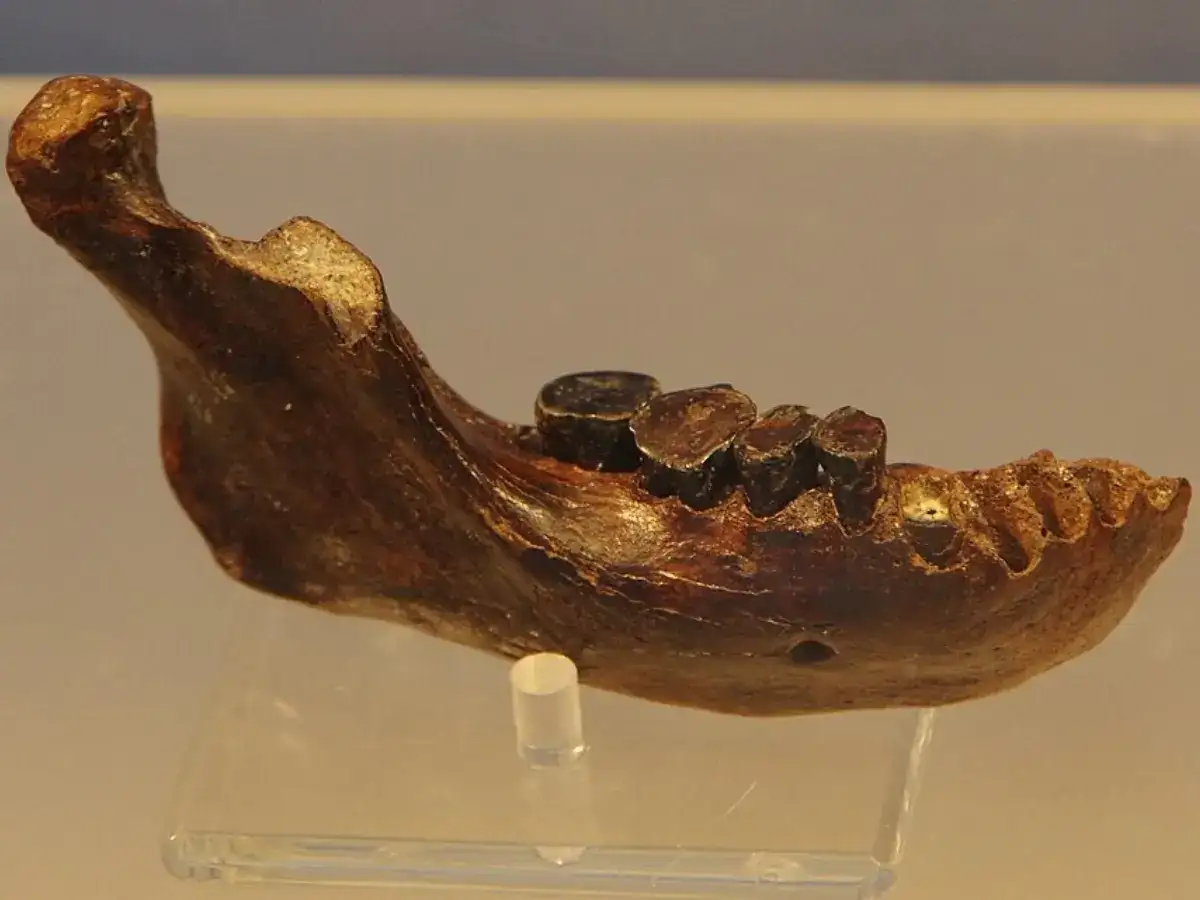
For a long time, the mysterious human mandible known as Penghu 1 was confusing researchers because of the age of this fossil and its peculiarities in terms of the dimensions. The Penghu 1 mandible was found on the sea bottom in the Penghu Channel of Taiwan and was regarded by scientists as an archaic human fossil due to its morphology.
The massive bone structure without a chin and extremely large teeth can be easily distinguished and recognized from today's human anatomy. However, it took researchers a lot of time to find more evidences as the previous examination of Penghu 1 mandible was purely morphological.
Unique features of the Penghu 1 mandible
The uniqueness of the Penghu 1 mandible existed before the appearance of any evidence of genomic data, as it was determined by the morphological properties of this fossil. Earlier studies of the Penghu 1 mandible had noted such particular features as the gigantic mandible and its body, along with other features characteristic of archaic humans.
As one can notice from scientific literature like Nature Communications, the difficulty in classifying this fossil in a context of modern humans is. Nonetheless, it wasn't enough to clarify the mystery surrounding the fossil's origin. In the absence of ancient DNA, scientists could only rely on visual inspection to figure out whether Penghu 1 belonged to an ancient human lineage.
Ancient proteins provided the answer
Penghu 1 was discovered thanks to ancient proteins. According to a study featured in Science in 2025, scientists used ancient protein analysis to discover that Penghu 1 was a Denisovan man. Unlike DNA, which degrades relatively fast, ancient proteins can survive long after DNA becomes extinct.
The relevance of this finding stems from the fact that Denisovans are one of the most elusive branches of hominins. The discovery of Denisovans happened in Siberia, more precisely Denisova Cave. Until this discovery, the remains of no other Denisovans had been discovered except for the fossils unearthed in Siberia and Tibet. It took scientists about two years to extract and analyze proteins from the fossils.