
The product planners at Toyota Motor North America headquarters in Plano, Texas, are feeling pretty hot right now. As competitors slash EV plans—and as longtime rival Honda suffers through its first-ever loss as a public company—Toyota’s hybrid-heavy lineup is printing cash. The company is, as ever, the most profitable automaker in the world. After years of criticism for its tepid embrace of pure electric vehicles, it looks vindicated.
So Cooper Ericksen seemed to be riding high when I walked into his office. Ericksen is TMNA’s senior vice president of product, battery electric vehicles, and mobility planning and strategy, giving him a wide remit and a tough gig. But for now, at least, his plan seems to be paying off. Americans can’t seem to get enough Toyota hybrids, and the company’s EV lineup is finally expanding and improving to boot.

(Full Disclosure: Toyota flew me to its North American headquarters in Plano, Texas, to sit in on its Electrification 101 employee education program. While I was there, I got the opportunity to sit down with Ericksen.)
Getting that timing right wasn’t easy.
“EVs have been a roller coaster ride in many, many ways,” Ericksen told me in a recent interview. “I'm product planning. So, I'm looking at five to 10 years out and five to 10 years back, trying to figure out when's the right time to enter the market. When is it too soon? When is it too late?”
Those aren’t easy questions. Most automakers overshot demand, banking on a quick transition that didn’t materialize. They may not have had a choice: Regulators were putting the squeeze on emissions, and if you didn’t have hybrids to help, you probably needed to build a lot of EVs. Now the U.S. regulations have been rolled back, giving automakers more maneuvering room. Most of them are scrambling; Toyota isn’t, Ericksen said.
“We're sticking to our strategy, and it's gratifying that the strategy is working well,” he told me. “The basic customer benefits of our portfolio is we have a little bit of something for everybody, and right now the big winner is our hybrid powertrains.”
Getting The Demand Picture Right
Toyota has taken a lot of heat over the years for its slow-moving approach to EVs. The company has said that it is pursuing a “multi-pathway” approach to electrification, focusing on widely deploying hybrids while investing in EVs and hydrogen for the future.
That means it’s been less aggressive in pushing EVs to date, and less bullish on their outlook in the marketplace. That’s for a simple reason, according to Ericksen: Customer demand isn’t there yet, and “we follow the customer.”
He rejected the idea that “everyone wants a BEV” right now, saying “lies in the marketplace” underestimated practical concerns and real consumer resistance. Based on the real-world data of the last few years, he said, it’s clear that consumers are still hesitant. And while EV fans point to sales that—until the tax credit and regulatory rollback last year—were rapidly growing, he argues those were driven heavily by incentives from both the government and automakers.
He said that in the tax-credit days, many car companies were spending between $10,000 and $20,000 per EV on incentives. Combine that with $7,500 from the federal government, or more if you factor in incentives on the manufacturing side, and these were heavily subsidized vehicles. Ericksen says in total, many EV sales involved $20,000 to $30,000 in manufacturer and government incentives.
“The actual customer demand can't be looked at through that lens,” he told me. “We sell 450,000 RAV4s a year at $36,000 each. If we put $30,000 of incentive money on RAV4, we could probably sell 5 million.”
Even still, market penetration peaked at 9%, a sign, he argues, that few customers are willing to buy these vehicles at a profitable price point. The reality, he says, is that customers have real practical concerns.
They don’t know about the reliability of EVs, they don’t know how to handle charging, and they don’t want the price premium. Toyota has been through this before, as consumers had many of the same concerns about hybrids when they first arrived, he noted. The company solved that through methodical improvement and consistency, but it’s taken over 20 years for hybrids to go from super niche to 16% of the market. EVs have a long road, too, and it starts with addressing the customer concerns, he said.
“What does the product need to be? Products are an art of compromise, right? You can never have everything you want in a vehicle. So what are you willing to compromise on? And where are the customers at?,” he said. “So from that perspective, yeah, EVs have been a huge challenge. I've read your company's articles over the years, and I've questioned my own sanity if we were doing the right thing or not.”
These days, he seems much more sure of it. But that doesn’t mean the road has been easy.
Not Getting The Product Right
Critics have piled onto Toyota for being slow to roll out EVs, and for lobbying against policies that would accelerate EV adoption—all while claiming to highly value reducing carbon emissions. But more than the pace and the politics, InsideEVs and countless other outlets have criticized the company for delivering EVs that feel underbaked. The company’s first modern, mass-market EV, the bZ4X, had lackluster range, bad charging performance, missing features for EV life, and little competitive edge. The company was already late to the party; showing up underdressed didn’t help.
Even Ericksen admits that it wasn’t the brand’s finest moment.
“You know, the first bZ didn't have as much product power as we wanted it to,” Ericksen said. “Your articles documented that quite fairly. Frankly, I might not have liked to read them, but you weren't wrong.”
The process taught Toyota that, while there’s a relatively small proportion of the customer base that’s ready to go fully electric, it’s a passionate group. EV buyers tend to love their cars, and love the fuel savings. Thanks to steady improvements, too, the products have gotten a lot better. The new bZ goes farther, charges faster, and has better software. The company may still be lagging on that last point; its latest cars still lack EV route planning, which has become pretty much industry-standard. But with a bunch of new EVs on sale and more in the hopper, it’s looking more serious than ever in this space.
Putting It All Together
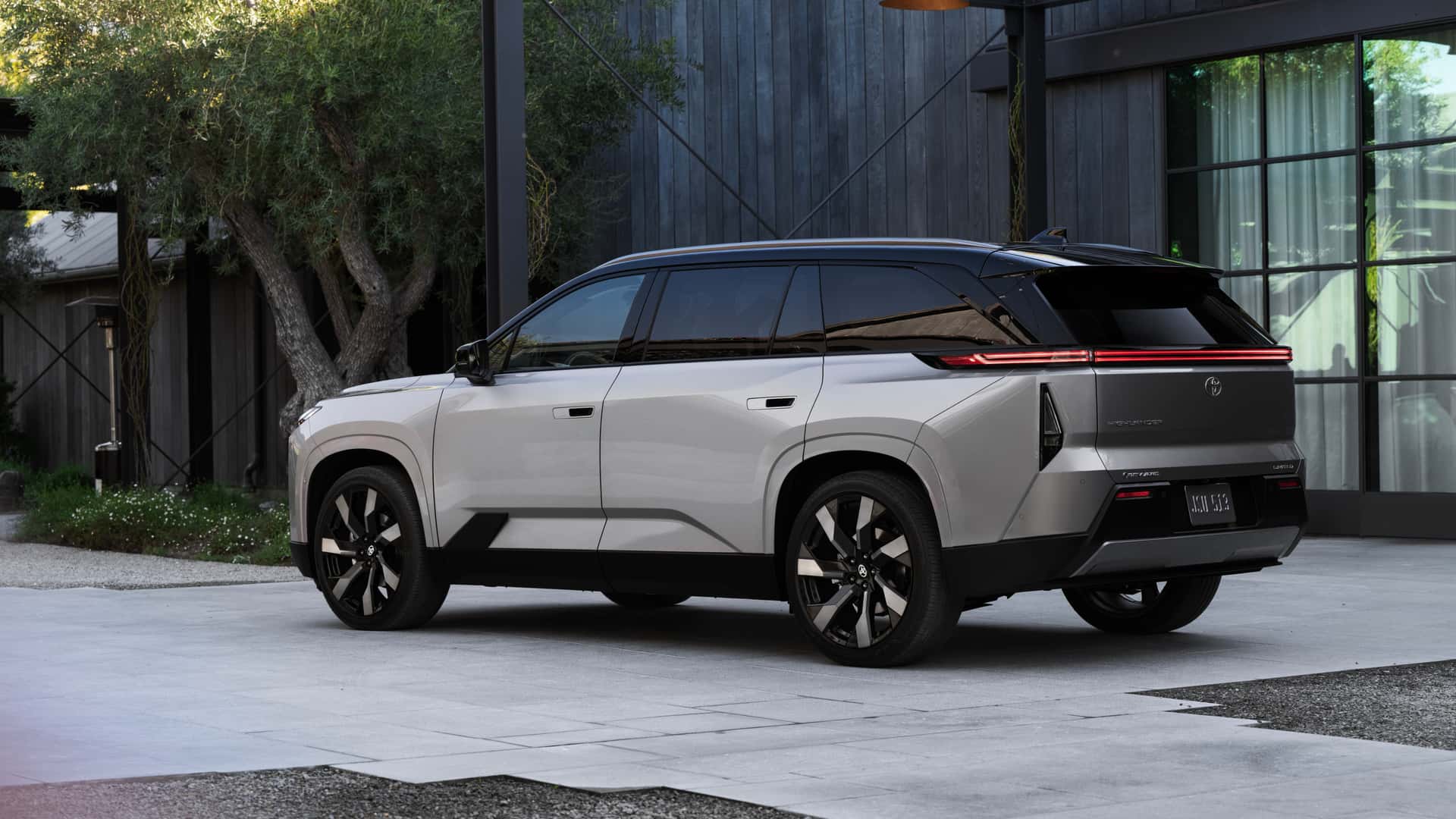
Toyota always planned to ramp up EV production. But because it was more conservative, it’s not having to massively rewrite its plans in this new policy landscape. Most competitors can’t say the same. Toyota just launched the new C-HR and bZ Woodland EVs, along with the refreshed bZ and the new Lexus ES EV. Three-row Toyota Highlander and Lexus TZs are slated to arrive soon, and Ericksen said those large SUVs will “create another plateau” for Toyota’s EV business.
“The next few years will be exciting,” Ericksen said. “By 2030, are we going to be 7, 8, 9, 10% BEV? Somewhere around 10%? Yeah, probably. Which for us is not a small number.”
That’s perhaps a less optimistic timeline than many of Toyota’s competitors. But Ericksen and Toyota are used to that. They have proven out their theory that being cautious can pay off. Toyota has profitably weathered a situation that has utterly battered most of its peers. Executives have every reason to feel good.
But the job isn’t done. Toyota has proven that it can maintain its position as the world’s most profitable car company through hundred-year storms. But if it wants to keep that title in decades to come, it needs to eventually match and surpass EV offerings from startups, Chinese automakers, and other legacy brands alike. Toyota executives project confidence that the company can pull it off. Now the company has to prove it.
Contact the author: [email protected]