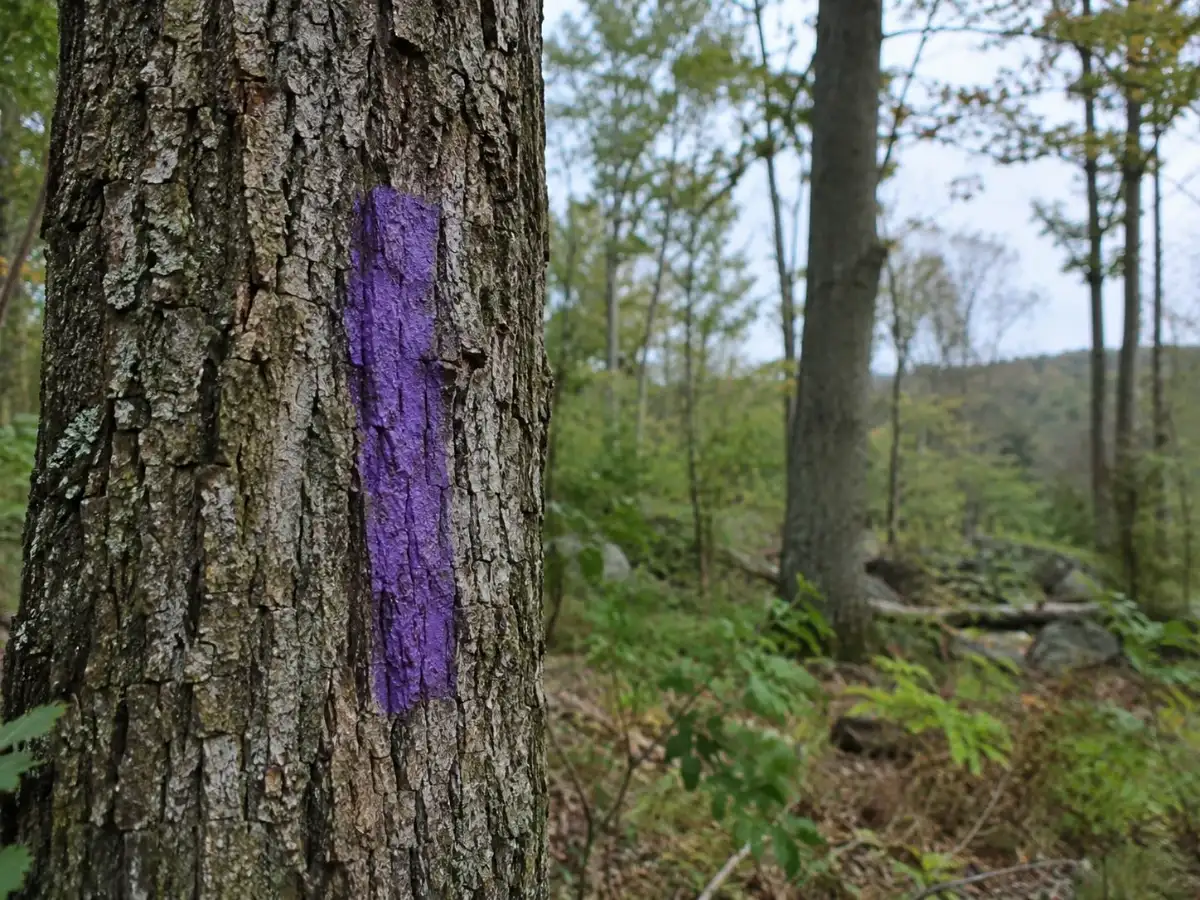
A hike in the rural countryside of Pennsylvania or Texas can take a surprising turn. A tree marked with a thick purple stripe might look like a stray bit of graffiti at first glance, but in a number of states, that mark carries the same legal weight as a printed sign. According to the Pennsylvania Game Commission, the state's official resource management agency, a vertical purple stripe painted on the trunk of a tree or on a post, at least 8 inches in length, 1 inch in width, and 3 to 5 feet above the ground, is equivalent to a "NO TRESPASSING" sign. Because many hiking trails cross both private and public land, it is worth knowing what the color code means before setting out.
Why paint stripes on trees, anyway?
It's all about low-maintenance durability, as per the Pennsylvania Game Commission. Signs can blow over in the wind or get washed away by rain, or even be deliberately removed by hikers who think they're some kind of vandal-proof nuisance. Paint is cheap and lasts a long time. Many landowners have large tracts of land to post. Plus, purple is a color not likely to be used by utility companies or timber companies when marking trees for removal, and it's easier on the eyes for people with red-green color blindness: a rationale that applies specifically to states using purple, not to every color a state has adopted.
It's more widespread than you'd think, but not universal
According to a 2026 legislative briefing prepared for the Vermont Senate Natural Resources Committee, at least 22 states, including Texas, Florida, Illinois, Missouri, Tennessee, and Pennsylvania, have laws of this kind on the books. Counts vary by source and by how strictly "purple paint law" is defined; a separate 2026 industry survey puts the figure as high as 26 when broader posting statutes are included. Not every state uses purple itself: Maryland requires blue, while Arizona, Idaho, and Montana require orange. Orange can be harder than purple for some forms of red-green color blindness to distinguish from autumn foliage, which is part of why color choice differs by state rather than following one universal accessibility standard.