
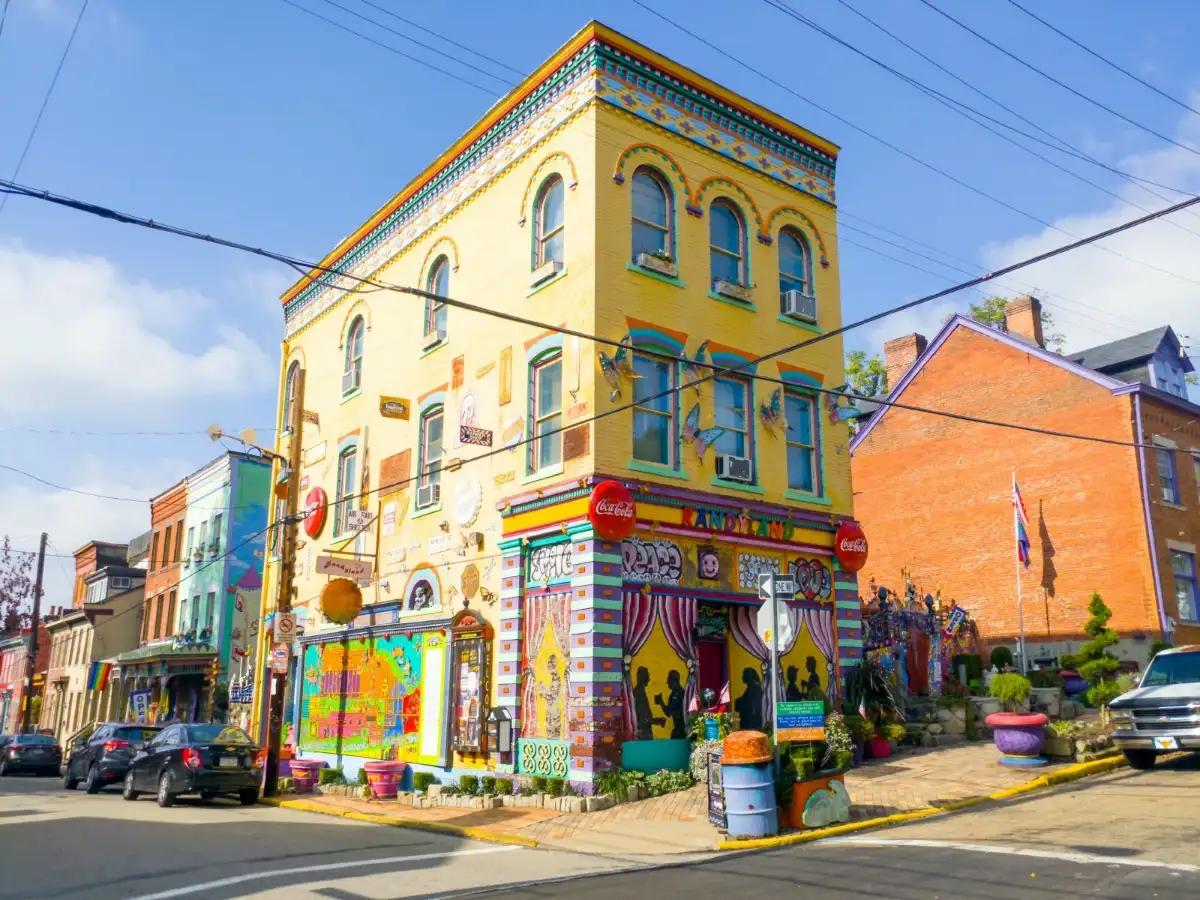
Three decades before “aesthetic” became a buzzword, Pittsburgh waiter Randy Gilson did something no branding expert would advise: buying a dilapidated, foreclosed building on the city’s North Side for $10,000 in 1995, paying the sum to a credit card, and proceeding to fill it with paint, bottle caps, and other castoff objects. Today, this building, known as Randyland, is one of the most popular topics of conversation in Western Pennsylvania and a prime example of a unique cultural phenomenon that challenged established views on art, authenticity, and community.
This phenomenon, however, is not simply an entertaining oddity featuring an eccentric main character. According to a 2015 study titled “The Crosstown Initiative: Art, Community, and Placemaking in Memphis,” published in the American Journal of Community Psychology, artist-initiated improvements to the local environment produce lasting social benefits, unlike many official programs aimed at revitalizing a neighborhood through economic means. This hypothesis has been supported by the example of Randyland and similar initiatives: the persistence of grassroots efforts at improving the urban environment correlates with increased social capital among residents.















