Get all your news in one place.
100's of premium titles.
One app.
Start reading
Tom’s Guide
Tom’s Guide
Technology
Sam Hopes

A physical therapist gave me three essential exercises to build strength and stability in my shoulders. As a personal trainer, here's why I swear by them

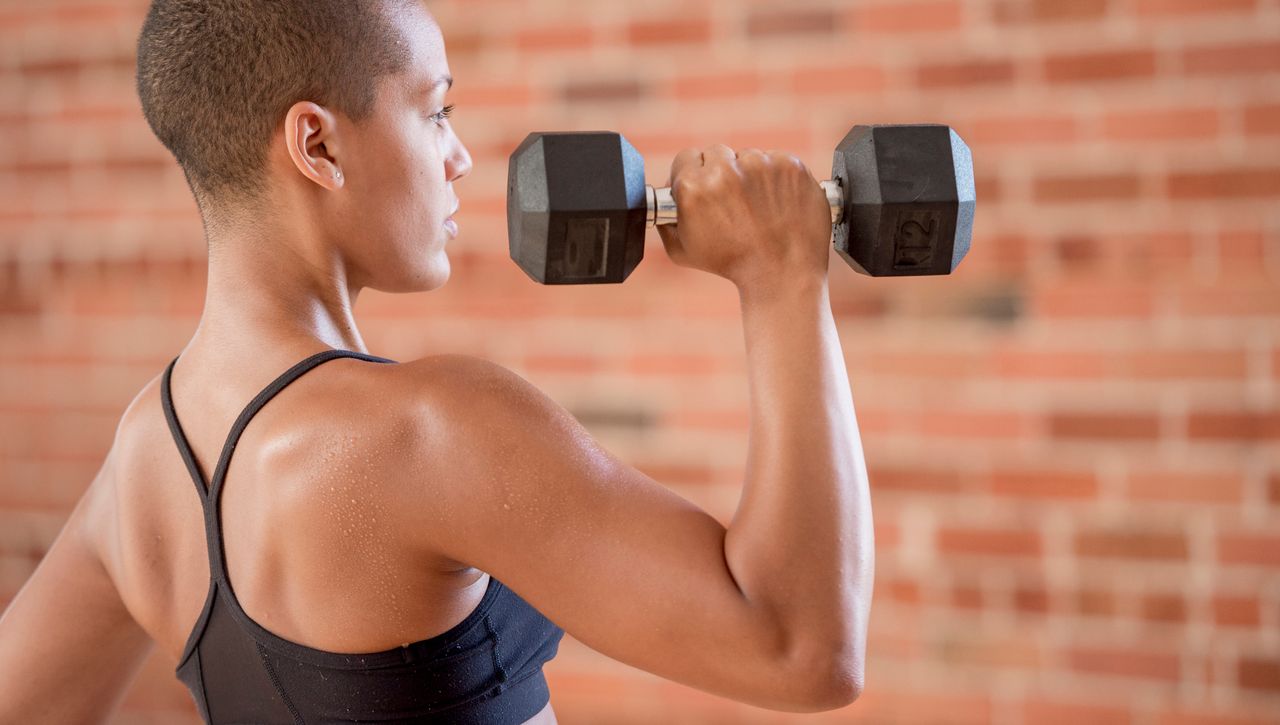
A woman lifting a dumbbell above her shoulder.

As a trainer who exercises four to five times per week, I like to think I have pretty strong shoulders. A visit to my physio later, and I'm sadly humbled.

Having coped with under-firing muscles in my left shoulder for years, developing niggles, pain and weaknesses along the way, I knew it was time to put the work in if I really wanted to fix it. Sadly, no amount of overcompensation with presses, rows, or Pilates and yoga would help me avoid the (let's face it) pretty tedious but necessary strength and mobility exercises required to make my shoulder better.

Charlie Brahmbhatt, physiotherapist and co-founder of Arlen Health, told me to start with three exercises repeated several times a week at low intensity and high reps. The idea is to get the deeper, stabilizer muscles firing up around my shoulders to prevent the bigger, dominant ones from taking over the work (think the lats and pectorals, for example).

These three moves are game-changers, and I want to share them with you, along with some of the benefits. I use stretchy resistance bands and a set of light dumbbells, but all of them can be performed using your bodyweight.

3 shoulder exercises for strength and stability

I strongly advise seeking medical assistance, visiting your physician, or booking an appointment with a physical therapist before starting any exercise regimen or recovery program.

Before we get stuck in, these three exercises have been specifically prescribed to me under the care and guidance of a physiotherapist and based on my individual shoulder condition.

I strongly advise seeking medical assistance, visiting your physician, or booking an appointment with a physical therapist before starting any exercise regimen or recovery program.

If you do choose to try these exercises and experience pain at any time, stop and rest. If you're working with an injury or health condition, I recommend seeking advice.

  • Scapula push-ups, 8 reps, 10-second hold, 2 sets:
    • Start on your hands and knees with your shoulders directly over your wrists and your hips stacked over your knees . Lightly engage your core and push away with your hands to broaden through your upper back.
    • Gently draw your shoulders down away from your ears. Keeping your arms straight, perform a push-up without bending your elbows, lowering your chest toward the ground and squeezing your shoulder blades together. \
    • Press up and away to separate the shoulder blades again, holding the position at the top. Progression: perform from a push-up position (no knees) or practice extending one arm in front of you at a time while pushing through the grounded hand. Try holding for 5-10 seconds.
  • Prone arm raises, 2x12-15 reps/ 3x18:
    • Lie on your stomach with your forehead resting on your right forearm, hips square and thighs and tops of the feet resting on a mat beneath you.
    • Extend your left arm by your side , palm up or down. Roll your shoulders back and down away from your ears and lift your shoulders slightly off the mat, knitting the shoulder blades together. With control (at least 3 seconds), lift your left arm into the air, pause at the top, then lower it again .
    • Repeat on the other side, moving slowly. Progression: hold a light weight in your hand.
  • Internal rotations, 2x12-15 reps:
    • Tie a rehab band to something sturdy behind you just above shoulder height. Start in a half-kneeling position facing away from your anchor point with your right leg forward, knee bent, foot planted.
    • Grip the band in your left hand and raise your arm , elbow bent, to 90 degrees, as if performing a shoulder press. Clench your fist. Position your left elbow slightly in front of the shoulder at shoulder height. Check for a straight line from fist to elbow.
    • Slowly lower your left fist forward until roughly aligned with your elbow, or slightly lower. Pause , then control the movement up again. Remember to switch sides.
    • Progression: try a thicker band or move further from the anchor point. Position your right thumb and middle finger around the left pec and armpit to ensure your back and chest don't take over.

A post shared by Tom's Guide Fitness (@tomsguidefitness)

A photo posted by

Why I love these exercises: Personal trainer verdict

Ideally, we want to strengthen and activate these weaker areas preventively rather than being reactive.

I encourage clients to work on mobility and strength several times a week, as this helps train the lesser-known stabilizing muscles in the body, as well as those aesthetically pleasing, powerful muscle groups, like the glutes, lats, chest and quads.

Think of your stabilization work as strengthening the muscles that support and assist you in doing the sports and exercises you enjoy. Without them, injuries, pain and a spendy visit to your physical therapist could be waiting.

Sadly, many of us won't even realize we have muscular imbalances or weaknesses from underfiring and overcompensation until we feel the little aches and pains set in. Ideally, we want to strengthen and activate these weaker areas preventively rather than being reactive. A hard lesson I've had to learn with my shoulders.

(Image credit: Getty Images)

These exercises work one side of the body at a time, known as unilateral training, allowing you to focus on your dominant and non-dominant sides without your stronger side taking over. That said, muscles such as your pectorals and lats can take over even when working unilaterally, so try not to compensate elsewhere; when fatigue sets in, "you're done," Charlie says.

Charlie asks me to use light weights and bands to maximize range of motion and control, ensuring the correct muscle groups switch on and work at those top rep ranges for better endurance while still working through resistance.

Each strengthening exercise is also low-impact on your joints, meaning it's suitable for the shoulder joints and the rotator cuff muscles surrounding the scapulae.

(Image credit: Shutterstock)

Follow Tom's Guide fitness on Instagram for more workouts, routines, tips, and tricks.

More from Tom's Guide

Sign up to read this article
Read news from 100's of titles, curated specifically for you.
Already a member? Sign in here
Related Stories
Top stories on inkl right now
One subscription that gives you access to news from hundreds of sites
Already a member? Sign in here
Our Picks
Fourteen days free
Download the app
One app. One membership.
100+ trusted global sources.